Star Wars End Credits: Technical Breakdown Across the Saga
George Lucas was fined $250,000 for refusing to put opening credits on Star Wars. He quit the Directors Guild instead. Every name that should have rolled at the top got pushed to the bottom — and that decision reshaped how Hollywood credits films.
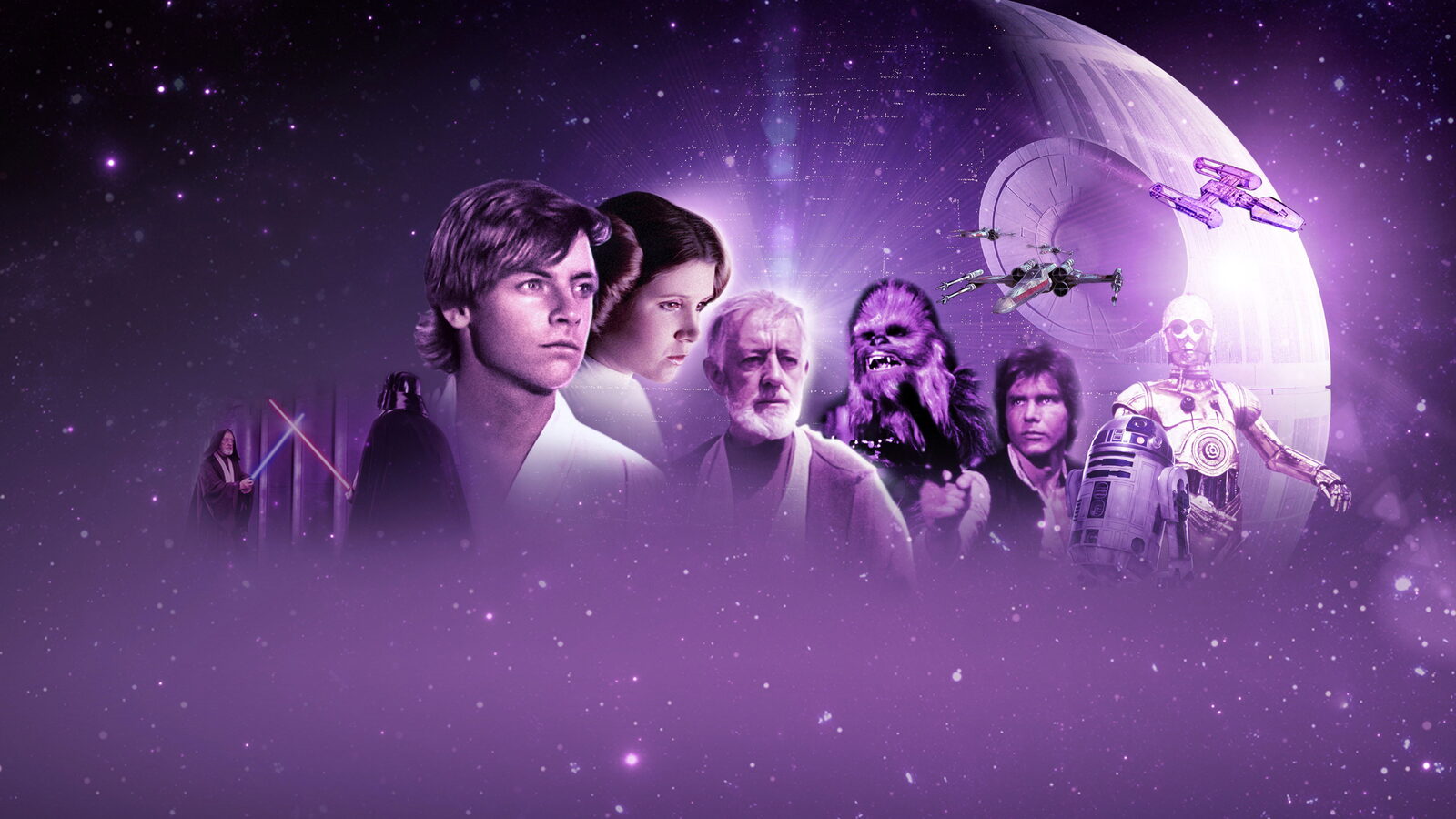
The Star Wars saga — nine episodic films released between 1977 and 2019 — represents one of the most significant case studies in end credits history. Not because the credits themselves are visually experimental (they aren’t), but because Star Wars forced the entire industry to accept that a major motion picture could put every single credit at the end.
This breakdown analyzes the Star Wars end credits as a piece of craft: their structure, typography, guild compliance, and how a crew of ~150 in 1977 ballooned to 3,000+ by 2019. It’s part of our credits breakdown series covering the most technically interesting credits in cinema.
Star Wars Credits at a Glance
The Saga in Numbers
| Detail | A New Hope (1977) | Return of the Jedi (1983) | Revenge of the Sith (2005) | The Rise of Skywalker (2019) |
|---|---|---|---|---|
| Credits duration | ~4.5 min | ~6 min | ~9 min | ~12+ min |
| Estimated crew credited | ~150 | ~350 | ~1,500 | ~3,000+ |
| End credits font | Trade Gothic Bold No. 2 | Trade Gothic Bold No. 2 | Univers family | Univers family |
| Style | Scroll on black | Scroll on black | Scroll on black | Scroll on black |
| Background | Solid black | Solid black | Solid black | Solid black |
| Post-credits moment | No | No | No | No |
| Guild compliance | Pre-DGA exit | DGA, WGA, SAG-AFTRA | DGA (waived), WGA, SAG-AFTRA, IATSE | DGA, WGA, SAG-AFTRA, IATSE |
All nine saga films follow the same core format: blue text scrolling upward on a black background, accompanied by a John Williams orchestral medley. No Star Wars saga film has ever used cards, animated backgrounds, or footage behind the end credits. The consistency is the point — it’s a visual signature as deliberate as the opening crawl.
Star Wars credits structure
How the End Credits Sequence Unfolds
Every Star Wars saga film follows a near-identical credits architecture:
- Final narrative moment — the last shot of the story
- Iris wipe to black — the classic Star Wars transition
- “Directed by” card — single card, white or blue text on black
- Principal billing block — above-the-line cards for producers, writers, and key cast
- Continuous scroll — the full crew list, department by department
- Studio/production logos — Lucasfilm, 20th Century Fox (original/prequel) or Disney/Lucasfilm (sequel)
- Legal/copyright text — final static card
The scroll section follows standard feature film credits hierarchy, though Star Wars has historically placed certain departments — particularly visual effects — in more prominent positions than industry convention dictates, reflecting ILM’s centrality to the franchise.
Department order in a typical Star Wars end credit scroll:
- Cast (in order of appearance)
- Casting
- Music (John Williams, always)
- Costume Design
- Editing
- Production Design
- Director of Photography
- Producers / Executive Producers
- Screenplay / Story
- Department heads (Art, Sound, VFX, etc.)
- Full crew by department
- Visual effects vendors (ILM first, then additional houses)
- Post-production
- Music credits (orchestrators, performers, recording)
- Special thanks
- Studio credits and legal
The above-the-line credits appear on individual cards before the scroll begins. In A New Hope, this meant a handful of cards. By The Rise of Skywalker, the billing block alone runs over a dozen cards to accommodate contractual requirements for the expanded cast and multiple producers.
Star wars beginning credits
Why Star Wars Has No Opening Credits (And the DGA Fine That Changed Hollywood)
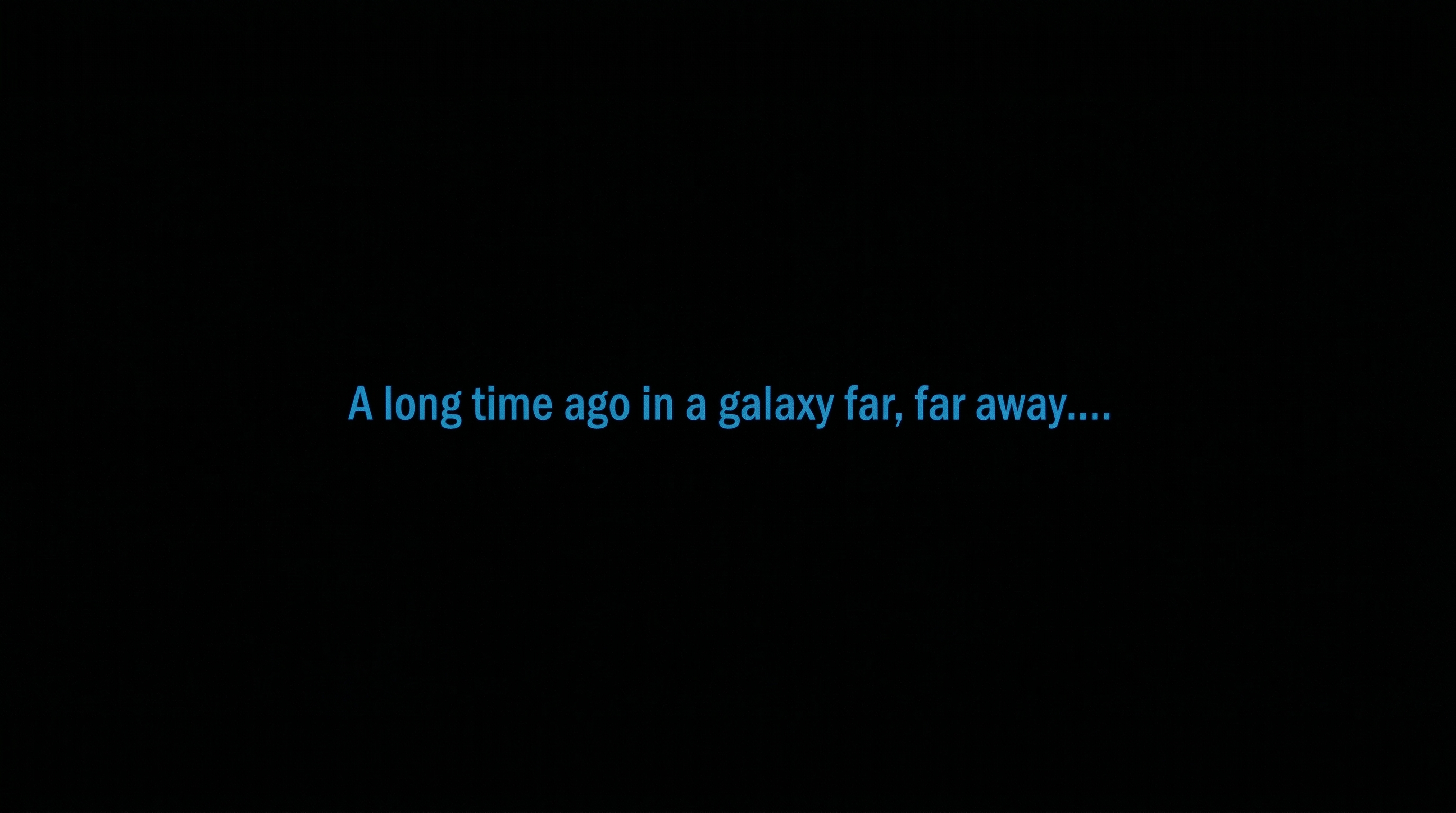
Star Wars films have no opening credits. Zero. The film begins with the Lucasfilm logo, the “A long time ago in a galaxy far, far away…” card, and then the opening crawl — which contains only the episode title and story text, no personnel names.
This was a deliberate choice by George Lucas, who wanted to immerse the audience immediately. It was also a violation of Directors Guild of America rules, which at the time required the director’s name to appear in the opening credits.
The timeline of the dispute:
- 1977: A New Hope releases with no opening credits. The DGA fines Lucas approximately $250,000.
- 1980: The Empire Strikes Back — directed by Irvin Kershner — also omits opening credits. The DGA fines Lucas again and threatens action against Kershner personally.
- 1981: Lucas pays the fines and formally resigns from the DGA, the Writers Guild, and the Academy of Motion Picture Arts and Sciences.
- 1983 onward: Because Lucas is no longer a guild member, subsequent Star Wars films aren’t bound by DGA opening credit requirements (though the productions still comply with SAG-AFTRA and IATSE end credit rules).
The practical consequence: every credit that would have appeared in the opening — director, writer, producers, lead cast — gets pushed to the end. This made the Star Wars end credits the sole location for all personnel acknowledgment, and it helped normalize the “main-on-end” credit format that most blockbusters now use.
Lucas wasn’t the first to skip opening credits (2001: A Space Odyssey and The Godfather did it earlier), but Star Wars was the first franchise to make it a non-negotiable signature across an entire series of films. The DGA eventually relaxed its opening credits requirements, in no small part because of this precedent.
Star Wars end credits font
Typography & Design Across the Saga
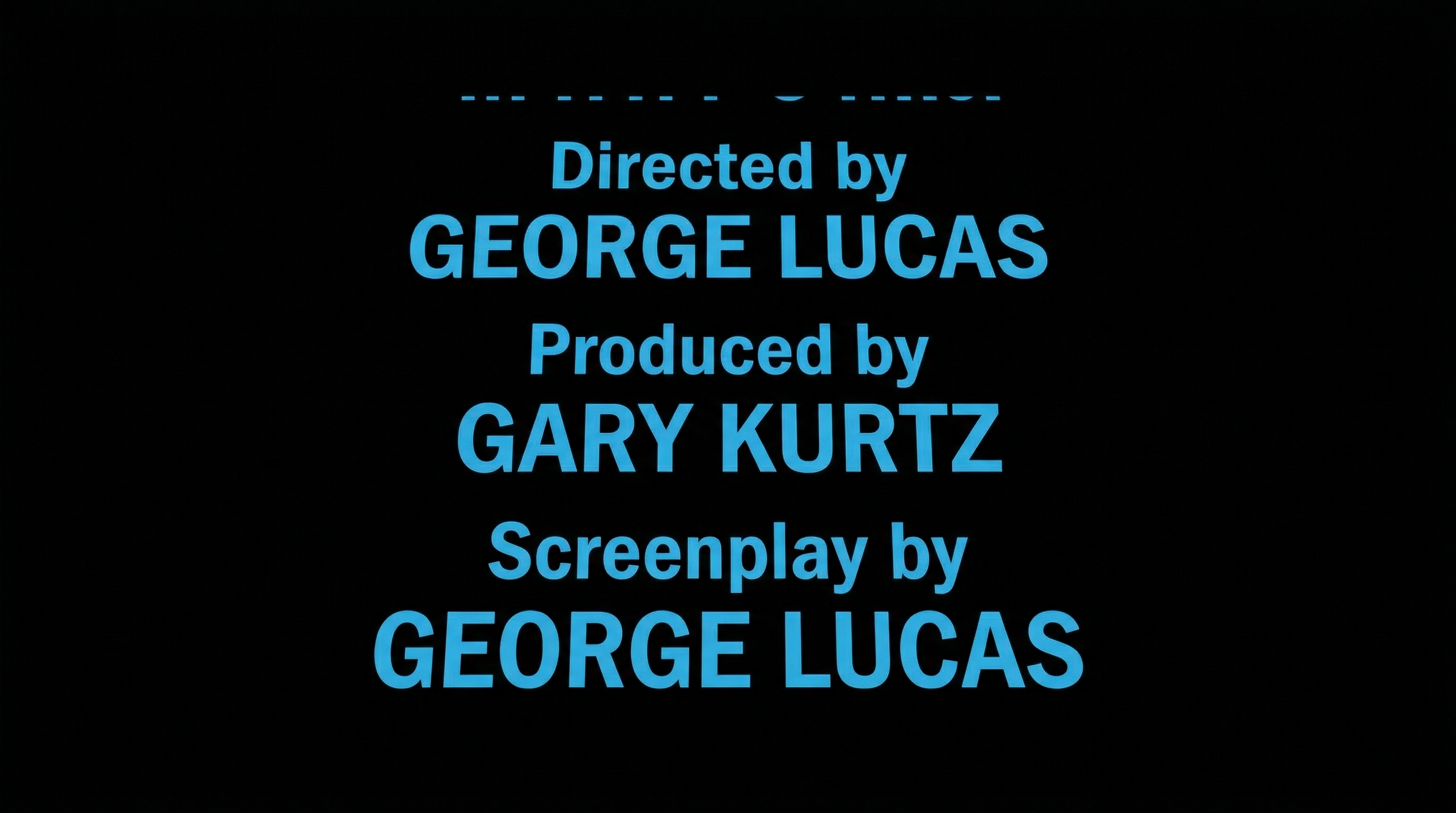
The Star Wars end credits use a consistent typographic identity: condensed sans-serif letterforms, blue on black, all-caps for names and mixed-case for titles.
Font identification by era:
| Era | Films | End Credits Font | Source |
|---|---|---|---|
| Original Trilogy (1977-1983) | Episodes IV-VI | Trade Gothic Bold No. 2 | Fonts In Use |
| Special Editions (1997) | Episodes IV-VI (re-release) | Updated to News Gothic Bold in some elements | Fan analysis |
| Prequel Trilogy (1999-2005) | Episodes I-III | Univers family (likely Univers 59 Ultra Condensed) | Forum consensus |
| Sequel Trilogy (2015-2019) | Episodes VII-IX | Univers family, tighter tracking | Industry observation |
The font confusion in online sources — where you’ll see claims of Arial, Helvetica, or Franklin Gothic — stems from two factors. First, Trade Gothic, News Gothic, and Univers are visually similar grotesque sans-serifs that differ primarily in stroke weight and terminal shapes. Second, different versions of the same film (theatrical, VHS, DVD, Blu-ray, Disney+) may use slightly different renders. Franklin Gothic Medium Condensed is the fan-recommended substitute for recreating the look, per multiple forum threads on theforce.net.
Design specifications:
- Text color: Blue on black — RGB approximately (28, 165, 225), matching the “A long time ago…” opening card
- Name-to-title ratio: Names (e.g., “GEORGE LUCAS”) appear approximately 20% larger than role titles (e.g., “Directed by”)
- Alignment: Centered throughout
- Scroll speed: Notably slower than most modern blockbusters — paced to match the orchestral score, giving each credit a moment of legibility
The visual bookending is deliberate: the same blue text that opens the film with “A long time ago…” closes it in the end credits. Designer Dan Perri, who created the original Star Wars title sequence, established this color palette in 1977. Suzy Rice designed the original Star Wars logotype (based on Helvetica Black but hand-drawn), and Joe Johnston refined it for widescreen — but the end credits typography was always a separate, more restrained design system.
For a deeper look at how font choices shape credits, see our guide to the best fonts for film credits.
Star Wars credits crew size evolution
From 150 to 3,000: How the Credits Grew
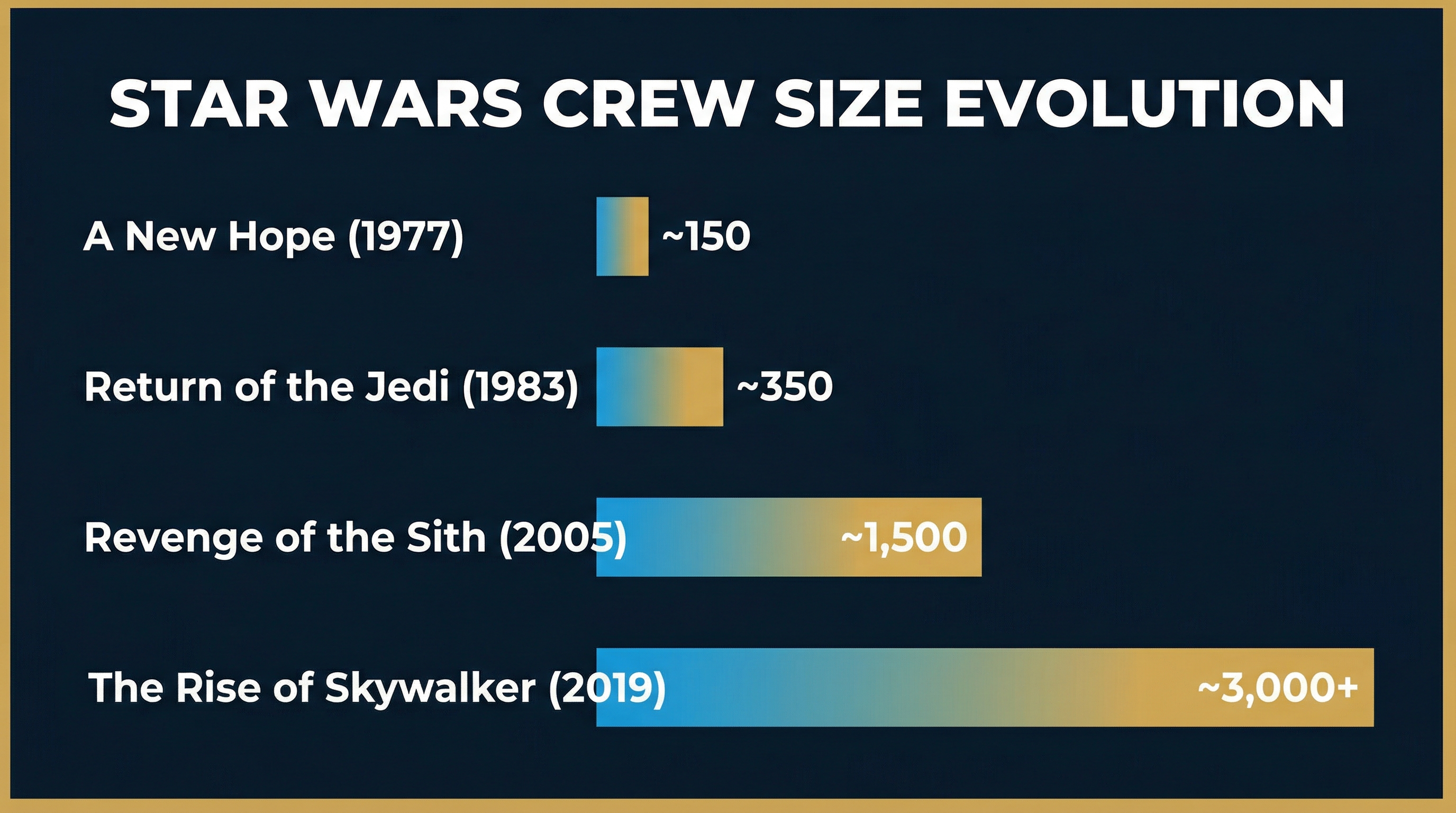
The most dramatic story the Star Wars end credits tell isn’t in any single name — it’s in the sheer volume of names. The original 1977 film credits roughly 150 people in under 5 minutes. The Rise of Skywalker (2019) credits an estimated 3,000+ people in over 12 minutes.
What drove the explosion:
| Factor | Impact |
|---|---|
| Visual effects | A New Hope had one VFX house (ILM, founded for the film). Modern entries credit 5-10 VFX vendors, each with dozens to hundreds of artists. |
| Digital production | Prequel-era digital filmmaking added entirely new departments: digital asset management, motion capture, previsualization. |
| Union expansion | IATSE and SAG-AFTRA crediting requirements expanded over four decades, mandating on-screen acknowledgment for more crew categories. |
| Global production | Sequel trilogy films shot across multiple countries, adding location-specific crews for the UK, Abu Dhabi, Ireland, and more. |
| Merchandising/corporate | Modern credits include Lucasfilm Story Group, marketing personnel, and Disney corporate executives — roles that didn’t exist in 1977. |
For context, Stephen Follows’ research on Hollywood crew sizes found the average top film credits 588 people (1994-2013 data). Star Wars exceeded that average by the prequel era and more than quintupled it by 2019. Revenge of the Sith alone had 99 people in the costume department.
The credits accommodate this growth purely through length — the typography, scroll speed, and formatting remain consistent. Star Wars never adopted the two-column or three-column scroll that some VFX-heavy productions use to compress credit runtime. Every name gets the same single-column treatment it would have gotten in 1977.
Star Wars end credits music
John Williams’ Score Design for the Credits
The Star Wars end credits aren’t accompanied by a single track looped to fill time. John Williams composed a distinct thematic medley for each film’s credits — a curated sequence of the score’s key themes arranged to reflect the emotional arc of the story just told.
Original Trilogy:
- A New Hope (1977): Throne Room fanfare into the main Star Wars theme — pure triumph. The credits music mirrors the medal ceremony’s energy and sustains it.
- The Empire Strikes Back (1980): The Force theme, transitioning to Han and Leia’s love theme, then the Imperial March — hope giving way to uncertainty. The credits musically summarize the film’s emotional trajectory: mysticism, romance, defeat.
- Return of the Jedi (1983): Ewok celebration theme (the underdog victory) into Luke and Leia’s theme — emphasizing family reunification over galactic politics.
Prequel Trilogy:
- The Phantom Menace (1999): “Duel of the Fates” (establishing the Sith as a genuine threat) into Anakin’s Theme — which Williams deliberately composed with melodic DNA from the Imperial March, foreshadowing Anakin’s fall.
- Attack of the Clones (2002): “Across the Stars” (the Anakin/Padmé love theme) woven with hints of the Imperial March — romance laced with darkness.
- Revenge of the Sith (2005): Opens with the A New Hope main theme (bridging to the original trilogy), moves through “Battle of the Heroes,” and resolves with the Throne Room/Force theme — tragedy yielding to hope.
Sequel Trilogy:
- The Force Awakens (2015): Rey’s Theme and the Resistance March dominate — new generation, new hope.
- The Last Jedi (2017): Variations on the Force theme and Rose’s theme — contemplative, less triumphant.
- The Rise of Skywalker (2019): A retrospective medley touching nearly every major saga theme — a musical summation of 42 years.
The music isn’t incidental to the credits experience. Williams and Lucas made a deliberate choice: the end credits function as a coda, letting the audience decompress while the score revisits the emotional beats of the preceding two hours. This matches the “coda credits” function identified by film analysts — credits that grab the final emotional note and let it ring.
Star Wars end credits scene
Post-Credits Moments in the Star Wars Franchise
The Star Wars saga films do not have post-credits scenes. All nine episodic entries end cleanly after the credits scroll and studio logos. This is a deliberate tradition — the saga’s credits function as a formal ending, not a teaser.
However, The Phantom Menace (1999) includes a subtle exception: after the end credits music fades to silence and the screen goes black, Darth Vader’s mechanical breathing can be heard. This was the franchise’s first post-credits tease — predating Marvel’s convention by nearly a decade. According to Pablo Hidalgo’s Star Wars: Fascinating Facts, the breathing was absent from pre-release press screening prints, making it a surprise exclusively for general audiences.
Star Wars TV series have adopted post-credits content more freely:
- The Mandalorian Season 2: Boba Fett and Fennec Shand seize Jabba’s throne — setting up The Book of Boba Fett.
- Andor Season 1 finale: A reveal showing part of the Death Star under construction, recontextualizing Cassian’s prison labor.
- Ahsoka: End credits featured golden lines forming a star map, with fans decoding an alphabet from embedded planet names (Lothal, Garel).
The saga’s restraint on post-credits content means the end credits themselves serve as the final word — there’s no incentive to rush out of the theater. The Rise of Skywalker had no post-credits scene, a deliberate choice to mark the saga’s conclusion as definitive.
Guild compliance in the Star Wars credits
How the Credits Handle DGA, WGA, and SAG-AFTRA Rules
Star Wars has one of the most complicated guild compliance histories in cinema, starting with Lucas’s exit from the DGA and WGA in 1981.
Key compliance details across the saga:
- DGA: After Lucas’s resignation, the original and prequel trilogies operated outside DGA jurisdiction for the director credit. The sequel trilogy, produced under Disney, returned to DGA compliance — J.J. Abrams and Rian Johnson are DGA members, and their credits follow standard DGA placement rules (director credit as the last main title card).
- WGA: Lucas resigned from the WGA as well, which gave him flexibility in writer credit placement on the prequels. The sequel trilogy restored standard WGA credit arbitration — the “Written by” and “Story by” credits on The Force Awakens went through formal WGA process.
- SAG-AFTRA: All Star Wars films comply with SAG-AFTRA credit requirements. Cast credits appear in the end scroll, typically “in order of appearance.” The billing block cards for principal cast follow negotiated contractual order.
- IATSE: Below-the-line crew credits follow IATSE standards across all films. The prequel and sequel trilogies, with their UK-based shooting, also comply with BECTU (the British equivalent) crediting requirements.
Notable contractual credit details:
- “A Lucasfilm Ltd. Production” functions as a production company credit, appearing on its own card.
- Lucas took possessory credit on the prequels (“Written and Directed by George Lucas”) but notably avoided “A George Lucas Film” — a restraint that aligns with DGA guidance discouraging possessory credits even though he wasn’t bound by it.
- The sequel trilogy’s “A Film by” credit was not used for any entry, consistent with the DGA’s long-standing position against possessory credits for directors.
Star Wars end credits compared to other franchises
How Star Wars Credits Stack Up
Star Wars established a credits template that many franchises followed, but it remains more conservative than most modern blockbusters:
| Feature | Star Wars | Marvel (MCU) | James Bond |
|---|---|---|---|
| Opening credits | None | Minimal (logo only) | Elaborate title sequence |
| End credits style | Single-column scroll | Two-column scroll | Single-column scroll |
| Post-credits scene | No (saga films) | Yes (standard) | Rarely |
| Background | Solid black | Often themed artwork | Solid black |
| Typography | Consistent sans-serif | Varies by film | Varies by film |
| Music | Original thematic medley | Licensed tracks + score | Licensed song + score |
The most distinctive aspect of Star Wars end credits isn’t any single design choice — it’s the 40+ years of visual consistency. The same blue-on-black, single-column, Williams-scored scroll has appeared in every saga film. No other franchise of comparable scale has maintained that level of typographic discipline across four decades.
For a contrasting approach — minimal crew, maximum design intention — see our breakdown of Everything Everywhere All at Once’s end credits. Or for how a modern prestige drama handles similar guild requirements, see Oppenheimer’s credits breakdown.
Sources & Further Reading
- Fonts In Use: Star Wars Opening Crawl and Titles — definitive font identification
- Art of the Title: Dan Perri interview — original title designer’s account
- SlashFilm: The Credits Controversy — DGA dispute history
- Stephen Follows: How Many People Work on a Hollywood Film? — crew size research
- IMDb: Star Wars Full Credits — complete personnel listing
Want to create end credits with that classic Star Wars look? EndCreditsPro lets you generate professional credits with customizable fonts, scroll speeds, and guild-compliant ordering — no NLE plugins or motion graphics skills required.