What Is a Film Director in Film?
The last card before the picture. The only credit with a word count that’s contractually mandated. No other role on a production has its billing controlled this precisely.
The film director is the creative authority on a production — the person who transforms the screenplay into the visual and dramatic experience the audience sees. Every department head answers to the director: the Director of Photography (DP) for the visual language, the production designer for the physical world, the actors for their performances.
In the film credits hierarchy, the director occupies a singular position — the only above-the-line role governed by a detailed guild agreement specifying size, placement, duration, and even the exact phrase that must appear on screen.

What is a director in film?
Where the Director Fits in Production
The director sits above-the-line alongside the producer, writer, and principal cast. Below-the-line crew — everyone from the gaffer to the boom operator — execute the director’s vision. The director executes the producer’s plan, within the budget and schedule the producer controls.
That tension — creative authority without financial control — defines the role. The producer holds the money and the legal rights. The director holds the set.
Department hierarchy under the director:
- Director of Photography — leads camera, lighting, and grip departments
- Production Designer — leads art, set, and props departments
- Sound Mixer — leads on-set audio
- First Assistant Director (1st AD) — manages set logistics and the shooting schedule
The First Assistant Director is the director’s operational counterpart, running the set so the director can focus on performance and composition. They are not the same role and do not share a credit line.
What does a director do?
Responsibilities Across All Three Phases
Pre-production:
- Breaks down the script with visual plans for each scene
- Chooses key department heads (DP, production designer, costume designer)
- Runs casting sessions and makes final casting decisions (with producer)
- Creates shot lists and storyboards for complex sequences
- Attends location scouts to choose sets
Production:
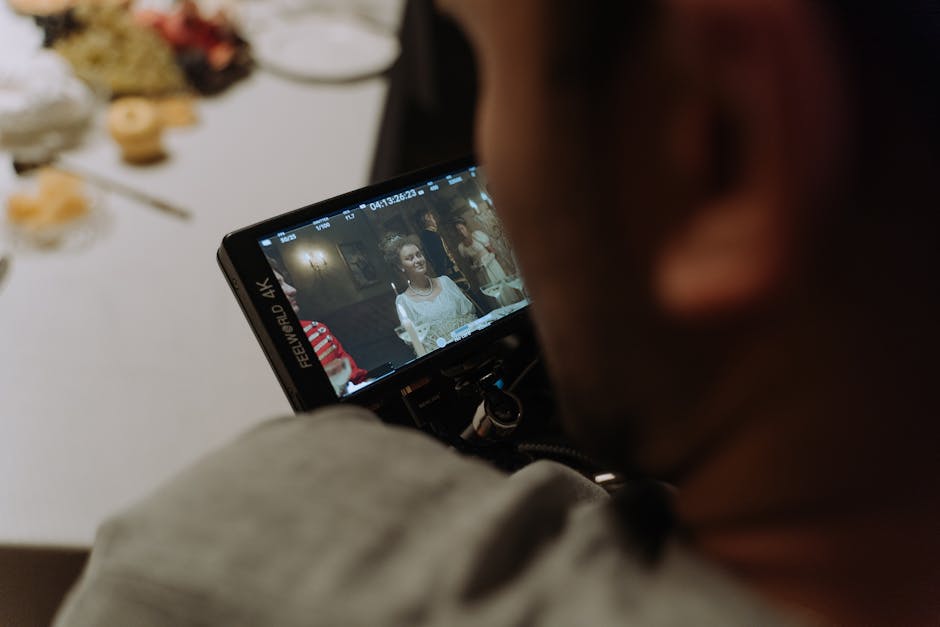
- Calls action and cut
- Reviews playback and approves takes
- Gives performance direction to actors
- Collaborates with the DP on camera placement, lens choice, and lighting
- Manages the shooting schedule in real time with the 1st AD
Post-production:
- Attends picture editorial sessions; delivers the director’s cut
- Reviews VFX, color grading, and sound mix
- For established directors: exercises final cut privilege (contractual, not automatic)
- Participates in DGA-required screenings before delivery
Where does the director appear in film credits?
The Director’s Exact Position in Opening and End Credits
Opening credits:
The director receives the last title card before the picture begins. This is the premium position — the most impactful moment in the title sequence. According to the Descript film credits hierarchy, the director is card #16 in a standard 16-element opening sequence, appearing after producers, writers, and casting.
The card reads:
Directed by
FIRSTNAME LASTNAME
Or, for episodic television:
Directed by
FIRSTNAME LASTNAME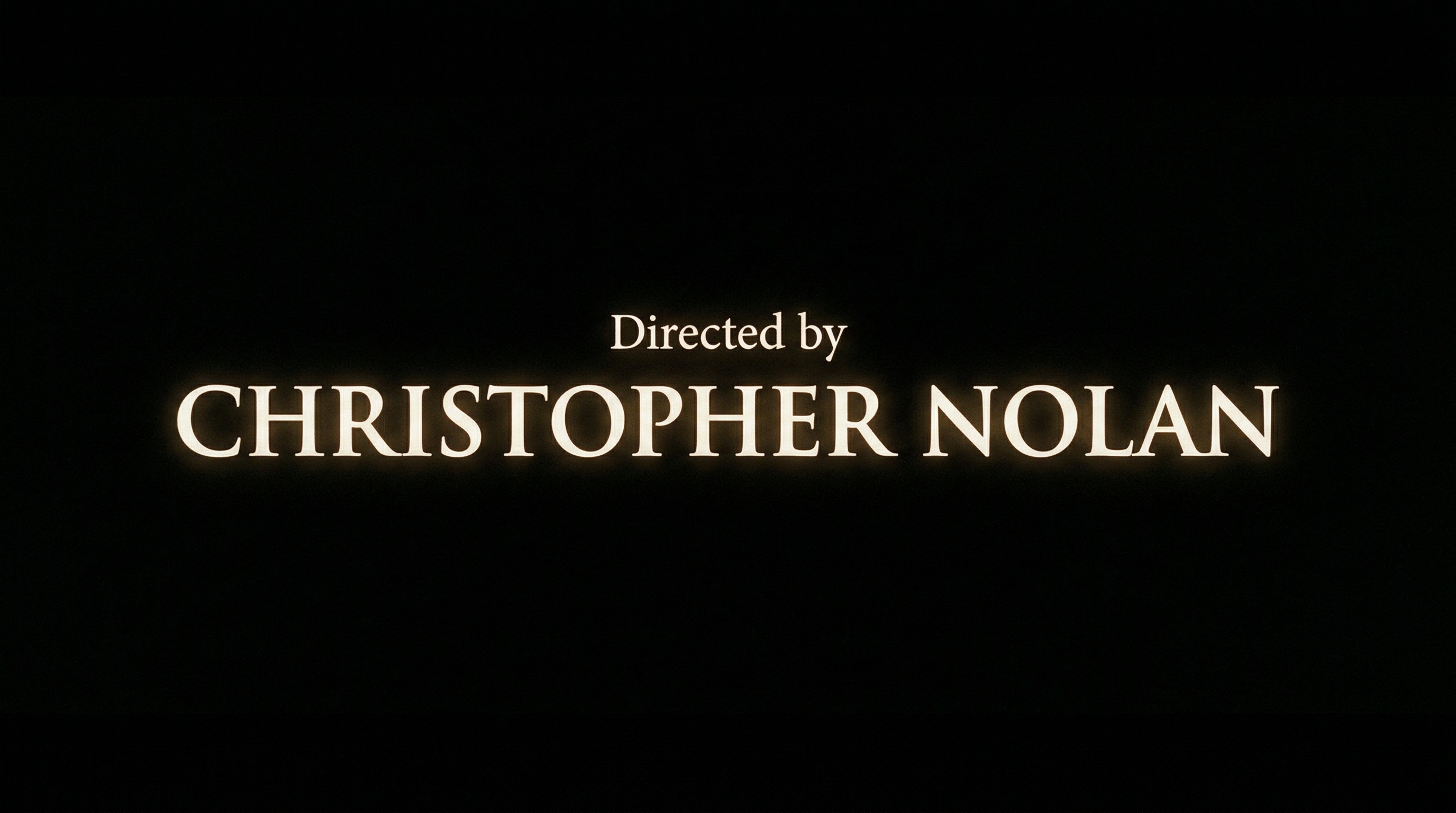
End credits:
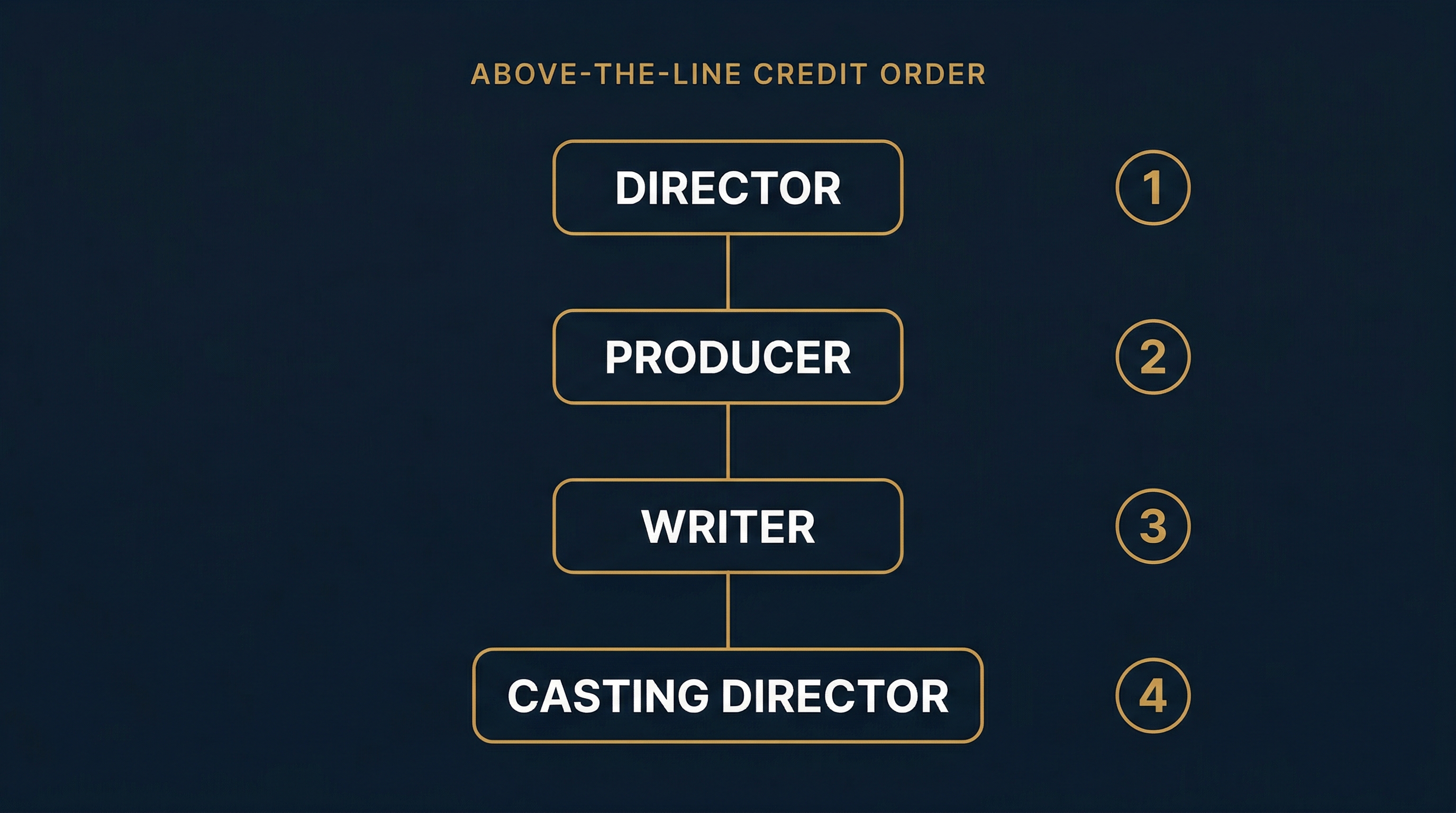
In the end crawl, the director appears in the above-the-line block at the very beginning — typically the first credit after any cast recap. The standard end crawl above-the-line order is:
| Position | Credit |
|---|---|
| 1 | Director |
| 2 | Producer(s) |
| 3 | Writer(s) |
| 4 | Casting Director |
| 5 | Below-the-line crew (departments) |
Some productions reverse Director and Producer order in end credits, but the DGA’s requirements govern on-screen placement, and the “Directed by” card must appear separately before picture regardless of how the end crawl is organized.
Feature film vs. television:
For feature films, the director’s card appears at the end of the opening title sequence, on a separate card, before the first scene.
For television, the director’s card appears either before the first scene or after the last scene — whichever the production chooses. When split credits run before the first scene, the director’s card is the last solo card before the episode begins.
How to credit a director correctly
Exact Format and Common Variations
The only acceptable directorial credit phrase is “Directed by.” The DGA prohibits alternatives like “Direction by,” “Director,” or any other form for theatrical and television productions covered under the Basic Agreement.
Standard format:
Directed by
FIRSTNAME LASTNAME
Multiple directors (rare):
If a production employs two directors — for separate units or under unusual circumstances — each receives a separate card. They do not share a card. The DGA requires that only one person serve as director on each unit.
Director-writer combination:
When the same person writes and directs, two separate credits appear. The writer credit appears in the writer’s position; the director’s card appears last before picture. They are never combined into a single card for DGA-covered productions.
Director-cinematographer combination:
For low-budget independent productions, the same person sometimes directs and operates camera. The DGA has no rule against this, but both credits appear separately in the end crawl — the “Directed by” card in its standard position, and the cinematography credit within the camera department block.
What credit the director does NOT share:
The director’s card is always a solo card. No other names appear on it.
DGA director credit requirements
What the DGA Mandates
The Directors Guild of America controls director credit for all DGA-signatory productions. The rules are specific and contractually enforceable:
Credit phrase: Only “Directed by” is permitted.
Card position: Separate card, last title before principal photography begins (for features). No other name or credit may share the card.
Size: The director’s name must be no smaller than 50% of the motion picture’s title size — or the largest credit given to any other person, whichever is greater. In practice, this means the director’s name is always at least as large as any producer’s or writer’s name in the opening credits.
Duration: The card must remain on screen for a minimum of 2 seconds for films under two hours, and 3 seconds or more for longer works.
Television: For prime-time dramatic programs under the Basic Agreement, the director receives credit equal to at least 40% of the episode or series title size.
Paid advertising: In paid advertising the director’s credit must be at least 15% of the size of the title type, and never smaller than any credit given to a non-actor (35% on outdoor ads that carry other names; DGA Basic Agreement, Article 8-203). The poster billing block size calculator does the arithmetic.
A DGA Credits Department reviews submissions for every covered feature film and television program. Productions submit their proposed credit blocks; the Guild verifies compliance before the film is locked.
What is a possessory credit in film?
The “A Film By” Credit — When It’s Allowed
A possessory credit is a credit that attributes ownership of the film to a single person — typically “A Film by [Director]” or “[Director]‘s Film.” These appear before or after the film’s title, granting the director a form of authorship credit separate from “Directed by.”
Possessory credits are controversial because they imply the film is entirely the director’s creation, which writers, producers, and other creatives dispute.
DGA rules on possessory credits:
- Possessory credits are prohibited for first-time feature film directors under the DGA Basic Agreement, unless the director brought the source material to the employer and performed substantial development services.
- Established directors negotiate possessory credits individually in their deal terms. They are not automatic.
- Possessory credits require the written consent of any other creative with whom the credit might conflict (typically the writer).
Who uses them:
- Steven Spielberg (“A Steven Spielberg Film” on Schindler’s List, Saving Private Ryan)
- Martin Scorsese (“A Martin Scorsese Picture” on Goodfellas, The Departed)
- Christopher Nolan (most productions from The Dark Knight onward)
Who can’t get them automatically:
- First-time feature directors
- Directors on any production where the studio or producer objects
The WGA and DGA have long-standing tension over possessory credits. The WGA position is that possessory credits erase the writer’s contribution; the DGA position is that they reflect the director’s authorial role. The issue comes up in contract negotiations regularly.
What happens when a director wants their name removed?
Alan Smithee and Director Pseudonyms
When a director loses creative control over a project — typically due to studio re-editing — they can apply to the DGA to have their name replaced with a pseudonym. From 1968 to 2000, the official DGA pseudonym was Alan Smithee.
The pseudonym required a formal panel hearing. The director had to prove they lacked creative control. If approved, the credit read “Directed by Alan Smithee,” and the real director was contractually forbidden from discussing the film.
Notable uses:
- David Lynch on the TV broadcast cut of Dune (1984) — his screenplay credit became “Judas Booth”
- Dennis Hopper on Catchfire (1990), before a later director’s cut restored his name
The system collapsed in 1998 when An Alan Smithee Film: Burn Hollywood Burn made the pseudonym famous. The film — itself subject to director interference — grossed $45,779 on a $10 million budget and won five Razzie Awards. By 2000, the DGA retired Alan Smithee. Directors now receive individualized pseudonyms if they qualify.
Walter Hill used “Thomas Lee” for Supernova (2000). David O. Russell was credited as “Stephen Greene” for Accidental Love (2015).
Director vs. First Assistant Director
Two Different Roles, Often Confused
The director and the first assistant director (1st AD) are frequently confused by newcomers to the industry. They are distinct roles with separate credits, separate contracts, and separate union agreements.
| Director | First Assistant Director | |
|---|---|---|
| Guild | DGA | DGA (separate classification) |
| Responsibilities | Creative decisions, performance, visuals | Schedule management, set operations, safety |
| Reports to | Producer | Director |
| Credit position | Last title card before picture | End crawl, AD department block |
| Credit format | ”Directed by" | "First Assistant Director” |
The 1st AD runs the set so the director can direct. On large productions, there’s also a Second Assistant Director handling background and paperwork, reporting to the 1st AD.
Notable Directors and Their Credit Practices
Steven Spielberg negotiates possessory credits (“A Steven Spielberg Film”) on all his productions and has done so since Close Encounters of the Third Kind (1977).
The Coen Brothers — Joel and Ethan Coen — co-directed together for decades, crediting themselves as a single entity: “Written and Directed by Joel and Ethan Coen.” Since 2021, they work separately, each directing independently.
The Wachowskis (Lilly and Lana Wachowski) operated similarly on The Matrix trilogy and Cloud Atlas, sharing a single director credit.
Michael Bay and Ridley Scott are among the directors who received Alan Smithee-equivalent pseudonyms under post-2000 DGA procedures for specific projects when creative control issues arose.
Sources & Further Reading
- DGA Credits Department — Official DGA credit submission process and compliance requirements
- DGA Basic Agreement — Full credit terms for features and television
- IMDB Crew Credit Guidelines — How IMDB handles director credits for database entries
Create broadcast-ready end credits with EndCreditsPro — format “Directed by” and your full above-the-line block automatically, in the correct hierarchy and order. Generate guild-compliant credits in minutes.