Does Movie Runtime Include Credits? The Industry Answer
When a film is listed at 182 minutes, every one of those minutes counts — including the final 10 spent watching names scroll.
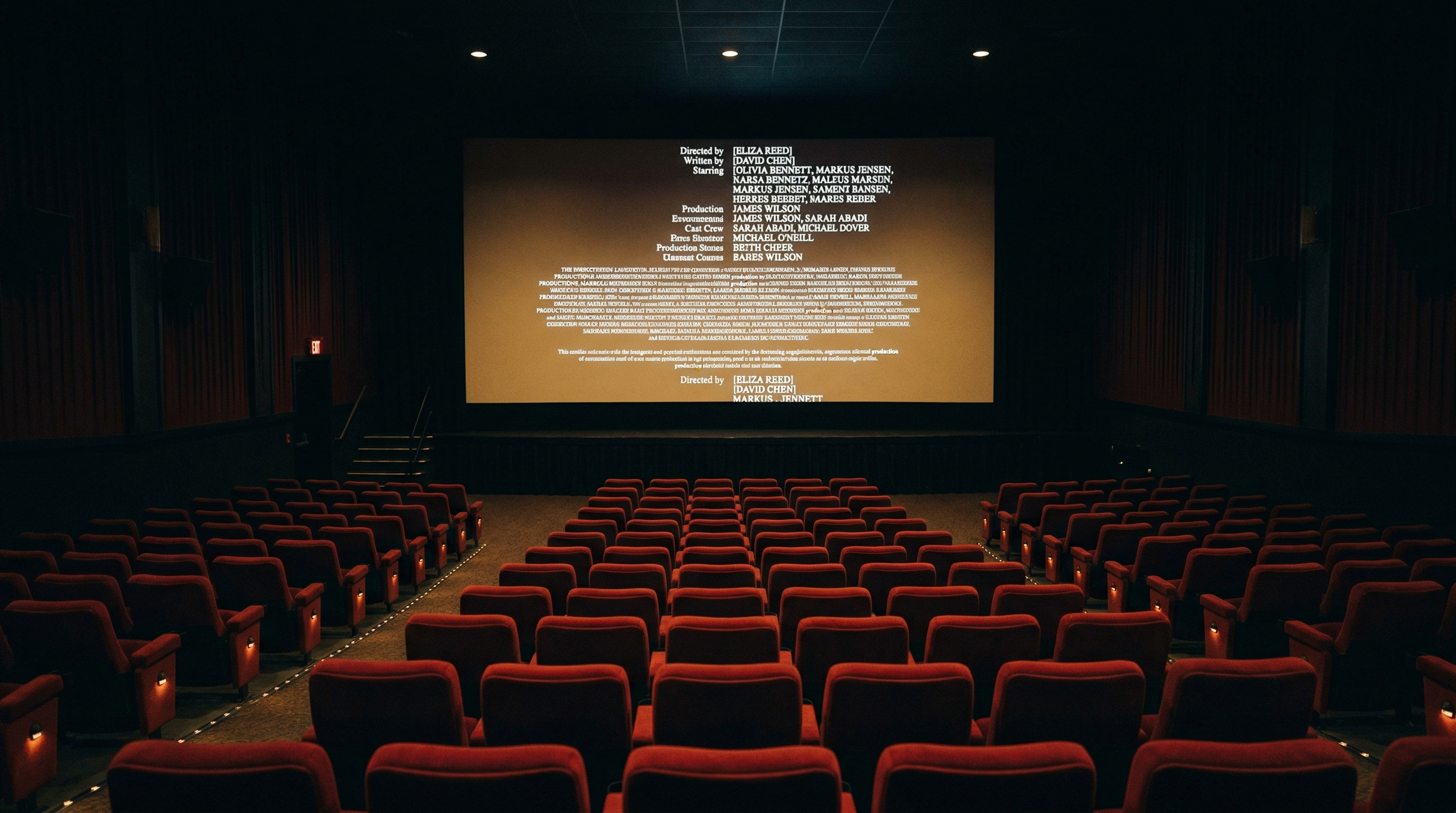
The answer is yes. Movie runtime includes end credits. This is not an informal convention — it is the documented policy of IMDb, the standard used by studios, distributors, and theater chains worldwide. If a film is listed at 120 minutes, that runtime begins with the first distributor logo and ends at the very last frame of the closing credits.
What the listed runtime does not include: theatrical trailers and pre-show commercials. Those run before the feature begins, and no major database or theater chain folds them into the official runtime.
Does Movie Runtime Include Credits
The IMDb Standard, Explained
IMDb is the authoritative source for film runtimes, and their policy is explicit. The help documentation states:
“For theatrical releases the timing begins from the first distributor logo and ends at the last frame of the end credits. If there are any mid or post credits scenes, these should also be included in the running time.”
This means the runtime clock starts the moment the studio logo appears — before the story begins — and stops only after the final credit has faded. Post-credits scenes are part of the runtime, not a bonus appended to it.
Letterboxd sources its running times from The Movie Database (TMDb), which follows the same convention. Rotten Tomatoes, Fandango, and most theatrical booking systems use the same base data.
Why Credits Count as Runtime
The credits roll while the film continues to run in the projector — or, in the digital era, while the digital cinema package (DCP) plays. Legally and technically, the credits are part of the film.
This matters beyond semantics. DGA, WGA, and SAG-AFTRA collective bargaining agreements mandate that certain credits appear on screen for minimum durations. These contractual obligations are embedded in the film itself, not tacked on afterward. For a deeper look at what guilds require in the credits, see Guild Credit Requirements: DGA, WGA, and SAG-AFTRA Rules.
A VFX supervisor, for example, has contractually guaranteed placement and screen time in the end credits. That screen time is part of the film’s runtime. The person responsible for the visual design of those scrolling titles is the title designer — a role that became essential as closing credits grew from a single card into multi-minute sequences.
How Long Are Movie Credits
What the Data Shows
If the runtime includes credits, the next question is: how much of that runtime is credits? The answer depends heavily on the film’s scale and genre.
| Film | Total Runtime | Approx. Credits Duration |
|---|---|---|
| Jaws (1975) | 124 min | ~3 min |
| The Lord of the Rings: Return of the King (2003) | 201 min | ~10 min |
| Avengers: Endgame (2019) | 181 min | ~12 min |
| Oppenheimer (2023) | 180 min | ~9 min |
| Barbie (2023) | 114 min | ~7 min |
| Spider-Man: Across the Spider-Verse (2023) | 140 min | ~10 min |
| Dune: Part Two (2024) | 166 min | ~9 min |
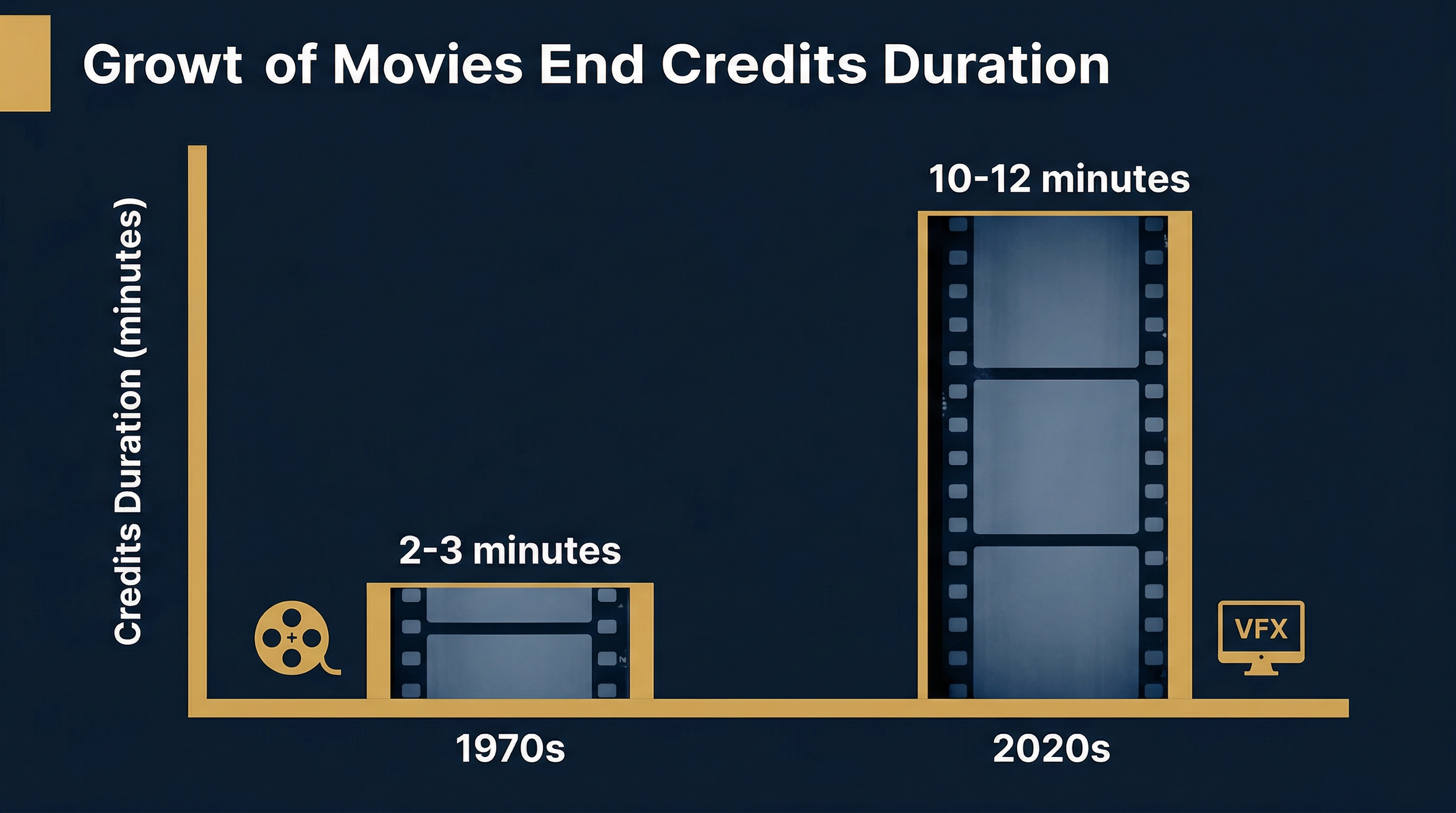
The pattern: a standard Hollywood feature runs 7 to 12 minutes of credits. Indie films with smaller crews can finish in 3 to 4 minutes. VFX-heavy productions with thousands of digital artists regularly exceed 10 minutes. For a comprehensive look at what goes into building a credit sequence — and why it takes as long as it does — see The Complete Guide to Film End Credits.
For a full breakdown with more than 20 films and a formula for estimating your own credits length, see How Long Are Movie Credits? Duration Data for Real Films.
Why Credits Have Gotten Longer
In the 1970s, most feature films wrapped credits in 2 to 3 minutes. Jaws (1975) credits run under three minutes. By the 2020s, a mid-budget film with significant visual effects routinely runs 8 to 10.
Three forces drive the expansion:
- Crew size growth. A 1970s action film might have 150 crew members. A modern Marvel production credits over 3,000.
- VFX labor. Digital effects require entire studios of artists, technical directors, and coordinators — each entitled to a screen credit.
- Guild expansion. As union membership has grown and contracts have evolved, more crafts have secured mandatory credit placement. A unit production manager must be credited. So must the executive producer. So must hundreds of others.
Does Movie Runtime Include Trailers
The Theaters Question
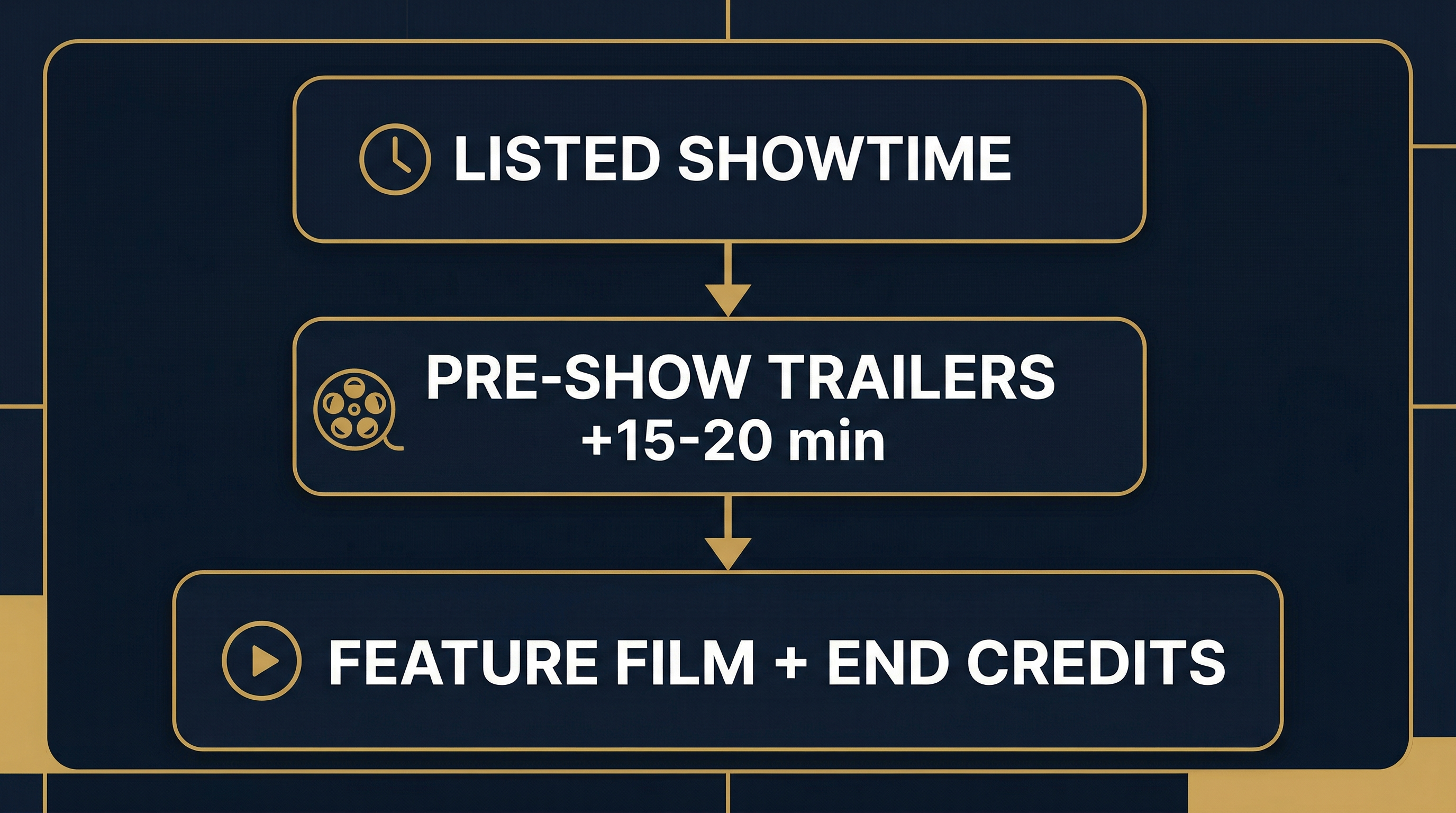
This is where viewers frequently get confused. When AMC or Regal lists a film at 2:15 PM, the film is not what starts at 2:15. The feature typically begins 15 to 25 minutes after the listed time, after a pre-show reel of trailers and advertising.
AMC’s own FAQ is clear: “The listed runtime is the duration of the feature film. The feature film does not start at the listed showtime.”
So the runtime you see — 120 minutes, 180 minutes — reflects only the feature, including its credits. It does not account for trailers. When planning around a theater visit, add 15 to 25 minutes for the pre-show.
The Streaming Question
Streaming platforms complicate the picture. Netflix, Prime Video, and Disney+ each handle runtime slightly differently.
On Netflix, the runtime displayed on a title’s info page typically matches the theatrical runtime — credits included. However, Netflix’s autoplay feature often cuts the credits short when the next episode or recommendation loads. The displayed runtime is accurate; the viewing experience may cut off before the final frame.
Disney+ and HBO Max generally show full credits for theatrical releases, though this can vary by title and region. If a post-credits scene is part of the story — as with many Marvel and DC productions — it is always included in the displayed runtime regardless of platform.
How to Calculate When a Movie Will End
A Practical Formula
For theater planning:
End time = Listed showtime + Pre-show (15–20 min) + Runtime
Example: Avengers: Endgame at 7:00 PM
- Listed showtime: 7:00 PM
- Pre-show: ~20 min → film starts at 7:20 PM
- Runtime: 181 min (3 hours 1 minute)
- End time: approximately 10:21 PM
That end time includes all credits. If you want the story-only runtime, subtract approximately 10–12 minutes for Endgame’s credits — but you would miss the post-credits scene, which is part of the official film.
For home viewing with a set window — say, an office event screening of Wicked’s 160-minute runtime — plan for the full listed time. The credits are not separable from the film.
Frequently Asked Questions
Does IMDb runtime include end credits?
Yes. IMDb explicitly states that theatrical runtime begins from the first distributor logo and ends at the last frame of end credits, including any mid- or post-credits scenes.
Does movie runtime include post-credits scenes?
Yes. Per IMDb’s policy, mid-credits and post-credits scenes are included in the official running time. A film listed at 150 minutes includes any footage that runs after the main credits begin.
Why do some sources list different runtimes for the same film?
Runtimes can vary by release version (theatrical cut vs. director’s cut), country of release, and whether a source is measuring from the first logo or from the first scene. Director’s cuts and extended editions have separate runtimes from the theatrical release.
Does streaming runtime match theatrical runtime?
Generally yes. Most streaming platforms use the theatrical runtime. The exception is when a platform licenses a different cut — a shorter international version, for example — in which case the listed runtime reflects that version.
Creating broadcast-ready end credits that meet guild standards takes more than a spreadsheet. EndCreditsPro is the film credits maker that generates properly formatted, guild-compliant credit sequences for feature films, television, and streaming productions.