What Is a Makeup Artist in Film?
When 60 makeup artists who built the Orc prosthetics for Bright were left out of Netflix’s credits, it made headlines. Their names weren’t on screen — but the Orcs were on every screen.
A film makeup artist designs and applies all makeup on actors and performers in a motion picture or television production. That includes beauty and corrective makeup for camera, character aging and transformation, wounds and injuries, and — in collaboration with specialized teams — prosthetic and special effects (SFX) makeup. The makeup artist works in the Makeup & Hair department, which reports directly to the director through the department head.
The makeup department hierarchy runs: Department Head Makeup (also called Key Makeup Artist) at the top, followed by individual Makeup Artists responsible for specific cast members, then Makeup Assistants who prep kits, maintain continuity documentation, and support the artists on set. On larger productions — major studio features, long-run episodic series — the team expands to include additional makeup artists for background players, a dedicated prosthetics artist, and a body makeup artist.
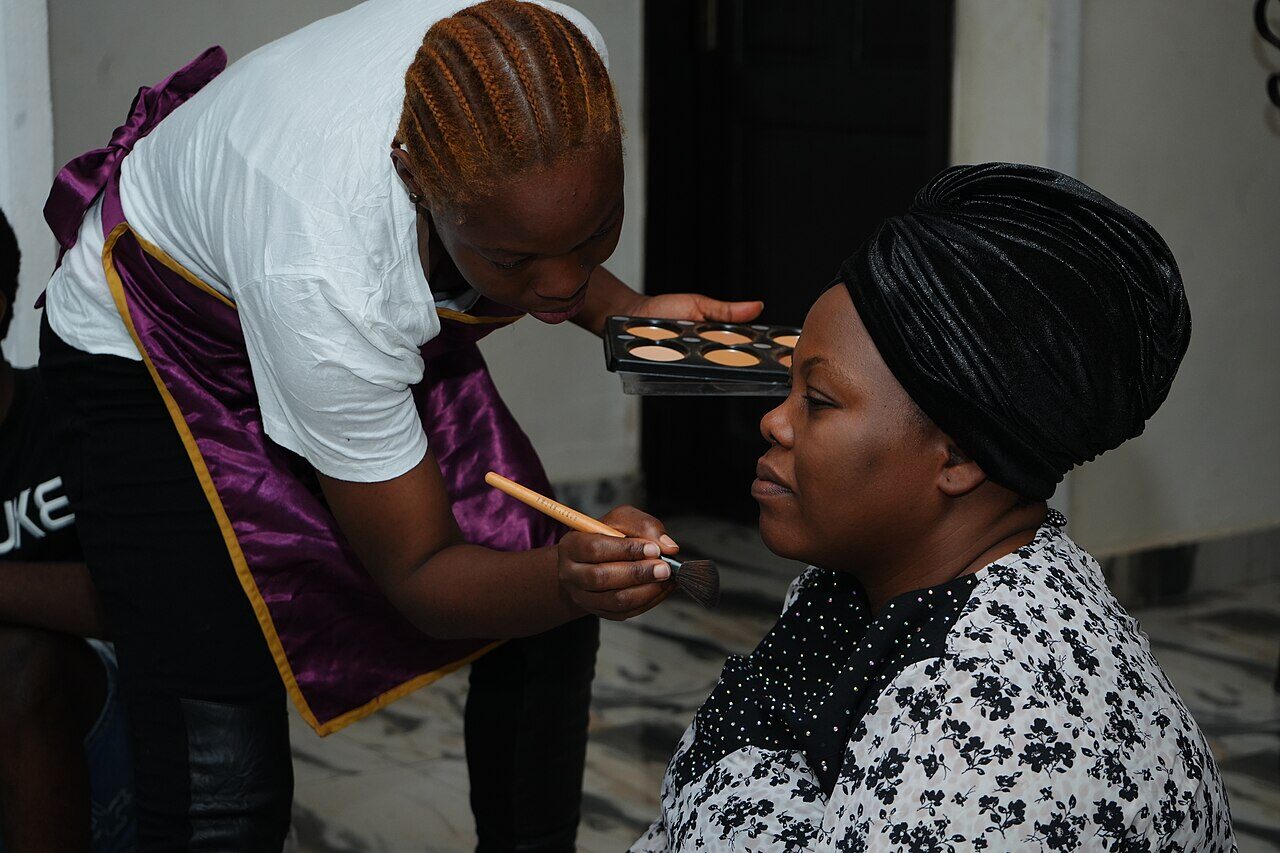
What does a film makeup artist do?
What Does a Film Makeup Artist Do?
The makeup department operates in two distinct phases: prep and principal photography.
During prep (pre-production), the Department Head Makeup reads the script, breaks down every scene by makeup requirement, creates character looks with the director, and tests those looks with camera tests in collaboration with the cinematographer. They establish the makeup budget and hire additional artists based on production scale.
On set during principal photography, the makeup department’s daily workflow runs:
- First call: Makeup artists arrive before talent — typically 1.5 to 3 hours before camera rolls, depending on the complexity of looks
- Morning prep: All principal cast are made up in priority order (leads first, supporting cast after)
- On-set coverage: At least one makeup artist remains on set during shooting for touch-ups between takes, matching continuity
- Continuity documentation: Every look is photographed — hair, makeup, and any special effects — to ensure frame-accurate matching across shooting days, reshoots, and pick-ups
- Wrap: Kit maintenance, product restocking, paperwork
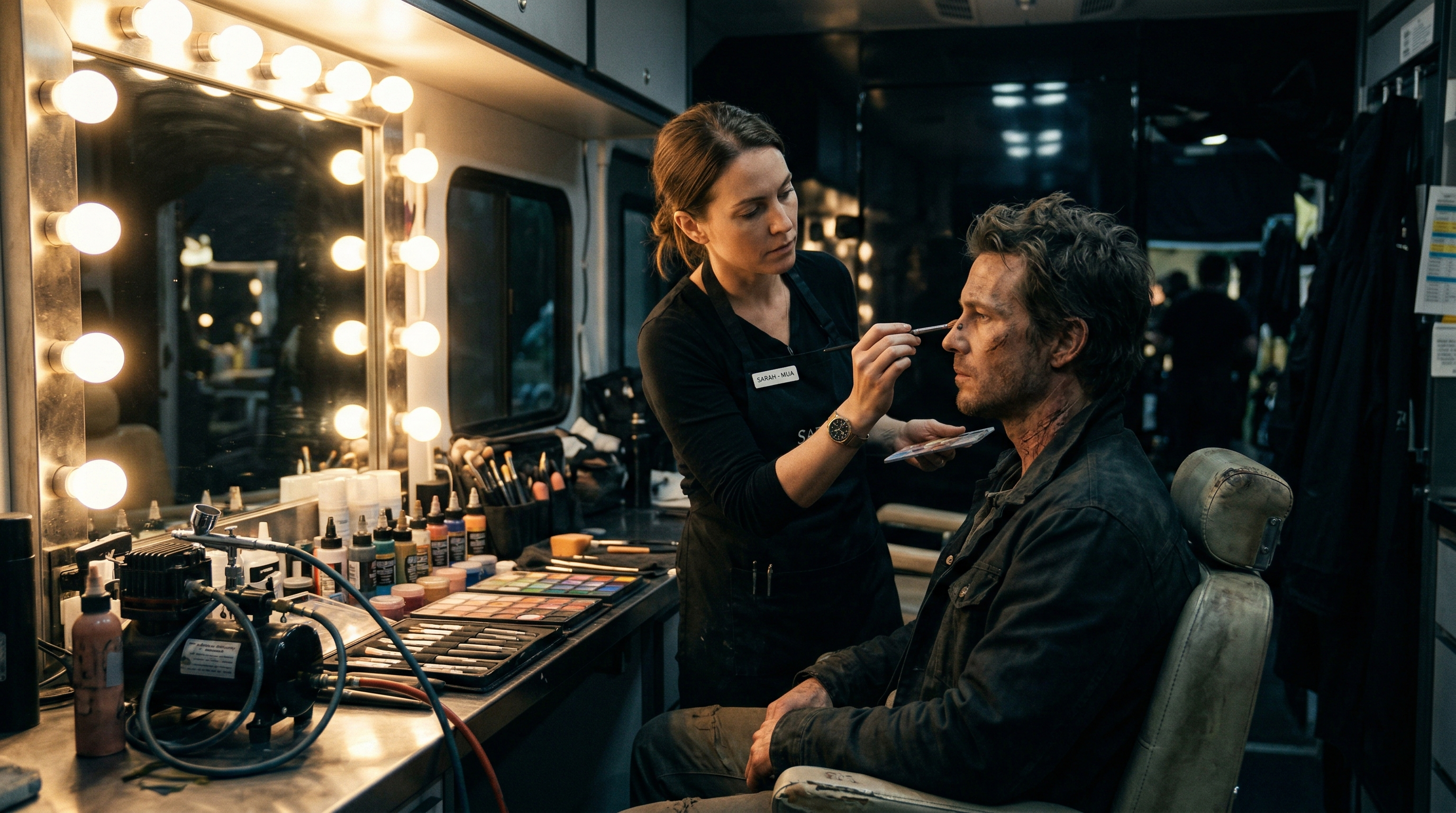
The makeup department owns the face. Anything below the neck that isn’t covered by wardrobe — body makeup, tattoo coverage, aging hands — typically falls under makeup jurisdiction as well. Jurisdictional lines with wardrobe, hair, and special effects are enforced partly through union contracts.
Tools of the trade include: airbrush systems (Temptu, Dinair), prosthetic adhesives (Pros-Aide, medical-grade silicone), a full corrective and character color palette, bald caps, aged skin materials, and detailed continuity polaroids.
Where does the makeup artist appear in film credits?
Where Does the Makeup Artist Appear in Film Credits?
The makeup department appears in the end credits scroll, grouped under a department header. Credit placement is governed by IATSE Local 706 (Make-Up Artists and Hair Stylists Guild) for union productions in the US.
Standard credit block structure:
MAKEUP DEPARTMENT

Department Head Makeup ................. Jane Doe
Key Makeup Artist ....................... Maria Santos
Makeup Artist ........................... Alex Kim
Makeup Artist ........................... Devon Walsh
Makeup Assistant ........................ Sam Rivera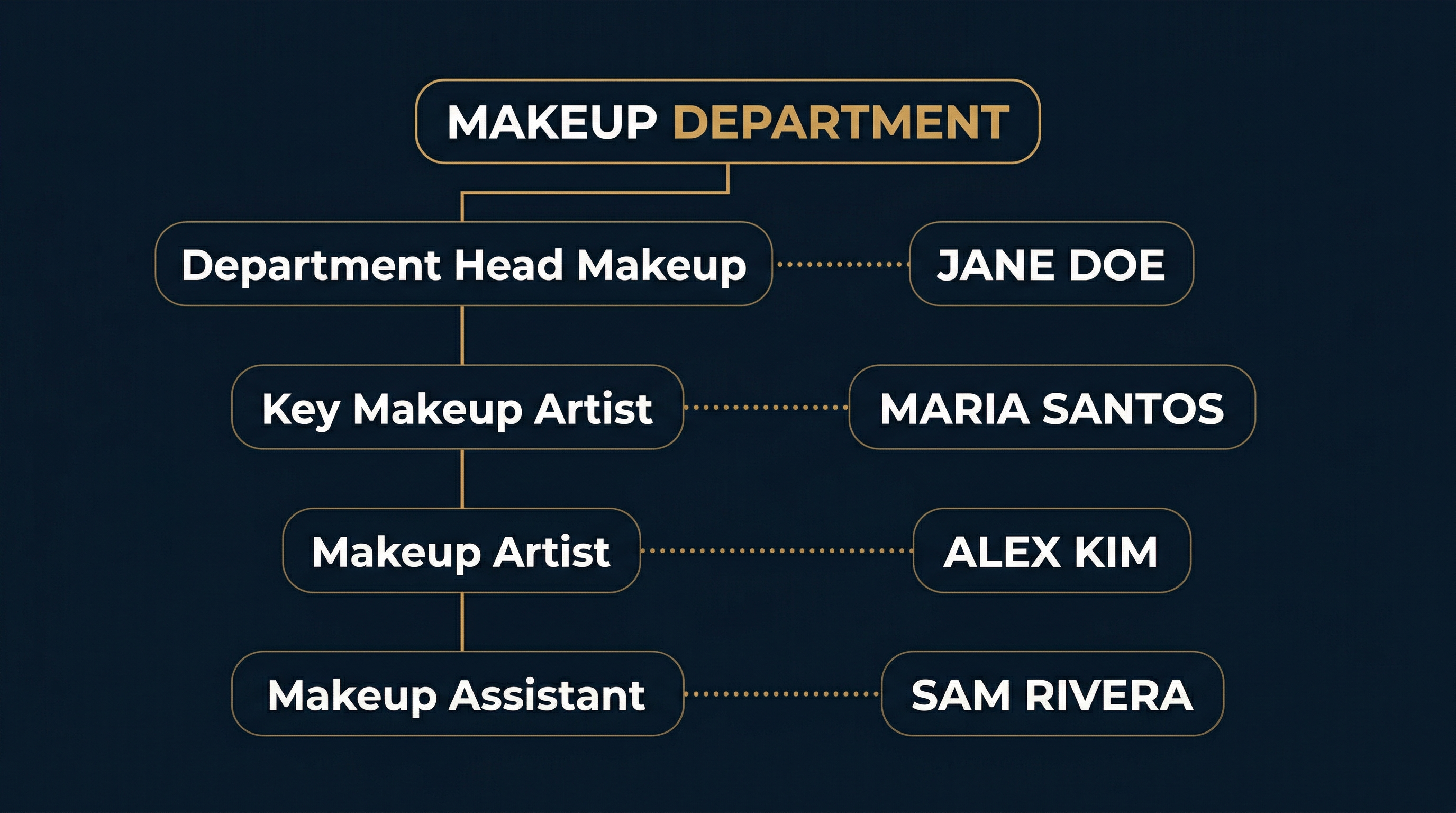
Key rules:
- Department Head receives the top credit within the makeup block. On some productions this title is “Makeup Department Head” or simply “Key Makeup Artist” — both are correct and interchangeable.
- Individual makeup artists are listed below the department head, typically in a hierarchy based on their rank and which cast members they covered.
- Background and crowd makeup artists may be listed collectively as “Additional Makeup Artists” or appear individually depending on the scale of the production and union agreements.
- Prosthetics and SFX makeup may be credited separately under “Special Makeup Effects” or “Prosthetic Makeup” — especially on productions with significant creature or transformation work where a specialized company (e.g., ADI, Amalgamated Dynamics, Legacy Effects) was contracted.
Opening credits: The makeup artist does not receive opening credits on feature films. The Department Head may receive an opening card on high-profile productions where the look is central to the film’s identity — a period piece with extensive period makeup, or a transformation-heavy role — but this is rare and typically negotiated individually.
Common credit title variations:
| Title | Usage |
|---|---|
| Department Head Makeup | Most common in feature films |
| Key Makeup Artist | Common in TV and independent films |
| Makeup Designer | Used when the HoD has a strong creative design role (prestige TV, high-end features) |
| Makeup Artist | Individual makeup artists below department head level |
| Personal Makeup Artist | Hired directly by a specific actor (paid by actor’s deal, not production) |
How to credit a makeup artist correctly
How to Credit a Makeup Artist Correctly
The exact format follows the two-column layout standard in end credits:
Department Head Makeup ............. JANE DOE
Key Makeup Artist .................. MARIA SANTOS
Makeup Artist ...................... ALEX KIM
Makeup Artist ...................... DEVON WALSH
What to avoid:
- Do not list the makeup department under “Hair & Makeup” as a single combined heading on union productions — IATSE Local 706 requires separate credits for makeup and hair departments
- Do not abbreviate “Department Head Makeup” to “MUA” or “Makeup” — these abbreviations are informal and do not belong in formal end credits
- If the same person served as both Department Head Makeup and Key Hair Stylist on a small production (common on micro-budget films), credit them for both roles on separate lines:
Department Head Makeup ............. JANE DOE
Key Hairstylist .................... JANE DOE
On productions covered by IATSE Local 706 collective bargaining agreements, the makeup artist’s credit title must match their hired title on their deal memo. Mismatching credits — billing someone as “Makeup Artist” when their deal memo says “Department Head” — can trigger grievances.
film makeup artist salary
Film Makeup Artist Salary & Day Rates
IATSE Local 706 sets minimum day rates through their collective bargaining agreement with the AMPTP (Alliance of Motion Picture and Television Producers). Actual rates depend on the union tier, production budget, and negotiated deals above minimums.
Approximate ranges (US, union):
| Role | Day Rate Range |
|---|---|
| Makeup Assistant | $350–$550/day |
| Makeup Artist | $500–$850/day |
| Department Head Makeup | $850–$2,500+/day |
| Makeup Designer (prestige TV) | $2,000–$5,000+/week |
Non-union rates vary significantly — independent productions in lower-budget tiers often pay $150–$400/day for makeup artists regardless of role. For non-union work, the makeup artist negotiates directly with the production.
Film makeup artist salary in the US averages $50,000–$90,000 annually for full-time employment, though most film and TV makeup artists work on a project-by-project basis and income depends heavily on the number of shooting days per year and rate negotiation.
Makeup Artist vs. Hair Stylist in Film Credits
Makeup Artist vs. Hair Stylist: How Their Credits Differ
Makeup and hair are separate IATSE Local 706 departments with separate credit blocks in the end credits, even though they often share a trailer on set and collaborate closely.
In credits:
MAKEUP DEPARTMENT

Department Head Makeup ............... Jane Doe
Makeup Artist ........................ Alex Kim

HAIR DEPARTMENT

Department Head Hair ................. Marcus Bell
Hair Stylist ......................... Priya Nair
The confusion arises because on many smaller productions — indie features, short films, low-budget TV — one person handles both makeup and hair. Even then, formal credits should list both roles if the person performed both functions, and the roles should still appear under separate department headers.
The hair stylist on a film is not the same role as a makeup artist. Makeup controls everything applied to the skin (base, color, prosthetics, aging). Hair controls wigs, cuts, coloring, and styling of the hair and beard. On a production with a costume designer and strong visual identity, all three departments — makeup, hair, and wardrobe — collaborate closely but maintain distinct credits.
how to become a film makeup artist
How to Become a Film Makeup Artist
The standard path involves three stages:
-
Training: Cosmetology school or a dedicated film/TV makeup program (Cinema Makeup School, Joe Blasco, Make-Up Designory/MUD). A cosmetology license is required in most US states to work professionally but does not specifically cover film makeup techniques — dedicated programs fill this gap.
-
Assisting: The film industry runs on relationships. Most working film makeup artists broke in by assisting established artists — carrying kits, doing background, handling touch-ups — for little or no pay while building credits and references. Union membership through IATSE Local 706 typically requires a minimum number of verified working days in the industry.
-
Joining IATSE Local 706: Union membership opens doors to major studio productions, minimum-rate protections, and benefit plans. Initiation fees and dues apply. Some artists join through work referrals and the union’s permit system before full membership.
The path is not fast. Many working makeup artists spend 3–7 years assisting before they hold a department head credit on a significant production.
Notable Film Makeup Artists
Notable Makeup Artists in Film History
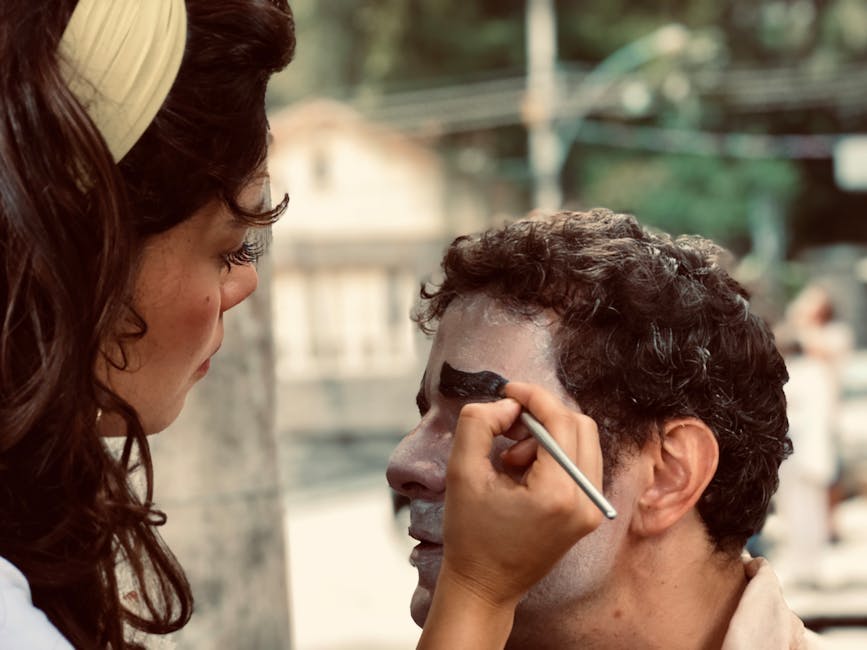
Ve Neill is one of the most decorated makeup artists in Hollywood history, with three Academy Awards for Beetlejuice (1989), Ed Wood (1995), and Mrs. Doubtfire (1994). Neill is also known for her extensive work on the Pirates of the Caribbean franchise.
Rick Baker — a master of prosthetics and special effects makeup — won the first-ever Academy Award for Makeup for An American Werewolf in London (1982) and went on to win six more Oscars, including for Ed Wood (shared with Ve Neill) and The Nutty Professor (1997).
Eryn Krueger Mekash won multiple Emmy Awards for her makeup design on American Horror Story, widely cited as one of the most complex ongoing makeup departments in television. She has served as Department Head Makeup across multiple seasons, building an in-house team capable of executing elaborate transformations under episodic production schedules.
Sources & Further Reading
- IATSE Local 706 — Make-Up Artists and Hair Stylists Guild — Official guild page with contract information and membership requirements
- Academy Award for Best Makeup and Hairstyling — Historical nominees and winners
- StudioBinder — Film Crew Positions: the Makeup Artist role — Industry overview
Create broadcast-ready end credits with EndCreditsPro. Format your makeup department credits with correct title hierarchy, IATSE-compliant ordering, and broadcast-standard typography — automatically.