What Is a Cinematographer in Film?
Roger Deakins has fourteen Oscar nominations. His credit reads “Director of Photography” — never “Cinematographer.” That distinction matters more than most people think.
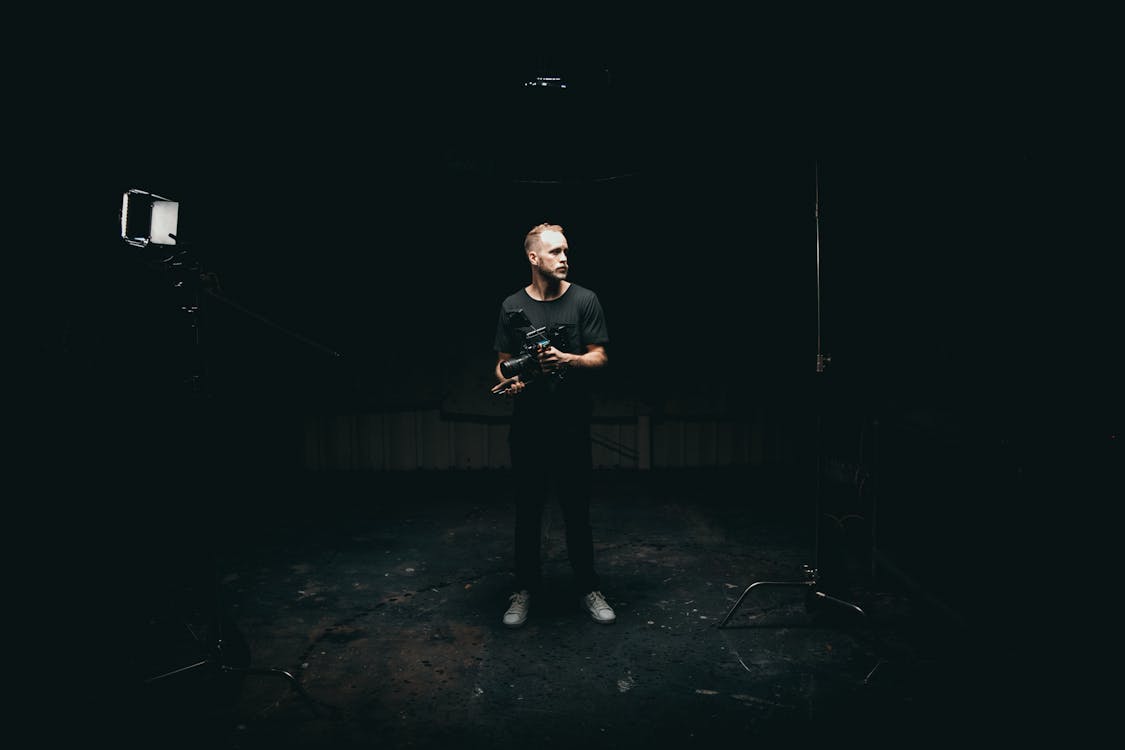
A cinematographer — also called the Director of Photography (DP) or DOP — is the department head responsible for every visual element captured by the camera. Lighting, lens selection, camera movement, composition, color palette: the cinematographer translates a director’s narrative vision into concrete images the audience sees on screen.
The DP sits at the top of the camera department and is the highest-ranked technical department head on a film production. In the credits hierarchy, the camera department appears before all other technical departments — immediately after Cast and the main title cards. That placement reflects the DP’s role as the most senior below-the-line creative collaborator on set.
What does a cinematographer do?
What Does a Cinematographer Actually Do?
The cinematographer’s work spans the entire production lifecycle — from early creative conversations about visual tone through the final color grade.

Pre-production:
- Reading the script and developing a visual language with the director — identifying the color palette, contrast, lighting philosophy, and camera grammar for the project
- Building a look book: a collection of reference images, film stills, paintings, and photographs that establish the intended aesthetic
- Scouting locations to assess natural light, rigging points, power access, and sun paths at different times of day
- Selecting the camera system, lenses, and filtration — anamorphic vs. spherical, vintage glass vs. modern optics, film vs. digital
- Storyboarding and shot-listing with the director to plan coverage
Production:
- Lighting — the number-one responsibility. The DP designs the lighting approach for every scene and works with the gaffer to execute it. “Photography is the study of light,” as one working DP puts it. “If you don’t have light, you don’t have a movie.”
- Lens selection — choosing focal lengths, depth of field, and optical characteristics shot by shot. This is often where the DP has the most independent creative control.
- Camera movement — determining when to use Steadicam, dolly, handheld, crane, gimbal, or a locked-off tripod. Usually a collaboration with the director and the camera operator.
- Frame composition — owning every corner of the frame. Set dressing, wardrobe colors, background action: the DP coordinates with multiple departments to control what the audience sees.
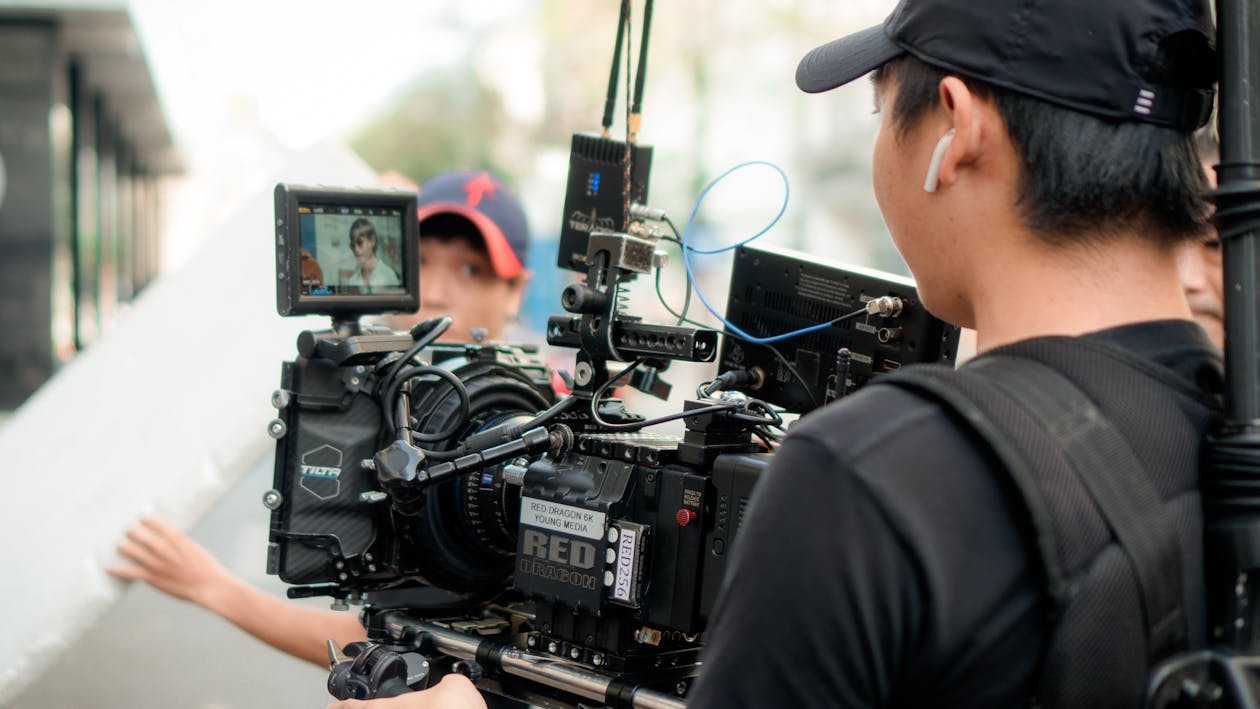
- Crew management — hiring and directing the camera team: operators, focus pullers, DITs, loaders, and assistants. On large productions, the DP may not touch a camera at all — instead sitting beside the director at a monitor, overseeing the image while operators handle the physical cameras.
Post-production:
- Supervising the Digital Intermediate (DI) / color grade to ensure the final image matches what was shot on set
- Approving final color, contrast, and grain across the entire project
- Fighting for seat time: Janusz Kaminski (Spielberg’s longtime DP) has publicly warned that DPs are “losing control of images they shoot” as producers cut colorists and DI sessions without DP involvement
| Phase | Key Deliverables | Collaborates With |
|---|---|---|
| Pre-production | Look book, shot list, camera/lens package, location reports | Director, production designer, producer |
| Production | Lit and composed frames, daily shot execution | Director, gaffer, camera operator, grips |
| Post-production | Approved color grade, final DI sign-off | Colorist, editor, director |
Cinematographer vs director
Cinematographer vs. Director: Who Decides the Look?
This is the most debated question in the camera department — and working professionals consistently answer: it depends.
The director has final creative authority over the look of the film. The cinematographer executes and advocates for the visual quality of the image. But the boundary between those roles shifts dramatically depending on the director-DP relationship.
Three points on the spectrum:
- Director-driven: Stanley Kubrick controlled lens selection, focal lengths, and lighting setups down to individual fixtures. His DPs executed a precise vision.
- Collaborative (most common): The director sets the overall tonal direction — “I want this to feel claustrophobic” or “this should feel like a memory” — and the DP translates that into concrete technical decisions. Christopher Nolan and Hoyte van Hoytema work this way.
- DP-driven: Some directors focus entirely on script and performance, leaving photographic choices to the DP. As one Reddit user puts it: “He just hands me the script and says make it look good.”
The best analogy from working DPs: the director is the CEO with the overall vision; the cinematographer is the CTO who determines how to build it.
One practical marker of this collaboration: directors who build long relationships with a single DP — Spielberg/Kaminski, Coen Brothers/Deakins, Wong Kar-Wai/Christopher Doyle — develop a distinctive visual identity across their filmography. Directors who rotate DPs often (Scorsese, for example) tend to have more visual variation between films.
Cinematographer vs videographer
Cinematographer vs. Videographer: What’s the Difference?
These are fundamentally different roles, despite overlapping equipment.
| Cinematographer | Videographer | |
|---|---|---|
| Scope | Heads a department; manages a team of operators, ACs, DITs, gaffers, grips | Usually a solo operator or part of a small crew |
| Context | Narrative film, episodic TV, commercials, documentaries | Events, corporate video, weddings, social media |
| Lighting | Designs and directs complex lighting setups | Works primarily with available or simple light |
| Post involvement | Supervises DI and color grade | Typically hands off after delivery |
| Credit | ”Director of Photography” or “Cinematographer" | "Videographer” or “Camera” |
The core distinction: a cinematographer directs photography — designing the visual approach and managing a team to execute it. A videographer captures footage, often as a one-person operation. Both require skill; they are different crafts.
Where does the cinematographer appear in film credits?
Where Does the DP Appear in Film Credits?
The cinematographer receives one of the most prominent credit placements in any production — reflecting the role’s creative seniority.
Opening credits:
The DP traditionally receives a dedicated single card in the opening titles. This means the name appears alone on screen — the same treatment given to the director, writer, producers, editor, production designer, and composer. Not every film uses opening credits, but when they do, the DP is almost always included.
Main-on-End cards:
Many contemporary films skip opening credits and instead use Mains-on-End — single-card credits that play before the scrolling crawl begins. The DP receives a dedicated card in this sequence. When a scrolling format is used without static cards, the DP credit gets a Clear Field (also called a “Rolling Single”): approximately 2 seconds of solo screen time within the scroll.
End credits — department section:
After the main cards, the Camera department appears as the first technical department in the credit crawl — before Sound, Art, Props, Set Decoration, or any other department. This ordering is consistent across the industry and reflects the DP’s status as the most senior below-the-line creative role.
The standard camera department credit order within the scroll:
- Director of Photography
- Additional Director of Photography
- “A” Camera Operator
- “B” Camera Operator
- 1st Assistant Camera (“A” Camera)
- 2nd Assistant Camera (“A” Camera)
- 1st AC / 2nd AC for additional cameras
- Digital Imaging Technician (DIT)
- Loader / Digital Loader
- Still Photographer
Specialized camera work — aerial/drone, underwater, Steadicam/Movi — gets credited in separate sub-department sections immediately following the main Camera block.
How to credit a cinematographer correctly
How to Credit a Cinematographer Correctly
The standard credit title is “Director of Photography.” Based on analysis of over 462,000 credited roles across 2,350+ productions, “Director of Photography” is the canonical on-screen credit used in the overwhelming majority of narrative film and television.
Accepted variations:
| Credit Format | Usage |
|---|---|
| Director of Photography | Standard for narrative film and TV — the most common on-screen credit |
| Cinematographer | Acceptable alternative, more common in documentaries |
| Cinematography by | Possessive format used occasionally in opening credits |
| DP | Conversational only — almost never appears in on-screen credits |
| DOP | European shorthand — rarely used in on-screen credits |
The ASC designation: Members of the American Society of Cinematographers append ”, ASC” after their name on the same credit line — e.g., “Roger Deakins, ASC, CBE.” International equivalents: BSC (British Society of Cinematographers), CSC (Canadian), ACS (Australian). These appear on the credit, not as separate lines.
When one person holds multiple roles: If the director also shot the film (common in indie and documentary), the credit typically reads “Directed and Photographed by” or lists both credits on separate cards. Do not combine them into a single compound credit like “Director/DP.”
Guild and contractual considerations: Very few on-screen credits are contractually guaranteed by guild agreements. The DP credit carries contractual weight through individual deal memos — but below the DP level, credits for camera operators, ACs, and DITs are typically “at the producer’s discretion.” The International Cinematographers Guild (IATSE Local 600) represents camera department crew, but credit placement is negotiated individually rather than mandated by the union agreement.
Director of Photography vs cinematographer
”Director of Photography” vs. “Cinematographer”: Is There a Difference?
Functionally, no. The terms refer to the same role. But working professionals draw subtle distinctions:
- “Director of Photography” emphasizes the leadership and department-head aspect of the role. “Photography” literally means “writing with light” — the title signals that this person directs how light is captured. On larger productions, the DP may never touch the camera.
- “Cinematographer” is broader and sometimes implies that the person also operates the camera (A-camera operator/DP). This is more common on smaller productions and documentaries.
In on-screen credits, “Director of Photography” dominates. In conversation and on resumes, both are interchangeable. One Reddit user sums up the practical reality: “There is no DOP license. It’s just like the word ‘journalist.’ Whether you like it or not, it’s easy to fit the broad definition.”
For credits formatting, use “Director of Photography” as the default. Use “Cinematographer” only if the production specifically prefers it.
Notable cinematographers in film history
Notable Cinematographers
| Cinematographer | Known For | Signature |
|---|---|---|
| Roger Deakins, ASC, CBE | Skyfall, Blade Runner 2049, 1917, No Country for Old Men | Natural-looking light, single-source motivation, precise framing |
| Janusz Kaminski | Schindler’s List, Saving Private Ryan, The Fabelmans | High-contrast, blown-out whites, handheld intensity |
| Emmanuel Lubezki, ASC, AMC | Gravity, Birdman, The Revenant | Extended single takes, natural light, fluid camera movement |
| Hoyte van Hoytema, ASC, FSF, NSC | Dunkirk, Oppenheimer, Interstellar | IMAX film, practical lighting, immersive scale |
| Rachel Morrison, ASC | Mudbound, Black Panther | First woman nominated for the Academy Award for Best Cinematography |
| Bradford Young, ASC | Arrival, Selma, A Most Violent Year | Low-light naturalism, underexposure as a stylistic choice |
Long-running director-DP partnerships produce some of cinema’s most recognizable visual identities. The Coen Brothers worked with Roger Deakins on thirteen films. Even though the Coens storyboard every shot and favor the same 27mm lens, films shot by Deakins look distinctly different from those shot by Bruno Delbonnel — the difference comes down to lighting philosophy: Delbonnel uses extremely soft, heavily diffused single-source light, while Deakins favors harder, more directional motivation.
Cinematographer salary and day rates
Cinematographer Salary and Day Rates
Cinematographer compensation varies dramatically by production scale, format, and market.
| Production Type | Typical Range (USD) | Basis |
|---|---|---|
| Studio feature film | $15,000 — $50,000+/week | Weekly rate, 12-20 week engagement |
| Independent feature | $3,000 — $10,000/week | Weekly rate, often flat deal |
| Episodic TV (network/streaming) | $10,000 — $30,000/episode | Per-episode rate |
| Commercials | $3,000 — $15,000/day | Day rate, typically 1-3 day shoots |
| Music videos | $1,500 — $5,000/day | Day rate |
| Corporate/branded content | $1,500 — $5,000/day | Day rate |
Key factors affecting pay:
- Union vs. non-union: IATSE Local 600 rates set minimums for union productions. Non-union work pays less but offers more flexibility.
- Market: Los Angeles and New York command higher rates than regional markets.
- Reputation and credits: A DP with studio features on their reel commands multiples of what an early-career DP earns.
- Package deals: Some DPs own camera and lens packages, earning a rental fee on top of their labor rate.
Most cinematographers are freelancers. A commercial DP might work 100-150 billable days per year across dozens of projects. A feature DP might do 1-3 films per year with longer continuous engagements.
How to become a cinematographer
How to Become a Cinematographer
Traditional path: Camera trainee (loader) → 2nd AC → 1st AC (focus puller) → camera operator → cinematographer. Many top DPs also spent significant time as gaffers or best boys, building deep lighting knowledge. This route takes years but produces technically rigorous DPs who understand every role in their department.
Modern path: The digital era lets people buy a camera and start shooting immediately. Self-taught DPs build reels through short films, music videos, and spec work — then leverage those reels into paid work. As one working DP on Reddit describes: “In 4 years I went from driving vans for location deliveries to shooting full time as a DP.”
What both paths require:
- Deep understanding of lighting — not just “how to set up a light” but how light behaves, motivates, and shapes emotion
- Lens knowledge — focal lengths, optical characteristics, how different glass renders skin, bokeh, and distortion
- Color science — understanding color temperature, LUTs, LOG formats, and the DI pipeline
- Crew management — leading a department of 5-20 people under time pressure
- Political skill — negotiating between director, producers, and other department heads for resources, time, and creative control
There is no formal licensing or certification required to work as a cinematographer. The ASC (American Society of Cinematographers) is an invitation-only honorary society, not a credentialing body.
Sources & Further Reading
- American Society of Cinematographers (ASC) — the professional organization for DPs, with technical articles and interviews
- IATSE Local 600 — International Cinematographers Guild — the union representing camera department crew
- British Society of Cinematographers (BSC) — UK equivalent of the ASC
Create Professional Credits with EndCreditsPro
Getting the cinematographer credit right means more than spelling the name correctly. Credit title (“Director of Photography” vs. “Cinematographer”), card placement (single card vs. scroll), ASC designations, and camera department ordering all follow specific conventions that vary by production type.
EndCreditsPro formats credits with the correct role hierarchy, department ordering, and guild-compliant layouts — so the camera department reads exactly the way the industry expects.