What Is a Director of Photography in Film?
The title says “photography.” The job is directing — a department of 10 to 20 people who build every image the audience sees.
A Director of Photography (DP) — also abbreviated DOP and commonly called a cinematographer — is the department head responsible for the visual language of a film or television production. Lighting design, lens selection, camera movement, framing, and color palette: the DP translates the director’s narrative intent into the concrete images that appear on screen.
The DP leads both the camera department and the electrical/lighting crew, making the role one of the most technically complex department-head positions on a production. In the film credits hierarchy, the camera department appears first among all technical departments — immediately after cast, director, producers, and writer — a placement that directly reflects the DP’s seniority.
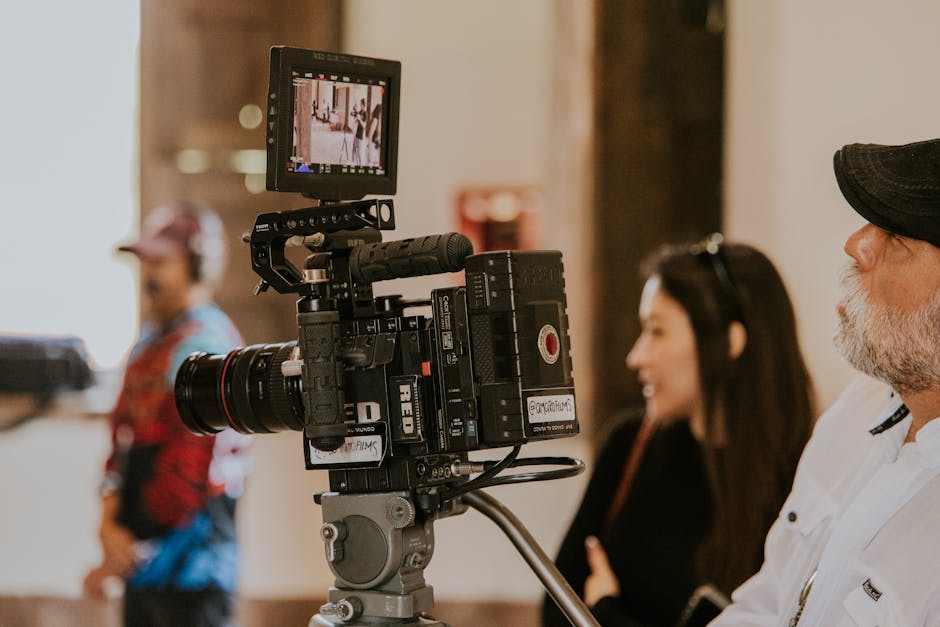
What does a director of photography do?
What Does a Director of Photography Do?
The DP’s work spans pre-production through post-production. On a large studio feature, the role is almost entirely supervisory. On a low-budget independent, the DP may also operate camera.
Pre-production:
- Meeting with the director to develop the film’s visual language — color palette, contrast approach, lighting philosophy, camera grammar
- Building a look book: collected reference images, film stills, and paintings that define the intended aesthetic
- Location scouting to assess natural light, rigging points, power access, and sun paths
- Selecting the camera system, lenses, and optical filtration — digital vs. film, anamorphic vs. spherical, vintage glass vs. modern optics
- Shot-listing and storyboarding with the director to plan coverage
- Crewing the camera and lighting departments: hiring camera operators, focus pullers, gaffers, grips, and DITs
Production:
- Lighting — the DP’s primary responsibility. The DP designs the lighting approach for every scene and works with the gaffer to execute it. As one working DP puts it: “Photography is the study of light. If you don’t have light, you don’t have a movie.”
- Lens selection — choosing focal lengths, depth of field, and optical character shot by shot. This is often the area with the most independent creative latitude
- Camera movement — deciding when to use Steadicam, dolly, handheld, crane, or locked-off tripod in collaboration with the director
- Frame composition — owning every corner of the frame, coordinating with the production designer, wardrobe, and other departments about what the audience sees
- Crew management — directing the full camera and electrical team; on large productions, the DP may not touch a camera, instead sitting at a monitor alongside the director
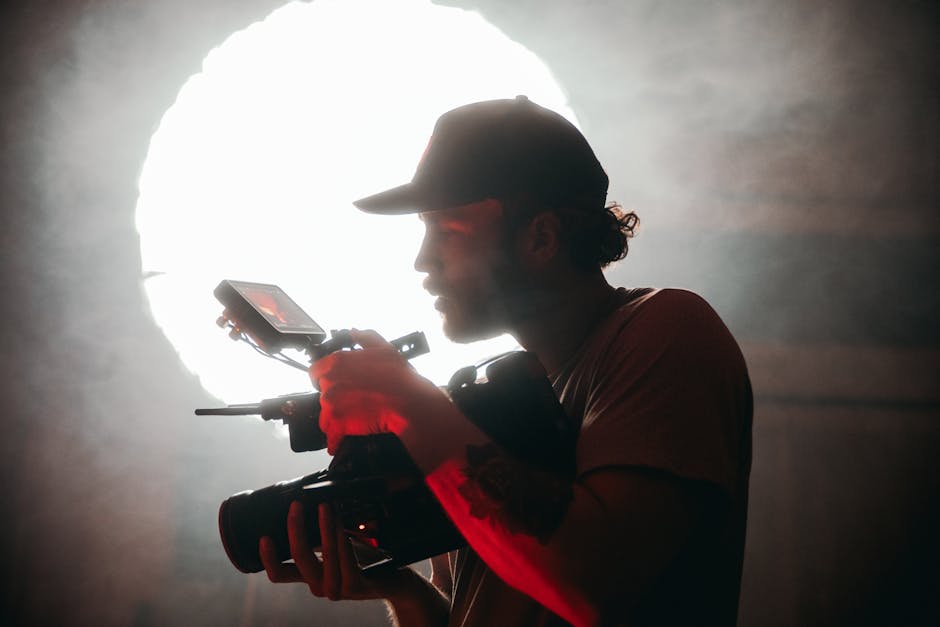
Post-production:
- Supervising the Digital Intermediate (DI) and color grade
- Approving final color, contrast, and grain to ensure the cut matches the on-set images
| Phase | Primary Deliverables | Key Collaborators |
|---|---|---|
| Pre-production | Look book, shot list, equipment package | Director, production designer, producer |
| Production | Lit and composed frames | Director, gaffer, camera operator, grips |
| Post-production | Approved color grade | Colorist, editor, director |
Director of photography responsibilities
Director of Photography Responsibilities: Technical and Creative
The DP’s responsibilities divide into two streams that most other crew roles don’t combine at the same level.
Technical responsibilities:
- Choosing and maintaining the camera package and lens kit
- Setting exposure — managing ISO, aperture, shutter speed, and ND filtration across changing conditions
- Overseeing focus — working with the 1st AC to define pulling distances and depth-of-field decisions
- Managing on-set monitoring and LUT application, often with a Digital Imaging Technician (DIT)
- Protecting the image through the entire chain from set to DI
Creative responsibilities:
- Interpreting the script’s emotional tone through light and shadow
- Shaping how each location’s specific light is used or modified
- Maintaining visual consistency across weeks or months of production
- Making real-time problem-solving decisions when locations, weather, or scheduling change
The DP is one of the few department heads whose decisions affect every other department simultaneously. A lighting setup determines how long the grip and electric departments work. A lens choice affects the production designer’s framing of sets. A slow dolly shot determines the AD’s blocking plan. The DP is at the center of these trade-offs every day.
Director of photography vs cinematographer
Director of Photography vs. Cinematographer: What’s the Difference?
The short answer: in most professional contexts, they’re the same role. Both terms refer to the creative head of the camera and lighting departments. The distinction is more semantic than functional.
That said, working professionals draw a practical difference:
- “Director of Photography” emphasizes the leadership and department-management dimension. The title implies that this person directs how photography happens — through a team of operators, assistants, and technicians — rather than necessarily handling the camera themselves.
- “Cinematographer” is broader and implies a tighter connection to the act of shooting. On documentaries and smaller productions, the cinematographer often operates camera while also designing the image.
One DP puts it bluntly: “A cinematographer is not as well versed in the film world. Their role isn’t as precise. I refer to myself as a Director of Photography because that has the word photography in it — we’re looking at everything in the frame.”
For on-screen credits, “Director of Photography” is the standard title in the vast majority of narrative film and television productions. See the cinematographer page for a detailed breakdown of when each term is used and why.
Where does the director of photography appear in film credits?
Where Does the DP Appear in Film Credits?
The Director of Photography receives one of the most prominent credit placements in any production.
Opening credits:
When a film uses opening titles, the DP receives a dedicated single card — name alone, full screen, the same treatment given to the director, writer, producers, and editor. The standard on-screen credit reads:
Director of Photography
JANE DOE
Or, using the possessive format common in opening titles:
Photography by JANE DOEMain-on-End / Mains-on-End:
Many contemporary films omit opening credits and use Mains-on-End — a sequence of single-card credits that play at the beginning of the end crawl. The DP receives a dedicated card in this sequence.
When the film uses a continuous scroll without separate static cards, the DP gets a Clear Field (sometimes called a “Rolling Single”): roughly two seconds of solo screen time within the scroll before the department block begins.
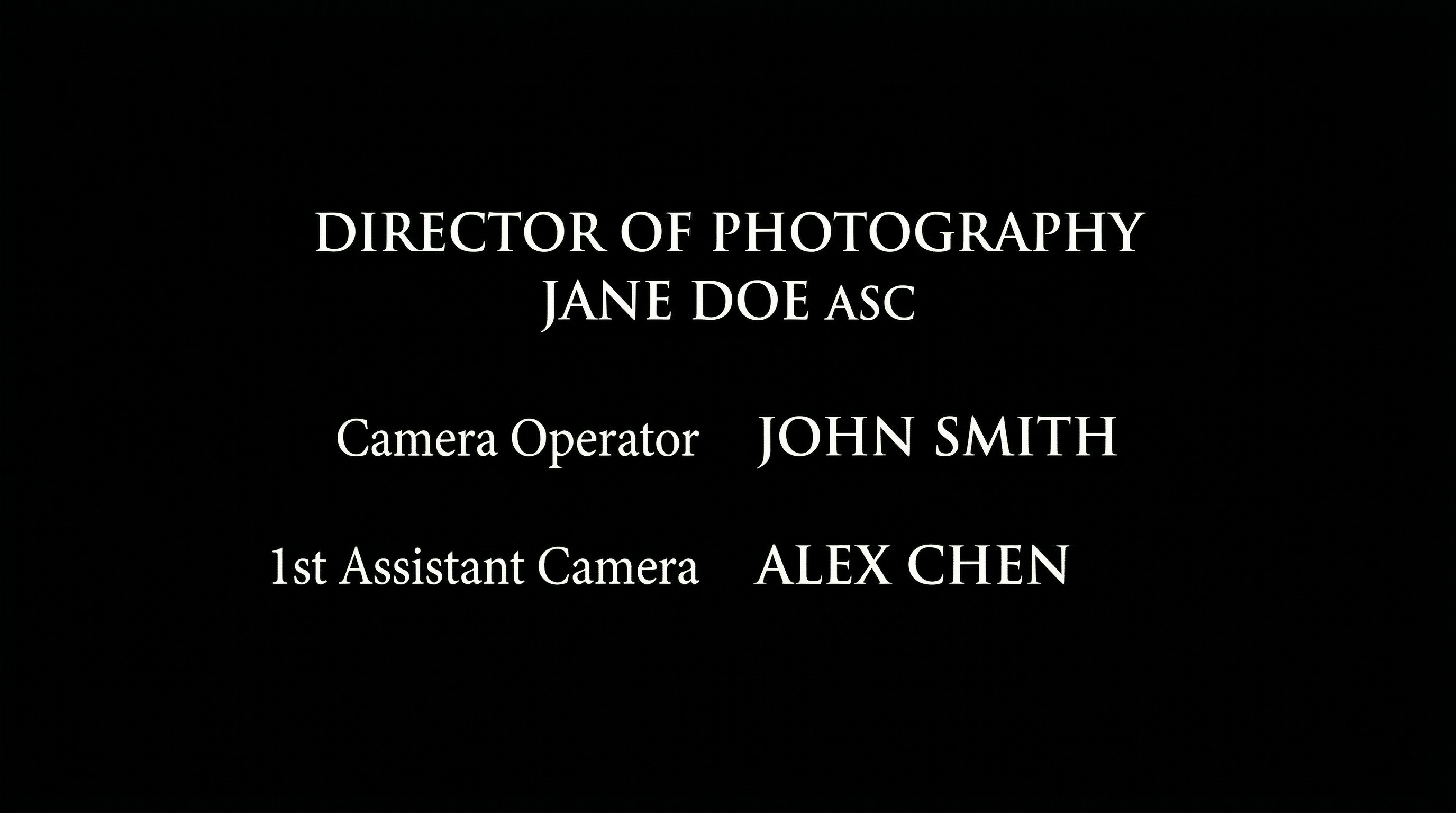
End credits — camera department:
After all main cards, the Camera department appears as the first technical department in the credit crawl — before Sound, Art, Costume, or any other department. The standard ordering within the Camera block:
- Director of Photography
- Additional Director of Photography (if applicable)
- “A” Camera Operator
- “B” Camera Operator
- 1st Assistant Camera (“A” Camera)
- 2nd Assistant Camera (“A” Camera)
- Additional camera crew (1st AC, 2nd AC per camera unit)
- Digital Imaging Technician (DIT)
- Loader / Digital Loader
- Still Photographer
Specialized camera work — aerial/drone, underwater, Steadicam — typically appears in separate subsections immediately after the main Camera block.
How to credit a director of photography correctly
How to Credit a Director of Photography Correctly
Use “Director of Photography” as the default credit title. This is the industry standard for narrative film and television. Common acceptable variations:
| Credit Format | Context |
|---|---|
| Director of Photography | Standard — narrative film and TV |
| Cinematographer | Acceptable alternative; more common in documentaries |
| Cinematography by | Possessive format for opening title cards |
| DP | Conversational; almost never used in on-screen credits |
| DOP | Common in Europe; rarely in US on-screen credits |
ASC designation: Members of the American Society of Cinematographers append ”, ASC” after their name on the credit line — e.g., “Roger Deakins, ASC, CBE.” This appears on the same line as the name, not as a separate credit. International equivalents: BSC (British), CSC (Canadian), ACS (Australian).
When the director also shoots: If one person directs and photographs the film — common in documentaries and micro-budget narrative — the credit reads “Directed and Photographed by” or assigns separate credits on successive cards. Do not combine into a single compound credit like “Director/DP.”
IATSE Local 600: The International Cinematographers Guild represents camera department crew. The DP’s credit is typically established by individual deal memo, not directly by the union agreement. Below the DP level, credits for operators, ACs, and DITs are customarily “at the producer’s discretion” unless negotiated otherwise.
Director of photography vs director
Director of Photography vs. Director: Who Controls the Look?
This is the most debated creative question in film production — and experienced professionals answer consistently: it depends on the director-DP relationship, which varies enormously.
The director has final authority over the film’s look. The DP executes and advocates for the quality of the image. But the practical boundary shifts based on working style:
Three points on the spectrum:
- Director-driven: Stanley Kubrick controlled lens selection, lighting setups, and focal lengths with precise specificity. His DPs executed a vision he largely already had.
- Collaborative (most common): The director sets emotional tone — “this should feel claustrophobic,” “this is a memory” — and the DP translates that into technical decisions. Christopher Nolan and Hoyte van Hoytema operate this way.
- DP-driven: Some directors focus entirely on script and performance. As one working DP describes: “He just hands me the script and says make it look good.”
Long-running partnerships produce cinema’s most recognizable visual identities: Spielberg/Kaminski across Schindler’s List, Saving Private Ryan, and The Fabelmans. Coen Brothers/Deakins across thirteen films. Wong Kar-Wai/Christopher Doyle across Chungking Express, Happy Together, and In the Mood for Love.
Directors who rotate DPs — Scorsese, for example — tend to have more visual variation between films. The reason is lighting philosophy: each DP brings a fundamentally different approach to how light is motivated, shaped, and controlled.
Director of photography salary
Director of Photography Salary and Day Rates
DP compensation varies more than almost any other crew role, scaling with production budget, market, and reputation.
| Production Type | Typical Range (USD) | Basis |
|---|---|---|
| Studio feature film | $15,000–$50,000+/week | Weekly rate, 12–20 week engagement |
| Independent feature | $3,000–$10,000/week | Weekly rate, often flat deal |
| Episodic TV (network/streaming) | $10,000–$30,000/episode | Per-episode rate |
| Commercials | $3,000–$15,000/day | Day rate, typically 1–3 day shoots |
| Music videos | $1,500–$5,000/day | Day rate |
| Corporate/branded content | $1,500–$5,000/day | Day rate |
IATSE Local 600 (the International Cinematographers Guild) sets minimum rates for union productions. Non-union productions pay below these minimums. A mid-career DP in Los Angeles or New York typically earns between $5,000 and $15,000 per week on a union feature — with the top end reserved for established names with studio relationships.
Many DPs own their own camera and lens packages, generating a rental fee on top of their labor rate. A quality cinema lens package can rent for $1,500–$5,000/day alone.
How to become a director of photography
How to Become a Director of Photography
There is no licensing requirement and no formal certification. The role is purely merit-based — reputation and reel.
Traditional path: Camera trainee / loader → 2nd AC → 1st AC (focus puller) → camera operator → DP. This route takes 8–15 years but produces DPs with deep technical knowledge of every position in the department. Many working DPs also spent time in the lighting department as best boy electric or gaffer, building the lighting knowledge that separates good DPs from exceptional ones.
Contemporary path: The digital era removed the gatekeeping of film stock costs. DPs now build reels through short films, music videos, and self-funded projects. As one working DP describes: “In four years I went from driving vans for location deliveries to shooting full time as a DP.”
What both paths require:
- Deep understanding of light — not “how to set up a light” but how light behaves, motivates emotion, and defines space
- Lens knowledge — focal lengths, optical characteristics, how different glass renders skin, highlights, and distortion
- Color science — color temperature, LOG formats, LUTs, and the DI pipeline
- Crew management — directing a department of 5–20 people under constant time pressure
- Political skill — negotiating between director, producers, and department heads for resources, time, and creative control
The ASC (American Society of Cinematographers) is an invitation-only honorary society, not a credentialing body. Membership signals peer recognition, not qualification.
Notable directors of photography
Notable Directors of Photography in Film History
| Director of Photography | Known For | Signature Approach |
|---|---|---|
| Roger Deakins, ASC, CBE | Blade Runner 2049, 1917, Skyfall, No Country for Old Men | Natural-looking light, single-source motivation, precise geometry |
| Janusz Kaminski | Schindler’s List, Saving Private Ryan, The Fabelmans | High contrast, blown-out whites, handheld urgency |
| Emmanuel Lubezki, ASC, AMC | Gravity, Birdman, The Revenant | Extended single takes, natural light, fluid long movement |
| Hoyte van Hoytema, ASC, FSF | Dunkirk, Oppenheimer, Interstellar | IMAX film, practical lighting, physical immersion |
| Rachel Morrison, ASC | Mudbound, Black Panther | First woman nominated for the Academy Award for Best Cinematography |
| Bradford Young, ASC | Arrival, Selma, A Most Violent Year | Underexposure as style, low-light naturalism |
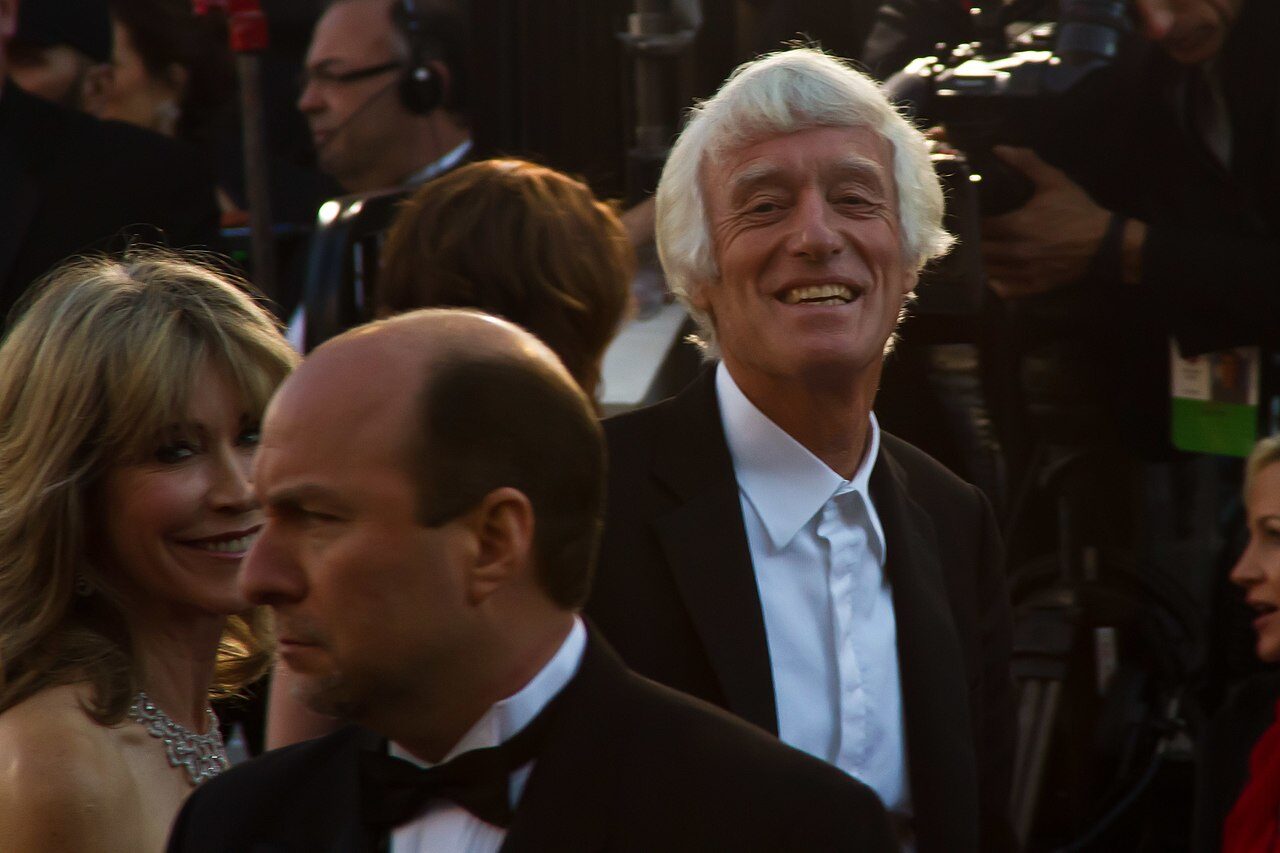
The three-time Oscar winner in cinematography — Emmanuel Lubezki for Gravity (2013), Birdman (2014), and The Revenant (2015) — is the only person in history to win the Academy Award for Best Cinematography in three consecutive years. That streak, on three entirely different visual projects, demonstrates the range the DP role demands.
Sources & Further Reading
- American Society of Cinematographers (ASC) — trade organization, American Cinematographer magazine, and technical resources
- IATSE Local 600 — International Cinematographers Guild — union representing DP and camera department crew
- British Society of Cinematographers (BSC) — UK equivalent
Create Professional Credits with EndCreditsPro
Getting the Director of Photography credit right means more than spelling the name correctly. Credit title (“Director of Photography” vs. “Cinematographer”), card type (single card vs. clear-field scroll), ASC designation format, and camera department ordering all follow specific conventions — and they vary by production type and format.
EndCreditsPro formats credits with the correct role hierarchy, department ordering, and guild-compliant layouts automatically.