What Is a Boom Operator in Film?
The boom operator is the sound department’s eyes on set — the mixer handles the levels, but the boom op handles the mic. Miss the mark by six inches and the dialogue is gone.
A boom operator (also called First Assistant Sound or “perchman”) is a core member of the sound department responsible for microphone placement during production. They operate the boom pole — a telescoping rod holding a directional microphone — keeping it as close to the actors as possible without entering the camera frame or casting a shadow.
The boom operator reports directly to the production sound mixer and works on features, episodic television, and documentary productions. On smaller productions, one person may cover both roles.
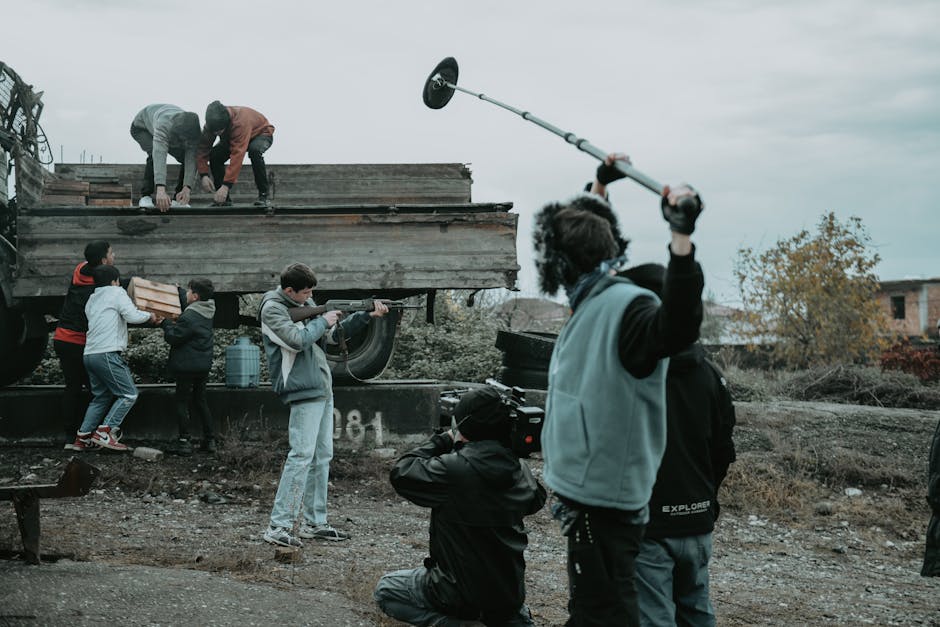
What does a boom operator do?
What Does a Boom Operator Do on Set?
The boom operator’s job is active, physical, and requires as much knowledge of camera work as it does of audio. On a typical shooting day, they:
- Read the shot before it’s called — Study the lens, camera position, and blocking during rehearsal to determine the safest mic angle that avoids frame and shadow
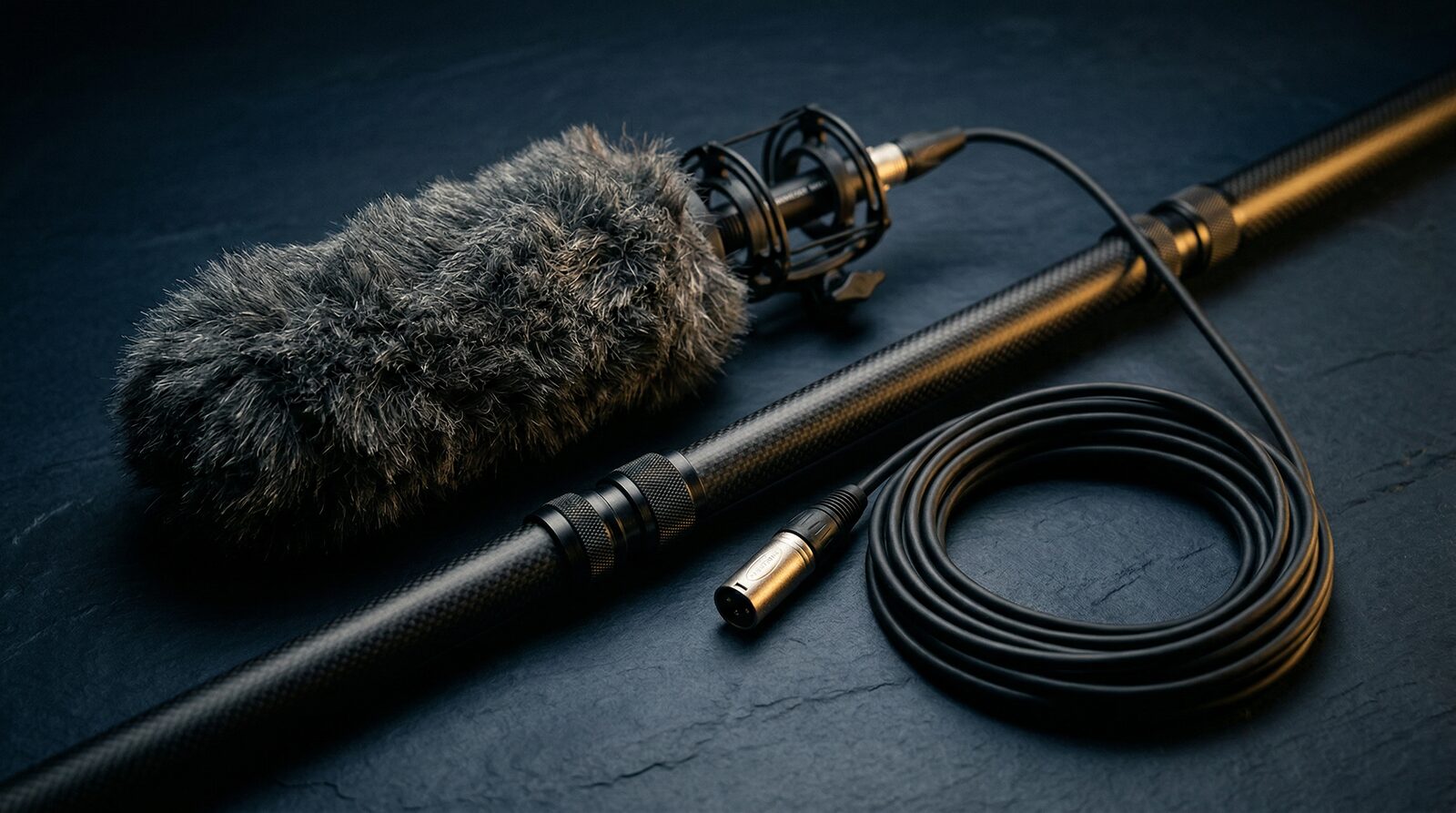
- Choose and rig the microphone — Select between a shotgun mic (hypercardioid, for tighter shots) or a cardioid mic (for wider scenes), then attach it to the boom pole with a shock mount and windscreen
- Execute the boom position — Hold the pole overhead, below frame, or from the side — depending on shot type — throughout the take without moving audibly
- Wire talent when needed — On scenes where the boom can’t cover the dialogue cleanly (wide shots, exterior noise), the boom op assists in placing lavalier microphones on actors
- Collect room tone — At the end of a scene, call for 30–60 seconds of silence so the post-production team has ambient sound to use in editing
- Communicate with camera — Interface with the Director of Photography (DP) and camera operators to know lens sizes and mark safe zones
The boom operator is the sound department’s representative on set. The mixer is typically at a cart away from the action; the boom op is the person the 1st AD, director, and DP interact with for sound concerns during filming.
They report to: Production sound mixer
They work with: DP, camera operators, 1st AD, script supervisor
On smaller productions: May cover utility sound duties (wiring talent) simultaneously

What boom operator equipment is used on set?
Boom Operator Equipment: The Standard Kit
| Item | Purpose |
|---|---|
| Boom pole (fishpole) | Extends the microphone above or below frame; carbon fiber poles preferred for weight reduction on long days |
| Shotgun microphone | Primary mic for most interior and controlled exterior dialogue |
| Cardioid/supercardioid microphone | Used on wider shots where extreme directionality is less critical |
| Zeppelin windshield + dead cat | Reduces wind noise and handling noise outdoors |
| Shock mount | Isolates the mic from pole vibration |
| Coiled XLR cable | Runs from mic down the pole to the sound cart or recorder |
| Lavalier microphones | Secondary mics placed on talent; boom op assists in rigging |
| Headphones | Boom ops monitor audio during takes to catch problems the mixer may not see |
On high-end productions, a separate utility sound technician handles lav rigging, freeing the boom op to focus entirely on pole work.
Where does the boom operator appear in film credits?
Boom Operator Credit Placement in End Credits
The boom operator appears in the end crawl under the Sound department header, not in opening credits. There is no standard opening title card for a boom operator — only above-the-line and select department heads receive main title credits.
Standard credit block format:
SOUND

Production Sound Mixer ........... James Erskine
Boom Operator ..................... Maria Chen
Utility Sound Technician .......... Devon Park
Order within the sound department:
- Production Sound Mixer (head of department)
- Boom Operator (second in department hierarchy)
- Utility Sound Technician / Cable Person (third, if credited)
On larger productions with multiple boom operators (common on multi-camera TV):
SOUND

Production Sound Mixer ........... James Erskine
Boom Operator ..................... Maria Chen
Second Boom Operator .............. Trevor Mills
Utility Sound Technician .......... Devon Park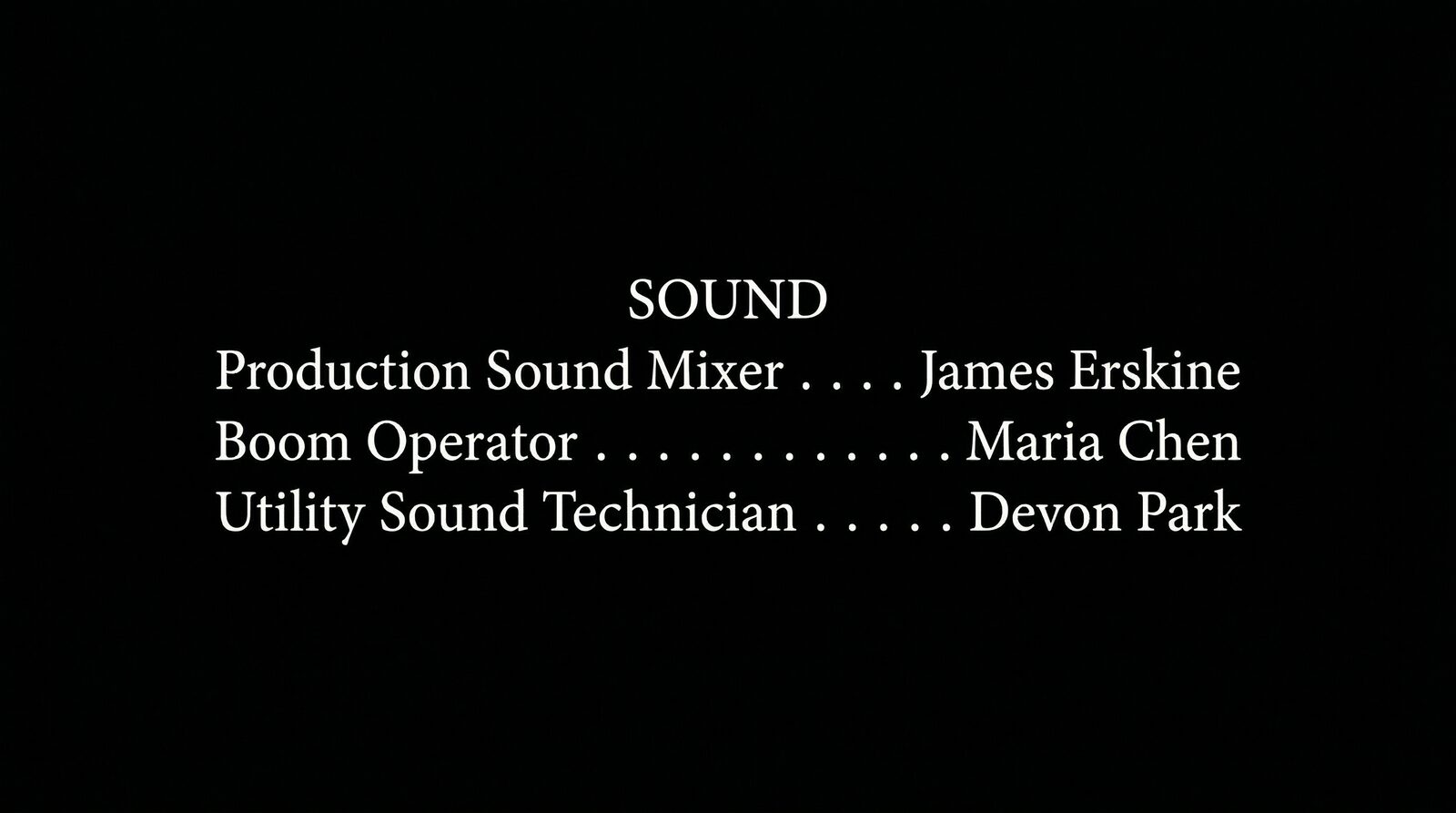
Single card vs. scroll: Boom operators always appear in the scroll (the full end credits), not on a dedicated title card. Only the top of each department — and occasionally the sound mixer on prestige productions — may receive a card.
IATSE Local 695 covers production sound in the U.S. Under Local 695 jurisdiction, the boom operator’s screen credit title is standardized: “Boom Operator” is the correct form. Older credits occasionally use “First Assistant Sound” or “Perchman,” but modern productions default to “Boom Operator.”
How to credit a boom operator correctly
Boom Operator Credit Format and Common Variations
The correct credit title is “Boom Operator” — two words, no hyphen. Acceptable variations in specific contexts:
| Credit Title | When Used |
|---|---|
| Boom Operator | Standard; used on the vast majority of U.S. productions |
| First Assistant Sound | Used on some studio and international co-productions |
| Perchman / Perchwoman | Older British usage; rarely seen on modern productions |
| Sound Assistant | Low-budget or student productions where roles overlap |
If one person served as both sound mixer and boom operator (common on ultra-low-budget productions), credit them in the more senior role: “Production Sound Mixer.” You can add a parenthetical — “Production Sound Mixer / Boom Operator” — but keep it to one line.
Guild requirements: On IATSE Local 695 productions, the boom operator must be credited by their contractual title. Omitting or altering the credit is a contract violation. For IATSE compliance details, consult the Local 695 collective bargaining agreement.
Boom operator vs. production sound mixer
Boom Operator vs. Sound Mixer: How the Credits Differ
These two roles are frequently confused by audiences and first-time producers. They are distinct union positions with different credit placement rules.
| Production Sound Mixer | Boom Operator | |
|---|---|---|
| Primary job | Records, monitors, and mixes audio from the cart | Positions the microphone on set |
| Credit placement | First in Sound department block; sometimes on a dedicated card | Second in Sound department block; scroll only |
| Union classification | IATSE Local 695 (Mixer) | IATSE Local 695 (Boom) |
| Reports to | Director / AD | Production sound mixer |
| Career path | Often former boom operators | Entry point to production sound |
The sound mixer and boom operator often have the longest working relationships on set — most mixers develop a preferred boom op they rehire across projects.
Notable boom operators in film history
Notable Boom Operators and Their Work
Many respected production sound mixers began their careers operating the boom. Several working boom operators have built careers on high-profile productions:
- Edward Tise — Worked on The Thin Red Line (1998) and Terrence Malick productions known for naturalistic, ambient sound design
- The boom operator on Apocalypse Now (1979) worked under sound mixer Walter Murch in conditions that became legendary in the industry — navigating a jungle environment with rudimentary wireless and constant background noise
The role has historically been an entry point into the sound department. Production sound mixers routinely cite their boom operator years as where they learned to read sets, manage set dynamics, and develop their ear.
Boom operator salary and day rate
Boom Operator Salary & Day Rate
Boom operator compensation varies significantly by market, union status, and production type.
IATSE Local 695 scale (U.S., approximate):
- Day rate (low-budget): $350–$500/day
- Day rate (studio production): $600–$900/day
- Weekly rate (episodic TV): $2,500–$4,500/week
Non-union / freelance: $200–$400/day on independent productions. Many boom operators start non-union and work toward their IATSE card through qualifying hours.
UK rates (BECTU): £350–£600/day depending on production size.
Boom operating is physically demanding — 12-14 hour days with extended overhead holds. Top boom operators on tentpole productions command rates comparable to many department heads on smaller films.
Sources & Further Reading
- IATSE Local 695 — Production Sound, Video & Sound Technicians — Covers jurisdictional standards for boom operators, including credit requirements
- SoundGirls: Boom Op Head to Toe — Practical guide to set technique from working professionals
Create Professional End Credits with EndCreditsPro
Getting boom operator credits wrong — wrong title, wrong order, wrong placement — is a contract issue on union productions. EndCreditsPro auto-formats your sound department credits in the correct hierarchy, with the right title for every role.
Generate guild-compliant credits in minutes
Related roles: Sound Editor · ADR Mixer · Gaffer · Film Crew Roles Hub
See also: Complete Guide to Film Credits · IATSE Compliance