What Is a Film Editor in Film?
Editors don’t cut footage — they rewrite the film. The director shoots possibilities; the editor decides what the movie actually is.
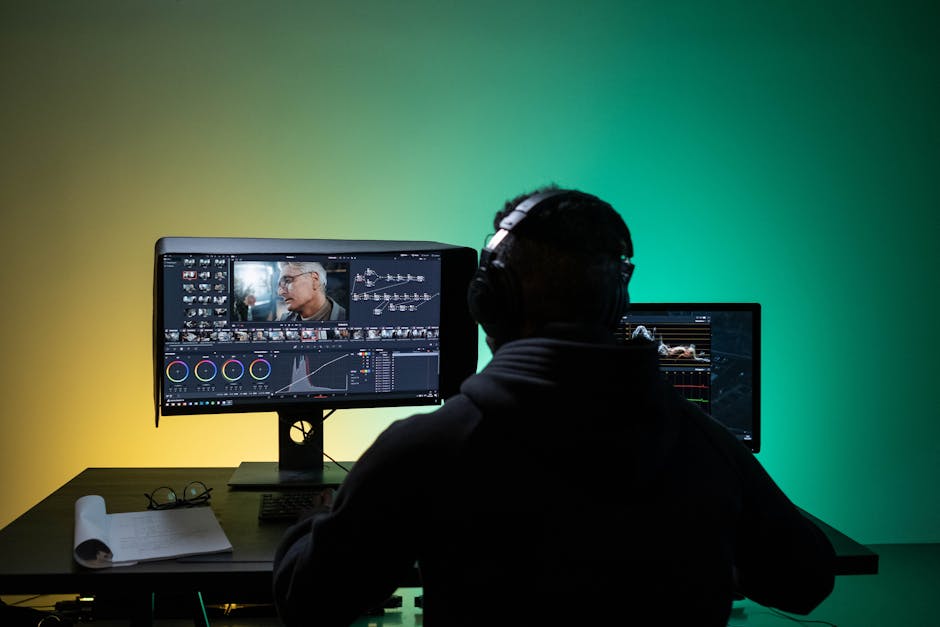
A film editor is the post-production craftsperson responsible for assembling raw footage into the finished motion picture. Working in collaboration with the director, they select takes, structure scenes, control pacing, and shape the narrative arc from thousands of hours of material into a coherent two-hour story.
Film editors belong to the post-production department and are members of the Motion Picture Editors Guild (IATSE Local 700). They’re classified as below-the-line but treated as key creative collaborators — the only crew member other than the director who works with every frame of the film.
What is the job of a film editor?
What Does a Film Editor Do?
The film editor is the primary architect of post-production. Their work begins before the shoot wraps and continues through picture lock — the moment at which the cut is frozen before audio and visual effects finishing begin.
Core responsibilities:
- Reviewing dailies — watching all footage from each shooting day to assess performances, coverage, and story continuity
- Assembly edit — building the first pass of the film by joining scenes in story order, often working in parallel with production
- Director’s cut — refining the assembly with the director over weeks or months, adjusting pacing, restructuring sequences, and removing or augmenting scenes
- Picture lock — finalizing the cut so VFX, sound design, and score can be finished to a stable timeline
- VFX supervision — coordinating with the visual effects supervisor on which shots require digital work
- Temp music — selecting temporary music tracks to communicate pacing and tone before the composer delivers the final score
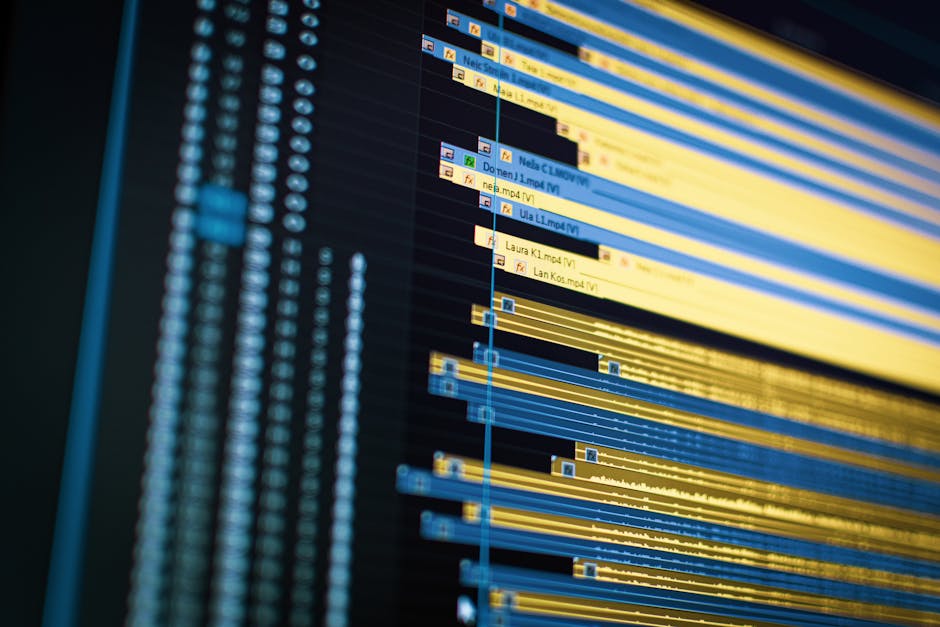
Editors work primarily in Avid Media Composer (the industry standard on studio features and television) or Adobe Premiere Pro (common on independent films and documentaries).
They report directly to the director and, at the studio level, to the producer. On large productions, they supervise a team that includes one or more first assistant editors, a second assistant editor, and sometimes a visual effects editor and a music editor.
What is the film editor job description?
Film Editor Job Description
The film editor’s day-to-day divides into two distinct phases:
During production: The editor receives footage each day — sometimes hundreds of gigabytes — and begins building scenes immediately. This allows the director to review early cuts of completed sequences before shooting is finished, catching continuity issues and coverage gaps while it’s still possible to reshoot.
During post-production: Once shooting wraps, the editor and director work in intensive daily sessions in the editing suite. A major studio feature typically allocates 10–14 weeks for the editor’s cut, followed by 10–14 weeks for the director’s cut — though schedules compress or expand depending on release dates and test screening results.
After test screenings, editors frequently cut new versions addressing audience feedback. The final weeks before picture lock involve frame-accurate precision: individual frame trims, color timing reference reviews, and final ADR (automated dialogue replacement) spotting sessions.
Where does the film editor appear in film credits?
Film Editor Credit Placement
The film editor holds one of the few above-the-line-adjacent credits in the film’s main title sequence and carries significant weight in the end crawl.
Opening credits (main titles): Film editors receive a single card in the opening title sequence — a contractual right established in the Motion Picture Editors Guild’s 1979 contract negotiations. Before 1979, editors often shared cards with other department heads. Now, on IATSE productions, the editor’s card is guaranteed as a standalone credit.
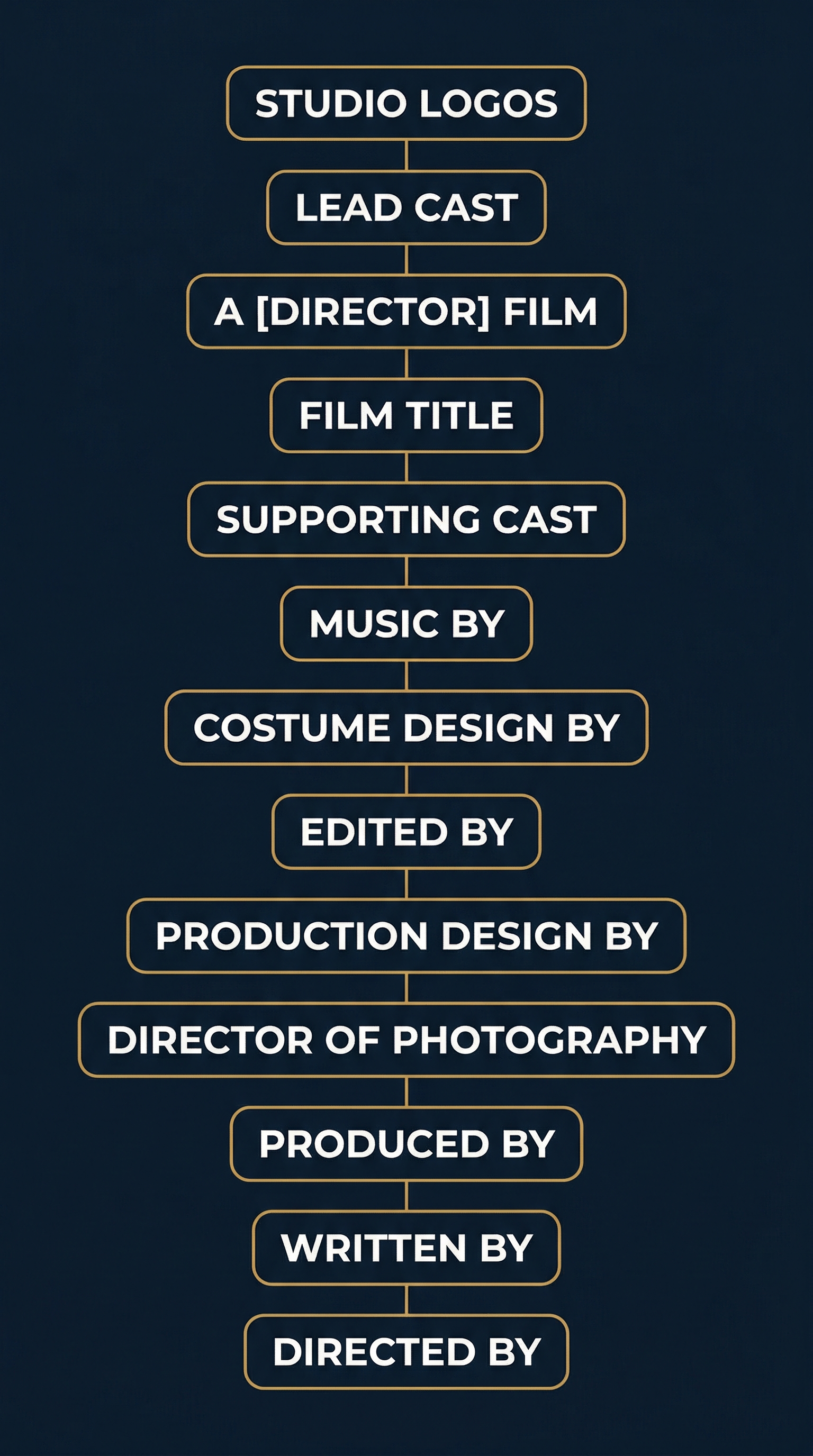
The standard main title order places the editor near the end of the opening sequence, after the composer and costume designer, alongside the production designer and director of photography. The typical sequence for a studio feature:
- Studio and production company logos
- “[Production company] presents”
- Lead cast members
- “A [Director Name] film”
- Film title
- Supporting cast
- Casting director
- Music by [Composer]
- Costume design by [Costume Designer]
- Edited by [Film Editor]
- Production design by [Production Designer]
- Director of photography [DP name]
- Produced by [Producer(s)]
- Written by [Screenwriter(s)]
- Directed by [Director]
End credits: In the scrolling end crawl, the film editor appears in the post-production department block, which comes after the main production departments (camera, grip, electric, sound, art, wardrobe) have been listed. Within post-production, the editorial department is listed first — ahead of visual effects, color, and music editorial.
The end crawl format for the editorial department follows a standard hierarchy:
POST-PRODUCTION

Edited by
JANE SMITH, ACE

First Assistant Editor
MARCUS CHEN

Second Assistant Editor
PRIYA ANAND

VFX Editor
TOMMY WALSH

Music Editor
CAROL OSTROWSKI
The “ACE” designation after the editor’s name indicates membership in American Cinema Editors, an honorary society. It is not mandatory but commonly included when the editor holds membership.
How to credit a film editor correctly
How to Credit a Film Editor
In the main titles, the standard credit reads:
Edited by
JANE SMITH
Or, for ACE members:
Edited by
JANE SMITH, ACE
Acceptable variations:
- “Edited by” — most common in North America
- “Editor” — used on some European co-productions and documentary features
- “Film Editor” — less common, appearing on older productions; the IATSE contract specifies any of these three forms as permissible
What NOT to write:
- “Cut by” — informal and not used in professional credits
- “Post-production editor” — incorrect; the title is simply “Editor” or “Film Editor”
When multiple editors share a credit: On large productions with co-editors, each receives their own separate card in sequence — not a shared card. The order is negotiated per contract, often reflecting the seniority or the portion of the film each editor cut.
When the editor also served as a producer (rare on features, more common in documentary), the more senior credit (producer) takes precedence, and both credits are listed: the editor credit in its standard position, the producer credit in the above-the-line block.
Film editor vs assistant editor
Film Editor vs. Assistant Editor
The distinction matters for credits and compensation — they are separate union classifications under IATSE Local 700.
| Film Editor | First Assistant Editor | |
|---|---|---|
| Primary role | Creative cut decisions | Technical and organizational support |
| Reports to | Director and producer | Film editor |
| Main title card | Yes — single card, contractual right | No |
| End crawl placement | Post-production block, first position | Listed under editor in editorial block |
| ACE eligibility | Yes | No |
| IATSE classification | Editor | Assistant Editor (separate rate scale) |
The assistant editor’s core work: ingesting and organizing footage, building bins, syncing dailies, managing media, preparing VFX pulls, and handling the technical infrastructure that allows the editor to focus on creative decisions.
On large productions, the first assistant editor also manages the editing room’s relationship with the production office, DIT, and post-production supervisor.
film editor salary
Film Editor Salary & Day Rates
Film editor compensation varies sharply between union and non-union productions, and between features and television.
IATSE Local 700 minimum rates (Major Studios, 2024–2027 contract):
- Weekly minimum (theatrical features): approximately $3,750/week
- Experienced editors on major studio films typically negotiate $10,000–$25,000/week
- Top editors on franchise features can negotiate flat deals in the $500,000–$1,000,000+ range per picture
BLS median annual wage: According to the U.S. Bureau of Labor Statistics, the median annual wage for film and video editors is approximately $62,000–$75,000/year across all production types — a figure pulled down by non-union and lower-budget work.
Independent film: Day rates on SAG-AFTRA Ultra Low Budget or micro-budget productions range from $350–$800/day. Many independent editors negotiate flat deals for the entire post schedule.
Television (episodic): On one-hour drama (the most editor-heavy format), editors typically work under the IATSE Television Agreement. Top episodic editors on prestige cable or streaming can earn $8,000–$15,000/week.
famous film editors
Notable Film Editors in History
Thelma Schoonmaker, ACE Martin Scorsese’s editor since Raging Bull (1980). Three Academy Award wins: Raging Bull, The Aviator, and The Departed. Raging Bull ranks first on the Motion Picture Editors Guild’s list of the 75 best-edited films of all time. Schoonmaker’s work with Scorsese over four decades is the defining long-term editor-director partnership in American cinema.
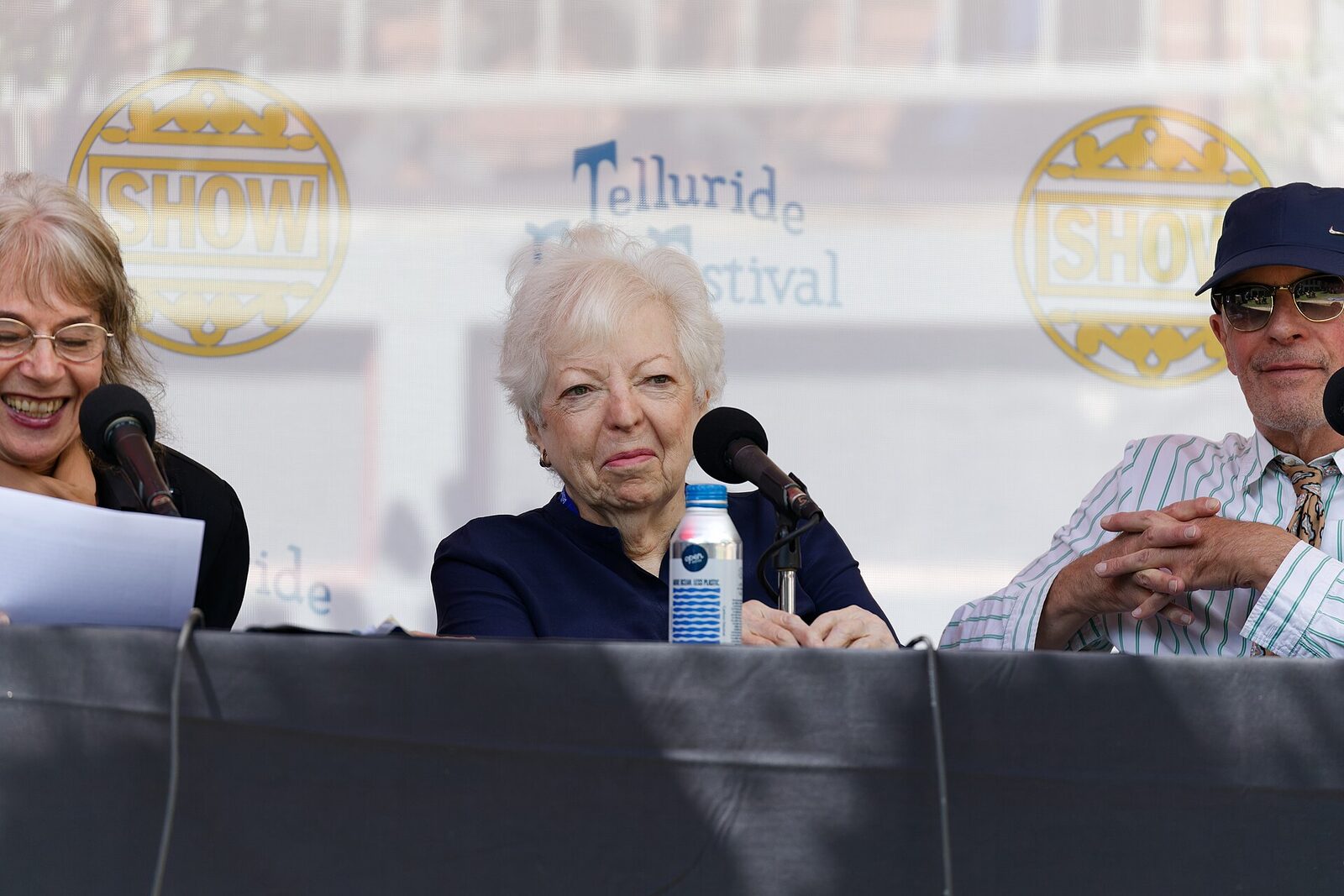
Walter Murch, ACE Editor and sound designer whose credits include The Conversation, Apocalypse Now, and The English Patient — the last earning him an Academy Award. Murch wrote the definitive book on editing craft, In the Blink of an Eye, and was the first person to receive a screen credit as “Sound Designer.” His three-Oscar career spans technical and creative achievement no other single editor has matched.
Michael Kahn, ACE Steven Spielberg’s collaborator since Close Encounters of the Third Kind (1977), with editing credits on Raiders of the Lost Ark, Schindler’s List, and Saving Private Ryan — three separate Academy Awards. Kahn’s ability to handle both Spielberg’s adventure spectacle and intimate historical drama in the same filmography reflects the range required of elite-level editors.
How to become a film editor
Film Editor Career Path
The traditional path starts as a post-production runner or PA, advancing to second assistant editor, then first assistant editor, before eventually being promoted to editor — typically over 8–12 years. The assistant editor role is not just a waiting room: it’s where editors learn how sets work, how directors think, and how post-production pipelines function.
Education: A degree in film production, communication, or a related field provides foundational skills. Film schools (UCLA, NYU, AFI) offer editing-specific programs. However, the guild path is apprenticeship-based — formal education matters less than floor experience and a strong reel.
Guild membership: To work on major productions, editors need IATSE Local 700 membership. Entry typically comes via the apprenticeship program or through qualification from prior production work.
Key skills:
- Avid Media Composer and/or Adobe Premiere Pro proficiency
- Narrative structure and dramatic pacing intuition
- Sound awareness (editors make many temp audio decisions)
- Strong communication skills for long director collaboration sessions
- Ability to work under pressure across multiple test screening cycles
Sources & Further Reading
- Motion Picture Editors Guild (IATSE Local 700) — official guild, wages, contracts, and membership information
- Cinema Montage — Give Them Some Credit! — definitive history of how editors earned their credit placement rights
- Walter Murch — Wikipedia — career overview
- Thelma Schoonmaker — Wikipedia — career overview
Create Professional End Credits with EndCreditsPro
Getting the film editor credit right — single card, correct wording, correct position in the post-production block — takes time to research and format manually. EndCreditsPro generates guild-aware end credits that follow IATSE placement conventions automatically.