What Is a Music Editor in Film?
The composer writes the cue. The music editor decides whether the director ever hears it. Every note that makes it into the final cut passed through this role first.
A music editor is a post-production specialist responsible for compiling, editing, and synchronizing all music to picture in a film or television production. They sit at the intersection of the music department and the picture editorial department — fluent in both the language of music and the mechanics of non-linear editing.
The music editor works primarily in post-production, managing every stage of the music process from the early spotting session through the final mix. On studio features and high-budget television, a dedicated music editor is essential. On indie productions under roughly $2 million, the role is often absorbed by the composer.
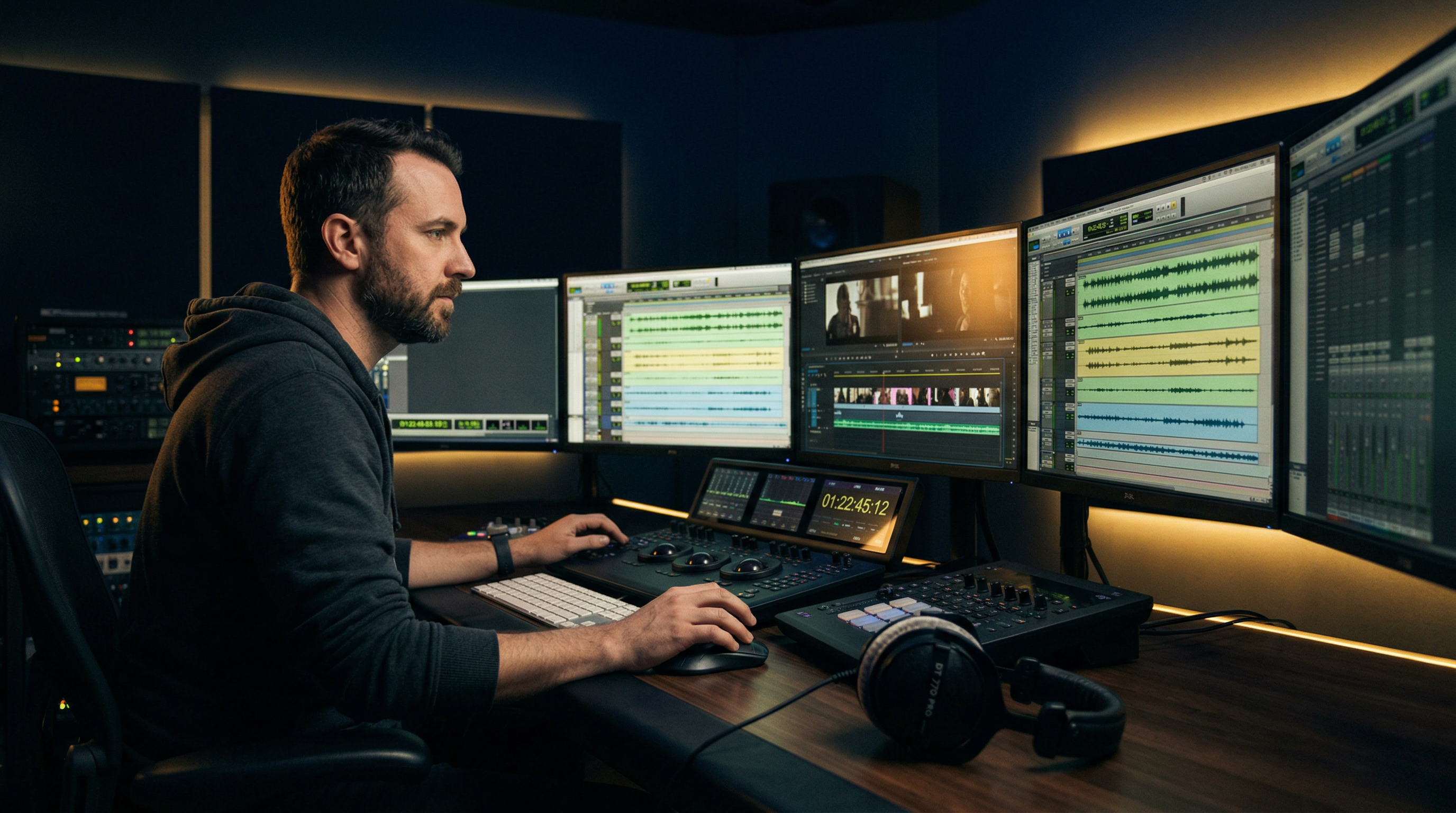
What does a music editor do?
Music Editor Responsibilities
The music editor’s duties span the entire post-production period, from before a single note is scored to the final deliverable.
Spotting session — Before the composer begins writing, the music editor attends the spotting session alongside the director, picture editor, and composer. Together they identify every scene that needs music, where music starts and ends, and what emotional tone each cue should serve. The music editor takes detailed notes that become the blueprint for the entire score.
Temp track construction — Before the original score is composed, most films run with a temp track — a temporary score assembled from existing music. The music editor builds the temp track, selecting library music, classical compositions, or music from other films that fit each scene’s emotional and rhythmic needs. A well-built temp track shapes what the director comes to expect from the final score, which is why the music editor’s taste and judgment matter as much as their technical skills.
Pre-dubbing liaison with the composer — Once the composer delivers cues, the music editor reviews them before they’re presented to the director. As one film composer describes the working relationship: “I write music to a scene and I give that music to the music editor, but the music editor would then say to me, for instance, ‘oh the scene works amazing but when we get to this part I wish you did something else.’ And I’m just like, wow, interesting.” This feedback loop — happening privately between composer and music editor before the director is in the room — is among the role’s least-discussed but most important functions.
Syncing music to picture — The music editor conforms all approved cues to the picture in Pro Tools, frame-accurately aligning every musical beat, hit point, and accent to the visual edit. When the picture is re-cut after music delivery (a frequent occurrence in post), the music editor re-conforms all existing cues to the new edit without requiring the composer to rewrite.
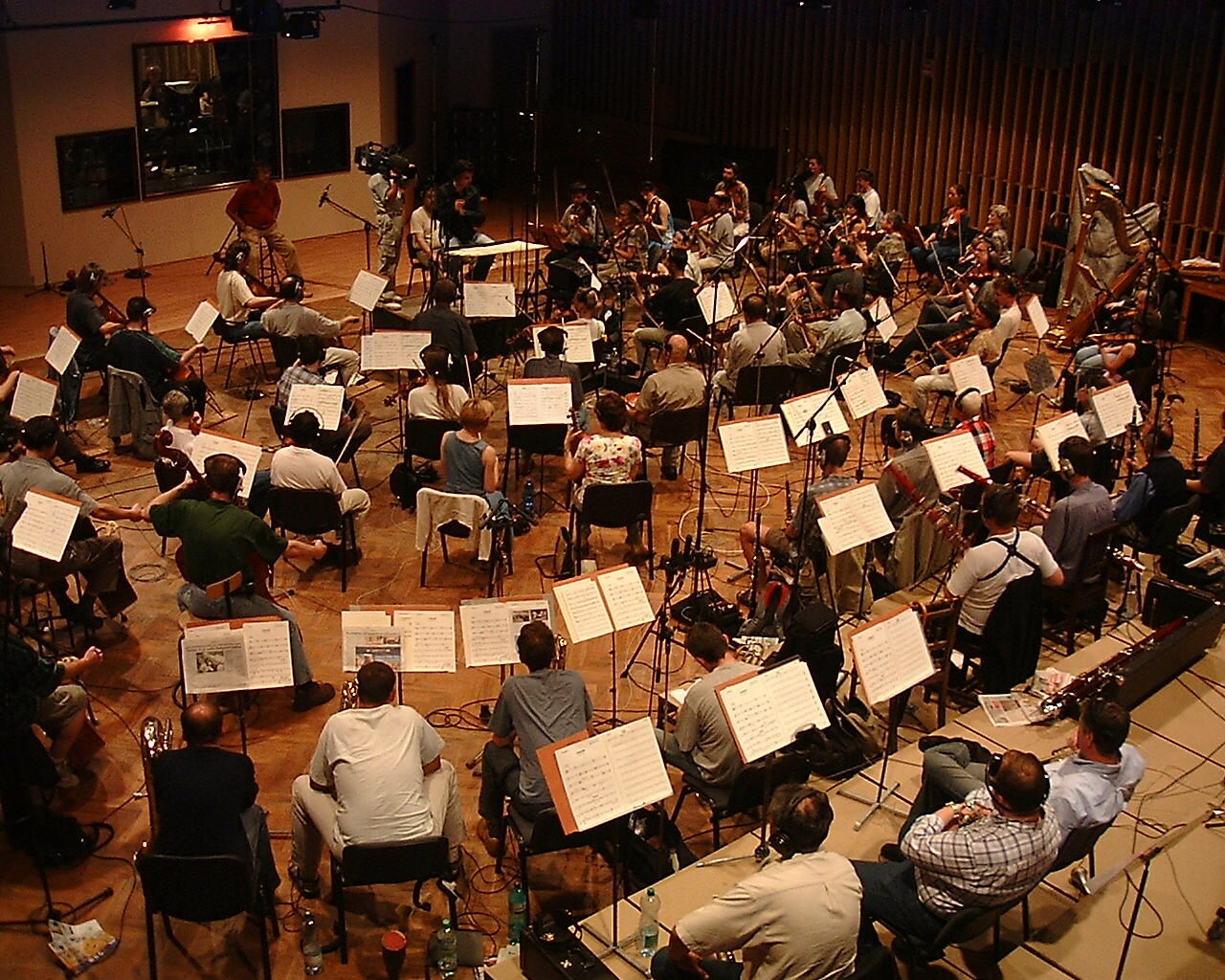
Music prep and click tracks — The music editor prepares click tracks for recording sessions, ensuring the orchestra performs to a tempo that hits specific visual moments. They work with music copyists and the score preparation team to ensure all materials are ready for the scoring stage.
Music playback on set — When a production requires playback of pre-recorded music on set (a musical number, a concert scene, a dance sequence), the music editor manages the playback system and ensures actors perform to the correct tempo.
Final mix support — During the final dub, the music editor sits with the re-recording mixer to address any last-minute adjustments: timing fixes, level decisions, music that conflicts with dialogue or effects.
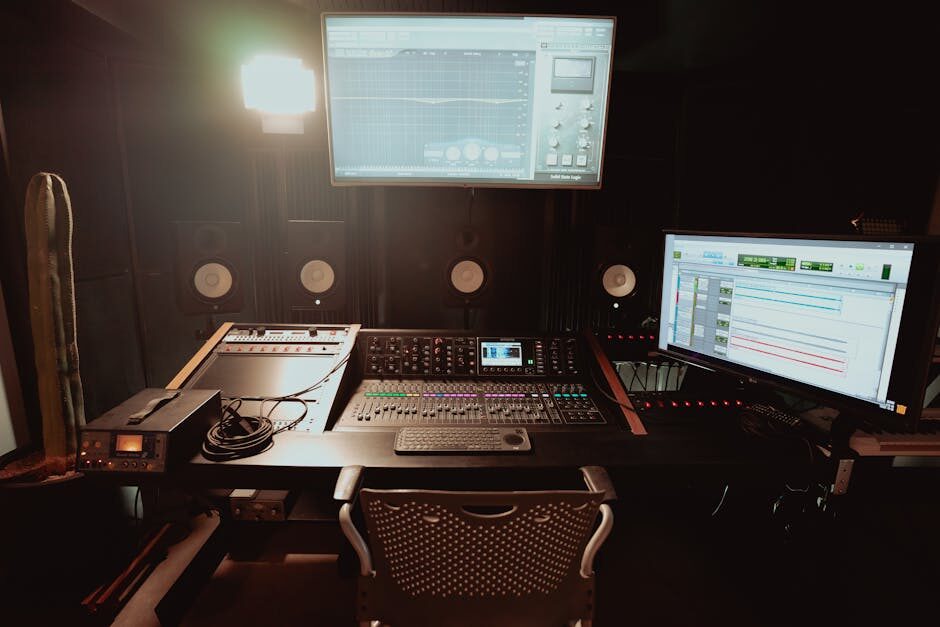
Tools and Software
- Pro Tools — the industry standard DAW for music editing
- Avid Media Composer — for picture sync and conforming
- MIDI and notation software — for click track creation and score communication
- Tempo maps — custom tempo grids built in the DAW to hit specific visual events
Music editor salary
What Music Editors Earn
Music editor compensation is governed primarily by union agreements and production type.
| Type | Range | Context |
|---|---|---|
| IATSE Local 700 (union feature) | $70K–$120K/year | Guild minimums for features and network TV |
| Freelance day rate (studio) | $600–$1,200/day | High-budget streaming and features, LA rates |
| Freelance day rate (mid-budget TV) | $400–$700/day | Cable, mid-tier streaming |
| Non-union / indie | $250–$450/day | Lower-budget independent productions |
Streaming platforms have driven rates upward for experienced music editors, particularly those with relationships with in-demand composers. Television offers more consistent work than features — a 10-episode streaming series can employ the same music editor for four to six months.
Music editors covered by IATSE Local 700 (Motion Picture Editors Guild) also receive residual payments when productions are broadcast or distributed, which can significantly supplement project income.
How to become a music editor
Career Path and Qualifications
There is no single degree program that trains music editors. The role demands a combination of musical knowledge and post-production technical skills that most film programs don’t teach together.
Core competencies required:
- Strong musical ear and theory foundation (ability to read music is essential on scoring-stage productions)
- Pro Tools proficiency — specifically the music editing toolkit
- Understanding of picture editorial workflow (Avid, spotting, conforming)
- Familiarity with orchestral instrumentation and recording practices
- Ability to build tempo maps and click tracks precisely
Typical career paths:
- Music background first — trained musician who learns post-production tools. Common among those who studied composition, orchestration, or conducting and transitioned into editorial
- Post-production background first — assistant picture editor or sound editor who developed a strong musical interest and moved toward music editing
- Music preparation background — music copyists and orchestrators who build relationships on scoring stages and transition into editorial
Union membership: Working music editors on guild productions are members of IATSE Local 700 (Motion Picture Editors Guild). Membership becomes available once a required number of qualifying credits have been accumulated.
Where does the music editor appear in film credits?
Credit Placement in the End Crawl
The music editor’s credit appears in the Music department of the end crawl, not in Sound Post-Production. Despite the editorial nature of the work, music editors are classified within the music department because their work product is music, not sound effects or dialogue.
The standard department order in the end crawl places the Music department immediately after picture editorial and before Sound Post-Production.
Within the Music department, the credit order is:
- Music by / Original Score — the composer (often a single card or prominent placement)
- Music Supervisor
- Music Editor
- Score Mixer / Score Recording Mixer
- Orchestrators
- Additional Music Composers
- Music Preparation
- Musicians (session performers)
- Music Clearances / Music Licensing
The music editor typically appears as a single credit line in the music department block:
Music Editor ................. SARAH CHENOn larger productions with multiple music editors — a common arrangement on long-form television with a music editor and an additional editor or assistant music editor — credits appear in a stacked format:
Music Editor
    Sarah Chen

Additional Music Editor
    Marcus Webb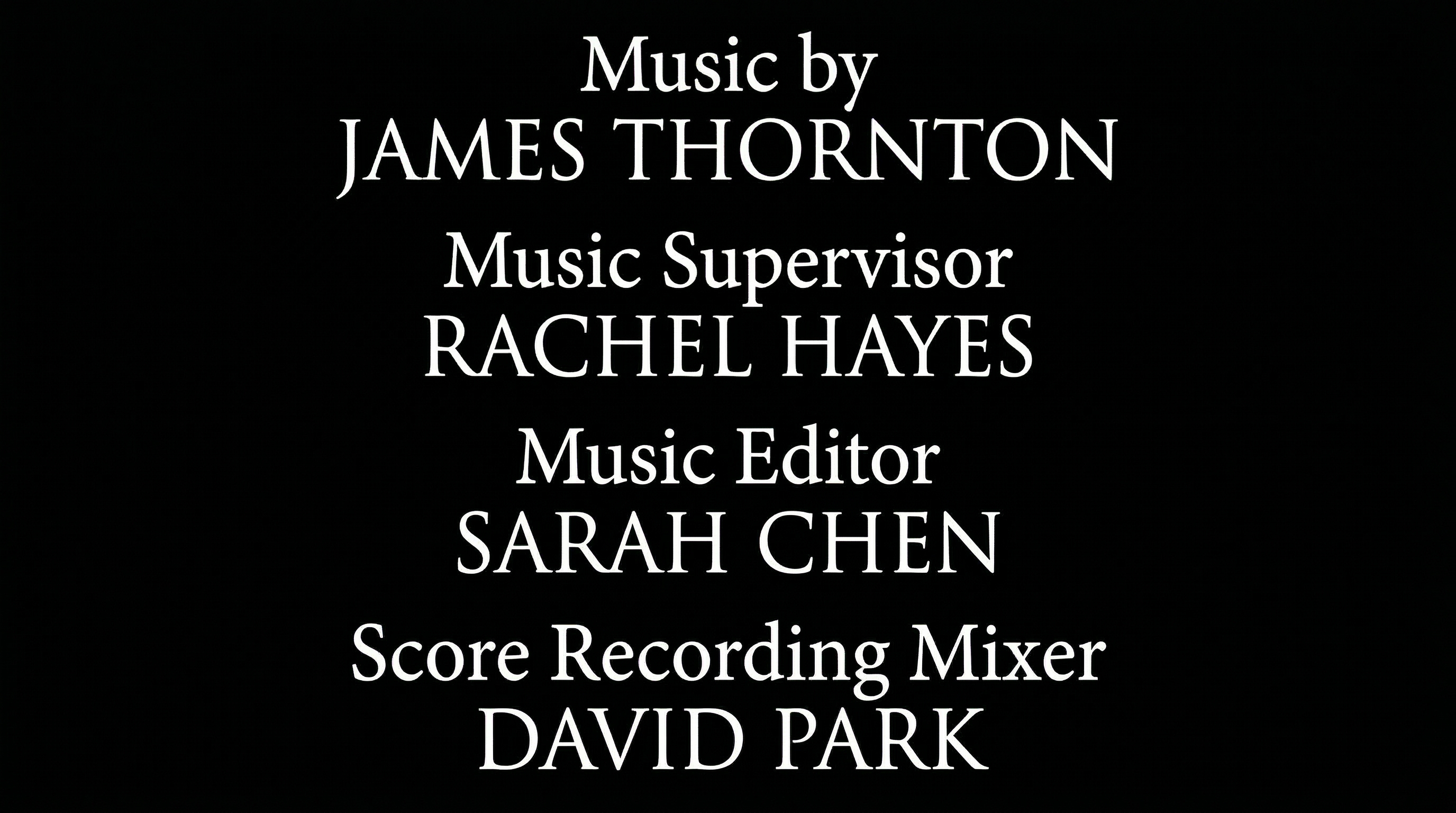
Opening Credits
Music editors do not appear in opening credits. Opening cards are reserved for above-the-line talent. The lone music-related credit that sometimes appears in opening credits is the composer (“Music by Hans Zimmer”), and that is the exception, not the rule for the department.
How to credit a music editor correctly
Formatting Rules and Title Variations
The standard credit title is “Music Editor” — two words, title case. It is never abbreviated in on-screen credits.
| Credit Title | Usage |
|---|---|
| Music Editor | Standard on all productions |
| Supervising Music Editor | Senior role when multiple music editors are hired |
| Additional Music Editor | Second editor on large-scale productions |
| Music Editor / Music Preparation | Dual credit when same person handles both functions on indie productions |
| Music Coordinator | A different role — handles licensing, clearances, and administrative music tasks |
Do not confuse “Music Editor” with “Music Supervisor.” These are distinct roles:
- The Music Supervisor selects pre-existing licensed music (songs) for use in a production and manages licensing fees and contracts
- The Music Editor edits and syncs all music — both original score and licensed songs — to picture
Both roles may appear on the same production. On many streaming productions, the music supervisor and music editor work closely together, but they receive separate credits in the Music department.
If a person served as both music editor and music supervisor on the same production, list each credit separately on its own line — never combined. The credit order should follow standard department hierarchy: Music Supervisor before Music Editor.
Music editors on union productions are covered by IATSE Local 700 (Motion Picture Editors Guild). The MPSE (Motion Picture Sound Editors) also recognizes music editing through its Golden Reel Awards, which include a dedicated Music in a Motion Picture and Music in a Documentary category.
Music editor vs composer
How the Roles and Credits Differ
| Music Editor | Composer | |
|---|---|---|
| What they do | Edits, syncs, and conforms music to picture | Writes original music for the production |
| When they work | Spotting through final mix | Spotting through scoring session |
| Musical skill | Strong musical knowledge; not required to compose | The primary creative musical voice |
| Credit position | Music department, below composer | ”Music by” — top of department, often a single card |
| Union | IATSE Local 700 | No mandatory union (Composers are typically not unionized; IATSE 700 does not cover composers) |
On major productions, the composer and music editor form one of the most essential creative partnerships in post. As a working composer describes it: “It’s very important that the composer and music editor is like a really solid team and that you really trust each other.” The music editor is frequently the composer’s closest collaborator in the room — reviewing cues privately before the director hears them, flagging timing issues, and translating editorial feedback into musical adjustments.
Notable music editors in film history
Influential Professionals in the Field
Dan Carlin Sr. — one of the most decorated music editors in Hollywood history. Credits include Apocalypse Now, The Right Stuff, Air Force One, and GoodFellas. Winner of multiple MPSE Golden Reel Awards and mentor to a generation of music editors. His son, Dan Carlin Jr., is also a working music editor.
Bob Badami — veteran music editor with decades of credits across studio features. Known for his exacting standards and strong working relationships with major composers.
Darrell Hall — long-time music editor with credits on films including The Silence of the Lambs and Philadelphia. Worked closely with Howard Shore and other major film composers.
Lisa Jaime — music editor with credits on multiple major studio productions, including work on high-profile streaming series. Representative of the next generation of music editors emerging through streaming-era production.
Ken Wannberg — one of John Williams’ primary music editors from the 1970s through the 1990s. Credits include the original Star Wars trilogy, Raiders of the Lost Ark, E.T., and Schindler’s List. The music editor-composer relationship between Wannberg and Williams is considered a model of the craft.
Sources & Further Reading
- IATSE Local 700 — Motion Picture Editors Guild — union covering music editors
- MPSE Golden Reel Awards — recognizes music editing excellence
- Film Credits Format & Order Guide — EndCreditsPro
- Complete Guide to Film Credits — EndCreditsPro
Recommended Videos
Create Professional Credits with EndCreditsPro
Format music editor credits with correct Music department ordering, guild-compliant title formats, and proper credit hierarchy from composer through musicians — all in minutes. Generate broadcast-ready end credits with EndCreditsPro or explore all film crew roles.
For related roles in the Music and Sound departments, see Composer, Music Supervisor, ADR Mixer, and Title Designer.