What Is a Production Designer in Film?
David O. Selznick invented the title for William Cameron Menzies on Gone with the Wind in 1939. Every set you’ve ever been transported by has one person responsible — this is that person.
The production designer is the department head responsible for the complete visual world of a film or television production. Every physical element the camera sees — sets, locations, furniture, props, color palettes, architectural details — falls under their creative and logistical authority. They are the head of the art department, which means they don’t just design; they hire, budget, and manage.
Production designers report directly to the director and work in close coordination with the director of photography (DP). Their visual decisions directly shape how the DP lights, frames, and shoots every scene.
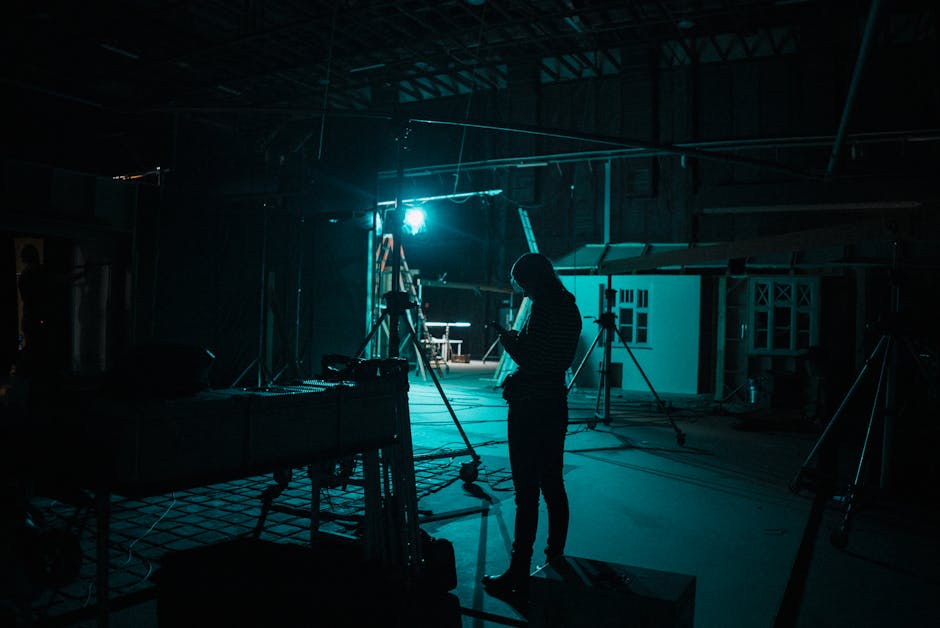
What does a production designer do?
What Does a Production Designer Do?
The production designer’s work begins before any other department head touches the script. In pre-production, they break down every scene for its visual requirements: what locations are needed, what needs to be built from scratch, what can be found, and how much all of it costs.
Core pre-production responsibilities:
- Develop the visual concept and overall aesthetic language of the film in collaboration with the director
- Generate a complete art department breakdown and budget from the script
- Scout and assess locations, often alongside the director and DP
- Commission concept art, storyboards, and scale drawings for custom builds
- Hire the full art department: art director, set decorator, set dresser, props master, graphic designer, and construction coordinator
On set during production:
- Supervise all set construction and dressing
- Attend location scouts and tech scouts to plan shooting requirements
- Coordinate with the DP on color palette, texture, and how sets will be lit
- Solve last-minute problems — a wall that can’t come down, a location that floods, a prop that reads wrong on camera
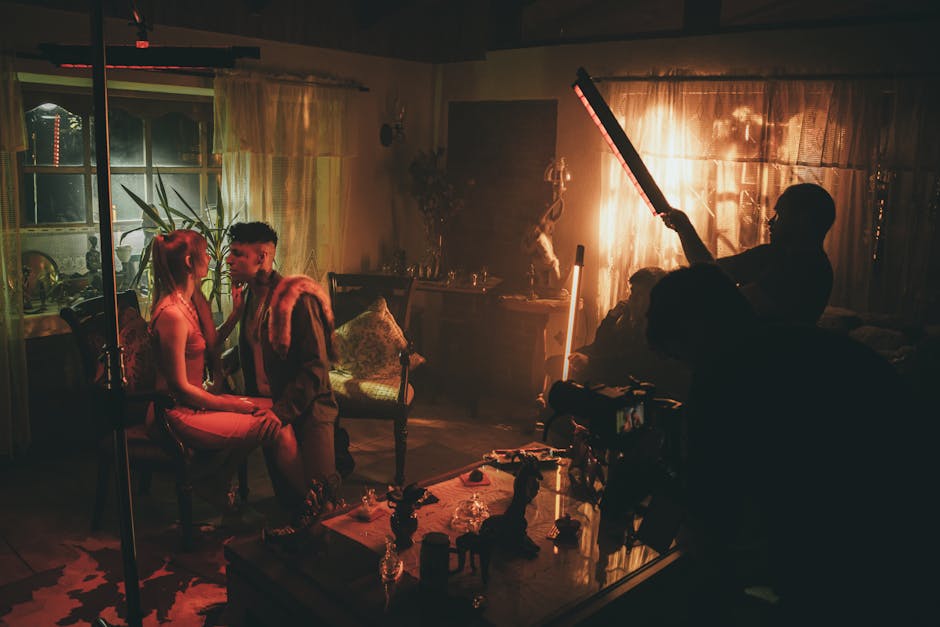
Tools of the trade: CAD software (AutoCAD, SketchUp), mood boards, lookbooks, scale models, Adobe Creative Suite for graphic design elements within the world, and a deep personal library of reference materials spanning architecture, art history, and period research.
The production designer reports to the director and producer. The art director reports to the production designer and manages the day-to-day execution of the design plan.
Production designer salary
Production Designer Salary & Day Rates
Production designer compensation varies significantly by project budget, union status, and market. On IATSE-covered productions (major studio features and network television), production designers are represented under IATSE Local 800 (Art Directors Guild) in the United States.
Typical rate ranges:
| Production type | Rate |
|---|---|
| Studio feature (IATSE) | $4,500–$8,000+/week |
| Mid-budget independent | $2,500–$4,500/week |
| Streaming TV (major) | $4,000–$7,500/week |
| Low-budget / non-union | $1,000–$2,500/week |
These figures reflect the U.S. market. The Art Directors Guild (IATSE Local 800) negotiates minimum rates through collective bargaining agreements with the AMPTP. Day rates for short shoots are typically calculated at approximately 1/5th of the weekly rate.
Senior production designers on major studio features can command significantly above scale through individual negotiation, particularly those with consistent above-the-line relationships or established reputations.
Where does the production designer appear in film credits?
Where the Production Designer Appears in Film Credits
The production designer receives a prominent placement in both opening and end credits on most major productions — a reflection of their above-the-line-adjacent creative authority.
Opening credits (main titles): On studio features, the production designer typically receives a solo card in the main title sequence, appearing after the director of photography and before or alongside the costume designer. The standard wording is:
Production Designer
FIRSTNAME LASTNAME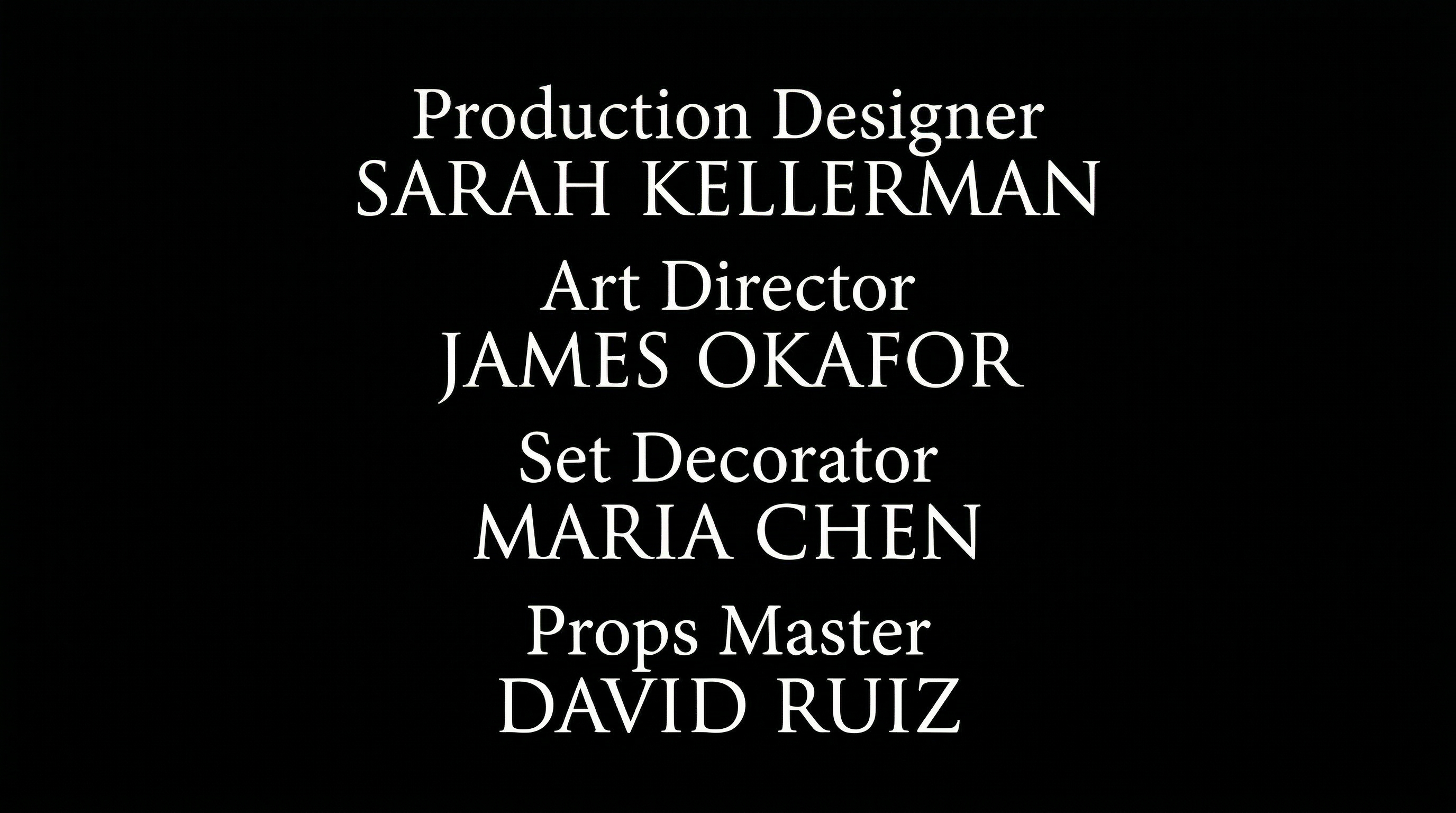
Not all films carry opening credits for the production designer. On films with minimal opening credits, they appear only in the end crawl.
End credits: In the main end crawl, the production designer appears in the Art Department section. Placement within that section:
- Production Designer — first position (always)
- Art Director(s) — second position
- Set Decorator — third position
- Set Dresser(s) / Lead Person
- Props Master
- Additional art department crew
The Art Department section typically falls after the camera and grip/electric departments in the crew scroll.
Television and streaming: On television, the production designer often appears in the main titles of each episode alongside the DP and other key above-the-line credits. In streaming productions, the format follows theatrical convention but placement can vary by deal.
Academy Award: The Oscar for Best Production Design (called Best Art Direction until 2012) is awarded jointly to the production designer and the set decorator — recognition that the visual world of a film requires both roles equally.
How to credit a production designer correctly
How to Credit a Production Designer
Standard feature film credit format:
Production Designer
FIRSTNAME LASTNAME
The title “Production Designer” should always be spelled out in full — never abbreviated as “PD.” Guild contracts specifically require the full title. On older films you may see “Art Direction by” — this was the standard title before the IATSE Local 800 negotiated the change to “Production Designer” as the required credit.
Common variations and when to use them:
| Format | When used |
|---|---|
| Production Designer | Standard — features, streaming, prestige TV |
| Production Design | Opening title card (as a possessory label, e.g., “Production Design by John Doe”) |
| Art Direction | Older films, some independent productions — acceptable but not current guild standard |
| Visual Production Designer | Animation and visual effects-heavy productions |
What to do when one person holds multiple roles: On low-budget productions where one person serves as both production designer and art director, credit them as Production Designer only — it is the higher title and subsumes the art director role. Do not double-credit the same person under two titles unless contractually required.
Shared credit: On large productions with multiple units or very long shoots, two production designers may share the credit. Format:
Production Designers
FIRSTNAME LASTNAME
FIRSTNAME LASTNAME
Production designer vs art director
Production Designer vs. Art Director
This is the most common confusion in the art department, and it matters for credits.
The production designer sets the visual concept. They are the creative authority and the department head. They answer to the director and producer.
The art director executes that concept. They manage the art department on a day-to-day basis — supervising draftspeople, coordinating construction schedules, tracking the art department budget, and making sure every set is built to spec and on time. On large productions, there may be multiple art directors (first art director, supervising art director, assistant art director).
The analogy: the production designer is the architect; the art director is the site manager.
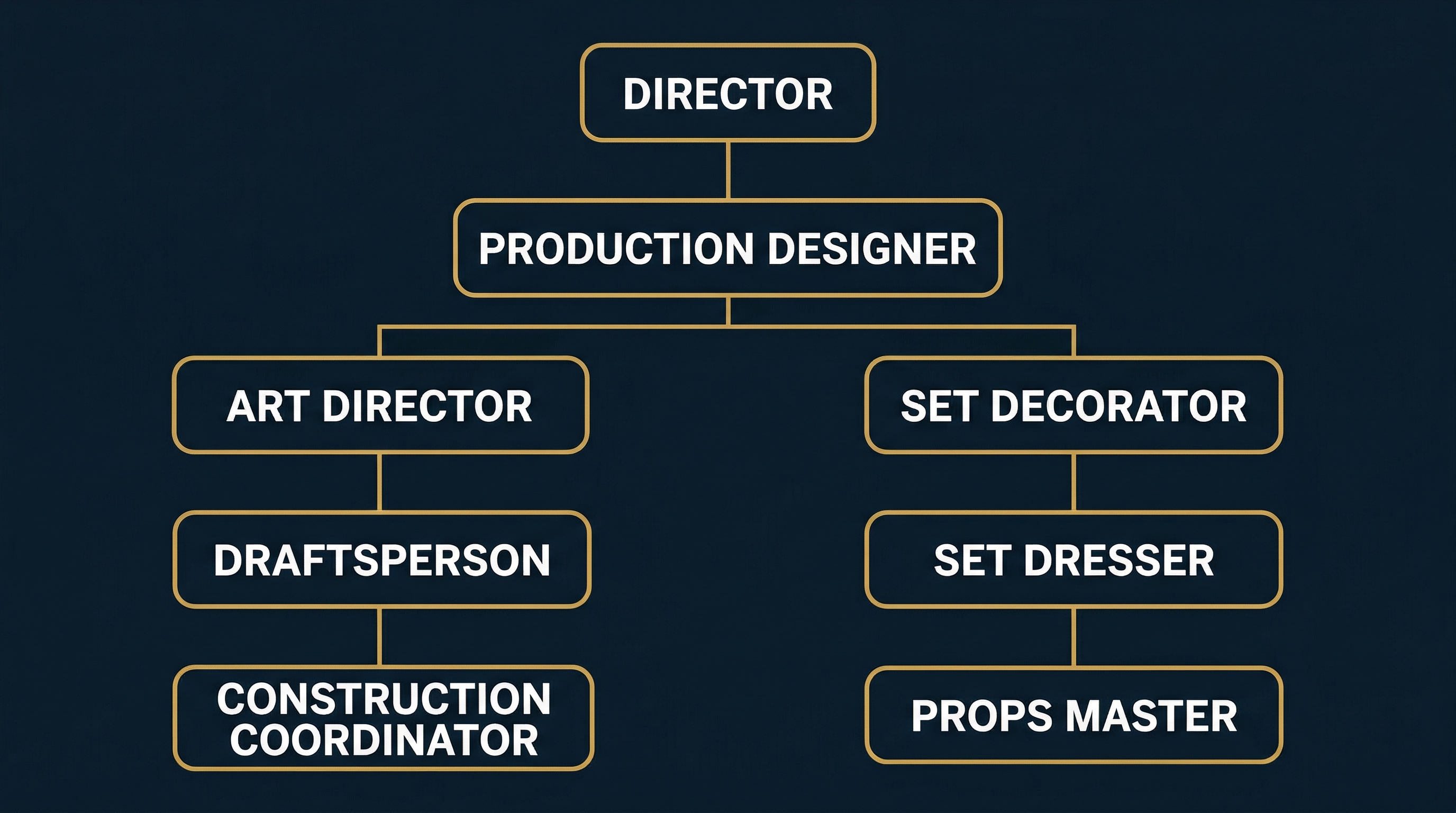
In credits, they always appear separately:
- Production Designer always comes first
- Art Director(s) follow immediately after
- They are never listed at the same level or in the same billing block
For related roles in the same department, see the page on art director. Within this site, the cinematographer page covers the DP’s role and how their collaboration with the production designer shapes the film’s visual language.
Notable production designers in film history
Notable Production Designers in Film History
William Cameron Menzies — The first. His work on Gone with the Wind (1939) was so comprehensive and conceptually unified that David O. Selznick created the title “production designer” specifically for him. Menzies designed not just the sets but the color palette, camera angles, and visual storytelling approach for the entire film.
Ken Adam — Defined the visual language of the James Bond franchise through seven films and designed the War Room in Dr. Strangelove (1964), one of the most iconic sets in cinema history. Received Academy Award nominations for both.
Hannah Beachler — The first Black production designer to win the Academy Award for Best Production Design, for Black Panther (2018). Her creation of Wakanda required designing an entire fictional nation’s architecture, fashion aesthetic, and material culture from scratch.
Rick Carter — Two-time Oscar winner (Avatar, 2009; Lincoln, 2012) and Steven Spielberg’s long-term collaborator. His work spans science fiction, period drama, and contemporary realism.
Patrizia von Brandenstein — Won the Academy Award for Amadeus (1984) and was the first woman to receive the honor. Her production designs across a 40-year career include Saturday Night Fever, The Silence of the Lambs, and Biloxi Blues.
How to become a production designer
How to Become a Production Designer
The production designer role is almost always reached through the art department career ladder, not through formal education alone. The typical path:
- Entry-level art department — PA, art department coordinator, or runner on set
- Set dresser / dressing department — hands-on work with the physical set
- Art director — managing the execution of the production design
- Production designer — earned through relationships and demonstrated creative vision
Formal training in architecture, fine arts, theater design, or interior design provides relevant skills but is not required. The AFI Conservatory offers a dedicated MFA in Production Design. The IATSE Local 800 (Art Directors Guild) is the union for production designers and art directors on major U.S. productions — joining typically requires being hired on a union production after enough non-union credits.
What separates working production designers from those who don’t make it: the ability to translate a director’s abstract vision into concrete, buildable, shootable environments — under budget constraints and on a schedule. It is as much a management role as a creative one.
Sources & Further Reading
- IATSE Local 800 — Art Directors Guild — union representing production designers, art directors, and scenic illustrators in the U.S.
- Academy of Motion Picture Arts and Sciences — Production Design Branch — the branch that votes on the Best Production Design award
- AFI Conservatory Production Design Program — MFA program information
Create Professional Credits with EndCreditsPro
Production designers earn prominent, precisely formatted credits — and getting the title, position, and spelling right matters to the people who made your film. EndCreditsPro generates broadcast-ready end credits with the correct art department hierarchy built in, so your production designer, art director, and set decorator are credited accurately, in the right order, every time.
Generate guild-compliant credits in minutes →
See also: Film Crew Roles · Cinematographer (DP) · Gaffer · Film Credits Format & Order Guide