What Is a Sound Designer in Film?
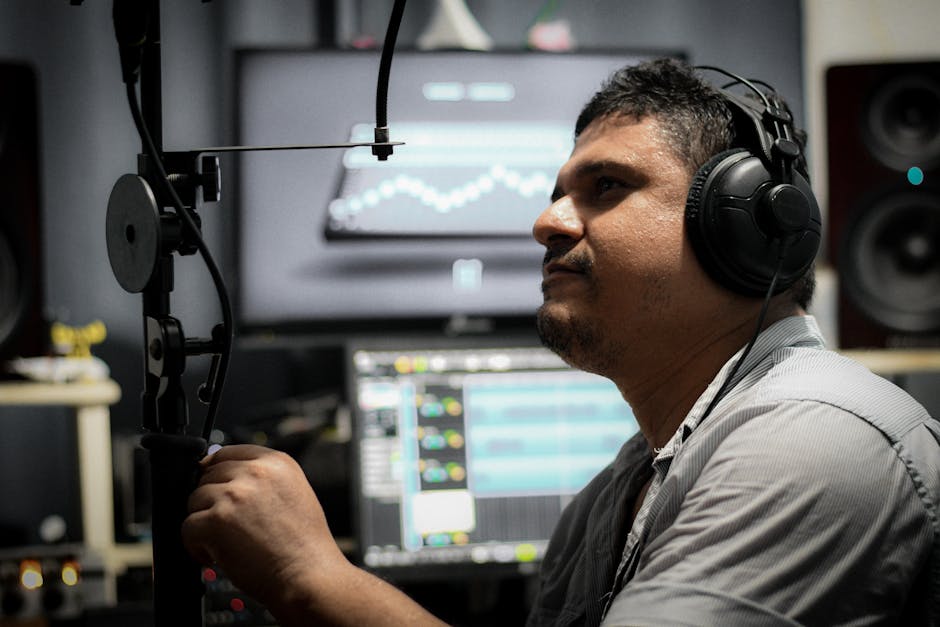
Every sound you hear in a finished film — except the dialogue recorded on set — was either chosen or built by the sound designer. The explosions, the footsteps on wet pavement, the distant train that establishes a neighborhood: all of it.
A sound designer in film is the creative lead responsible for shaping the entire sonic identity of a production. They design, source, edit, and supervise every non-dialogue, non-music audio element — sound effects, ambiences, Foley, and the texture that makes a film’s world feel tangible.
The role sits squarely in post-production. Sound designers are distinct from production sound mixers, who record live dialogue on set. Where the production mixer captures reality, the sound designer constructs it.
What does a sound designer do in film?
What a Sound Designer Actually Does
The simplest description — “they make the sound effects” — misses the creative scope. Sound designers are storytellers who work in frequency and time. Their responsibilities span:
Pre-production:
- Consult with the director on the sonic identity and emotional tone of the film
- Read the script and identify scenes requiring custom sound creation (creature sounds, unique environments, designed weapon sounds)
- Begin building a “sound bible” — the tonal vocabulary that will unify the film
Post-production (primary phase):
- Design original sound effects from scratch using synthesis, field recordings, and layered audio sources
- Build and edit ambiences (room tones, environmental beds, atmospheric textures)
- Supervise the sound editing team — dialogue editors, effects editors, Foley editors
- Coordinate with the re-recording mixer and music editor to ensure sound effects, dialogue, and score coexist without masking each other
- Attend all sound mix sessions to protect the creative intent of their work
Key tools: Pro Tools (industry standard DAW), iZotope RX (restoration), Kontakt (sample instruments), large proprietary sound libraries, field recording equipment (Zoom H6, Sennheiser MKH series)
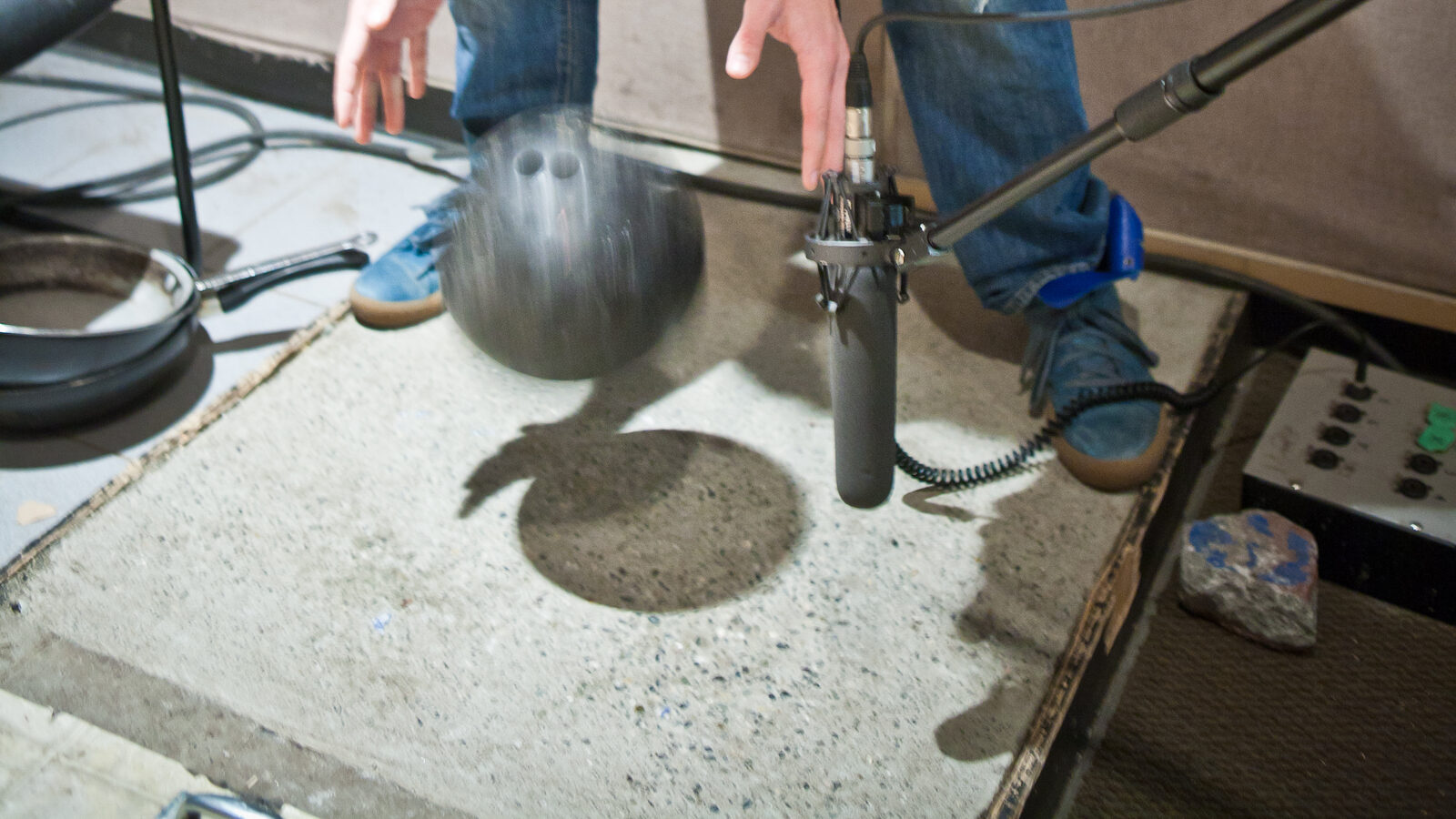
The sound designer reports to the director and producer, and works alongside the film editor and re-recording mixer. They supervise sound editors, Foley artists, and ADR teams.
Where does the sound designer appear in film credits?
Sound Designer Credit Placement in End Credits
The sound designer credit appears in the end credits, within the Sound department block. This section typically follows Music and precedes Visual Effects in the standard credit order.
Position within the Sound department:
| Role | Typical Position |
|---|---|
| Sound Designer | First or second in the sound block |
| Supervising Sound Editor | First or second (often the same person) |
| Re-recording Mixers | Follow immediately after |
| Sound Effects Editors | Listed as a group |
| Foley Artists | Listed as a group |
| ADR Mixer | Separate line |
On prestige productions, the sound designer often receives a dedicated card — their name appears alone on screen, a marker of their contribution to the film’s identity. This is not universal; on smaller productions, the sound designer may appear in the scrolling end crawl.
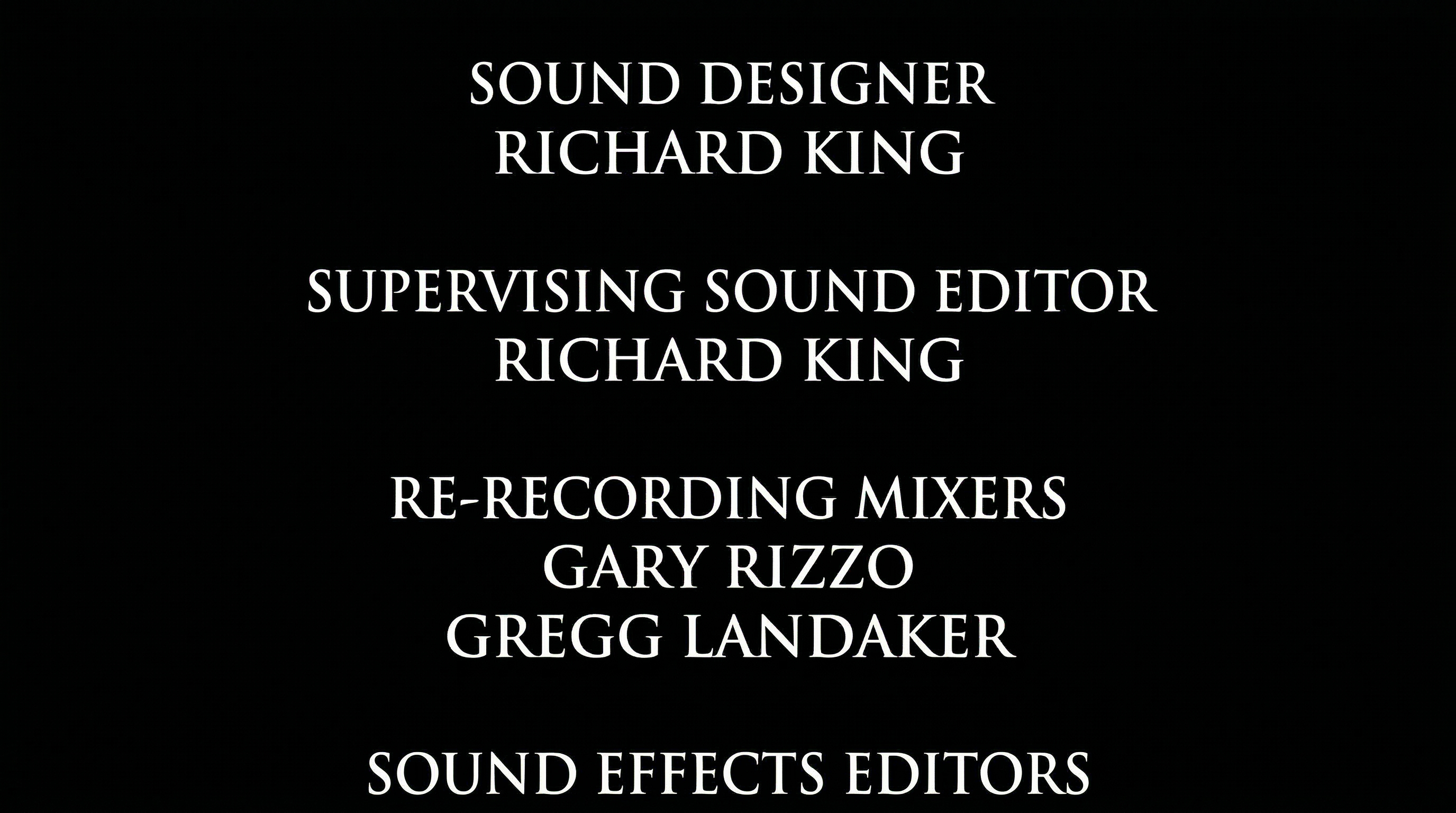
Opening credits: Sound designers almost never appear in opening credits. The opening cards are reserved for above-the-line talent (director, writer, lead producers, lead cast). Sound design is an end-credit role.
The “Supervising Sound Editor” overlap: On many studio films, the Supervising Sound Editor and the Sound Designer are the same person, credited as both. The Supervising Sound Editor title is the guild designation (IATSE Local 700 — Motion Picture Editors Guild); “Sound Designer” is the creative title. Some productions credit both separately if the scope warrants two distinct leads.
Oscar recognition: Since 2021, the Academy merged Best Sound Editing and Best Sound Mixing into a single Best Sound category. The award is given to the re-recording mixers and the sound supervisor/designer. This change reflects how inseparably design and mix are linked on modern productions.
How to credit a sound designer correctly
Correct Credit Format for Sound Designers
The sound designer title is not governed by a union contract the way DGA, WGA, or SAG-AFTRA credits are. There is no mandated format enforced by an external guild for the “Sound Designer” title specifically. This means filmmakers have flexibility — and responsibility.
Standard formats:
Sound Designer .............. Jane SmithSound Designer
Jane SmithFor dual titles:
Sound Designer & Supervising Sound Editor .... Jane SmithWhat to avoid:
- “Sound Design by Jane Smith” — this is the theatrical/theatre convention, not standard film format
- Omitting the title entirely if the person performed substantial design work — this is a professional slight
- Listing as “Sound Effects” rather than “Sound Designer” — these are different roles
If one person handled multiple sound roles (common on indie films):
Sound Design & Mix ........... Jane Smithor simply credit each function separately:
Sound Designer .............. Jane Smith
Re-recording Mixer .......... Jane Smith
The Motion Picture Sound Editors (MPSE) sets professional standards for sound credits on larger productions — checking their guidelines is advisable if your production has an MPSE member on the team.
Sound designer vs. supervising sound editor
Sound Designer vs. Supervising Sound Editor
This is the most common point of confusion in sound credits, and the distinction matters for both professional courtesy and accurate credits.
| Sound Designer | Supervising Sound Editor | |
|---|---|---|
| Focus | Creative sonic identity | Editorial supervision and workflow |
| Primary work | Designing original sounds | Overseeing editing team, technical delivery |
| Credit origin | Creative title, no guild mandate | IATSE Local 700 designation |
| Oscar eligibility | Yes (Best Sound) | Yes (Best Sound) |
| Common overlap | Often the same person on studio films | Often the same person on studio films |
On a $100M studio film, the Sound Designer may be an auteur-level collaborator (Ben Burtt on Star Wars, Walter Murch on Apocalypse Now) who shapes the film’s identity from script stage. On a $500K indie, “sound designer” often means the person who handled all post-production audio — design, editing, and mix.
The title you put in the credits should reflect the actual scope of work. For short films and low-budget productions, one person handling everything is the norm — credit them accurately for what they did.
Sound designer salary
Sound Designer Salary & Day Rates
Sound design compensation varies widely based on budget, market, and whether the role is staff or freelance.
Freelance day rates (US market, 2024):
- Entry-level / indie: $300–$600/day
- Mid-career / episodic TV: $700–$1,200/day
- Senior / feature film: $1,500–$3,000+/day
Annual salary (staff positions — studios, post houses):
- Junior Sound Designer: $55,000–$75,000/year
- Mid-level: $80,000–$120,000/year
- Senior Sound Designer / Supervising Sound Editor: $130,000–$200,000+/year
Geography matters significantly. Los Angeles and New York rates run 20-40% higher than other markets. London and Toronto are competitive with LA for high-budget productions.
IATSE Local 700 (Motion Picture Editors Guild) contracts set minimum rates for covered sound editors — these floors are the baseline for union productions. Sound designers working outside guild contracts negotiate individually, which can work in their favor on high-budget non-union or indie productions.
Famous sound designers in film history
Notable Sound Designers in Film History
Ben Burtt

The defining figure in modern film sound design. Burtt created the entire sonic universe of the original Star Wars trilogy — lightsaber hum (broken TV projector combined with an idle film projector motor), R2-D2’s voice (Arp synthesizer + his own vocalization), and Chewbacca’s roar (a mix of bear, walrus, and lion recordings). He also designed the sound for the Indiana Jones series. Winner of multiple Academy Awards.
Walter Murch The other founding father of the field. Murch coined or popularized the term “sound designer” itself on Apocalypse Now (1979), where Francis Ford Coppola gave him the title to reflect the scope of his work. Murch’s approach — treating sound as a narrative tool that could carry emotional and psychological information — defined what the role could be.
Randy Thom Longtime sound designer at Skywalker Sound, Thom worked on The Right Stuff, Cast Away, The Incredibles, Ratatouille, and many others. His essay “Designing a Movie for Sound” remains required reading for anyone entering the field — it argues that films designed for sound from the script stage are invariably better films.
Richard King Four-time Academy Award winner (The Dark Knight, Inception, Dunkirk, Dune). King’s work on Christopher Nolan films established a distinctive aesthetic: massive, textured, hyper-realistic environments that feel immersive rather than synthetic.
Sources & Further Reading
Official resources:
- Motion Picture Sound Editors (MPSE) — professional organization for film sound editors and designers
- IATSE Local 700 (Motion Picture Editors Guild) — union representing sound editors
Recommended videos:
Further reading:
- Randy Thom, “Designing a Movie for Sound” — the foundational essay on sound design as storytelling
- ADR Mixer role — the dialogue replacement specialist working with the sound team
- Sound Editor role — managing dialogue, effects, and Foley tracks under the sound designer
- Film Credits Format & Order Guide — full reference for credit ordering across departments
Create Professional Credits with EndCreditsPro
Sound design credits require precision — the right title, the right order, the right format. EndCreditsPro generates broadcast-ready end credits with correct department ordering, professional typography, and guild-compliant formatting. No template wrestling, no guesswork on role titles.
Explore the film crew roles hub to see credit formats for every department.