What Is a Foley Artist in Film?
There are more astronauts in the world than working foley artists. Every footstep, door creak, and sword clash you hear in a film was performed live by one of them — and most audiences have no idea the job exists.
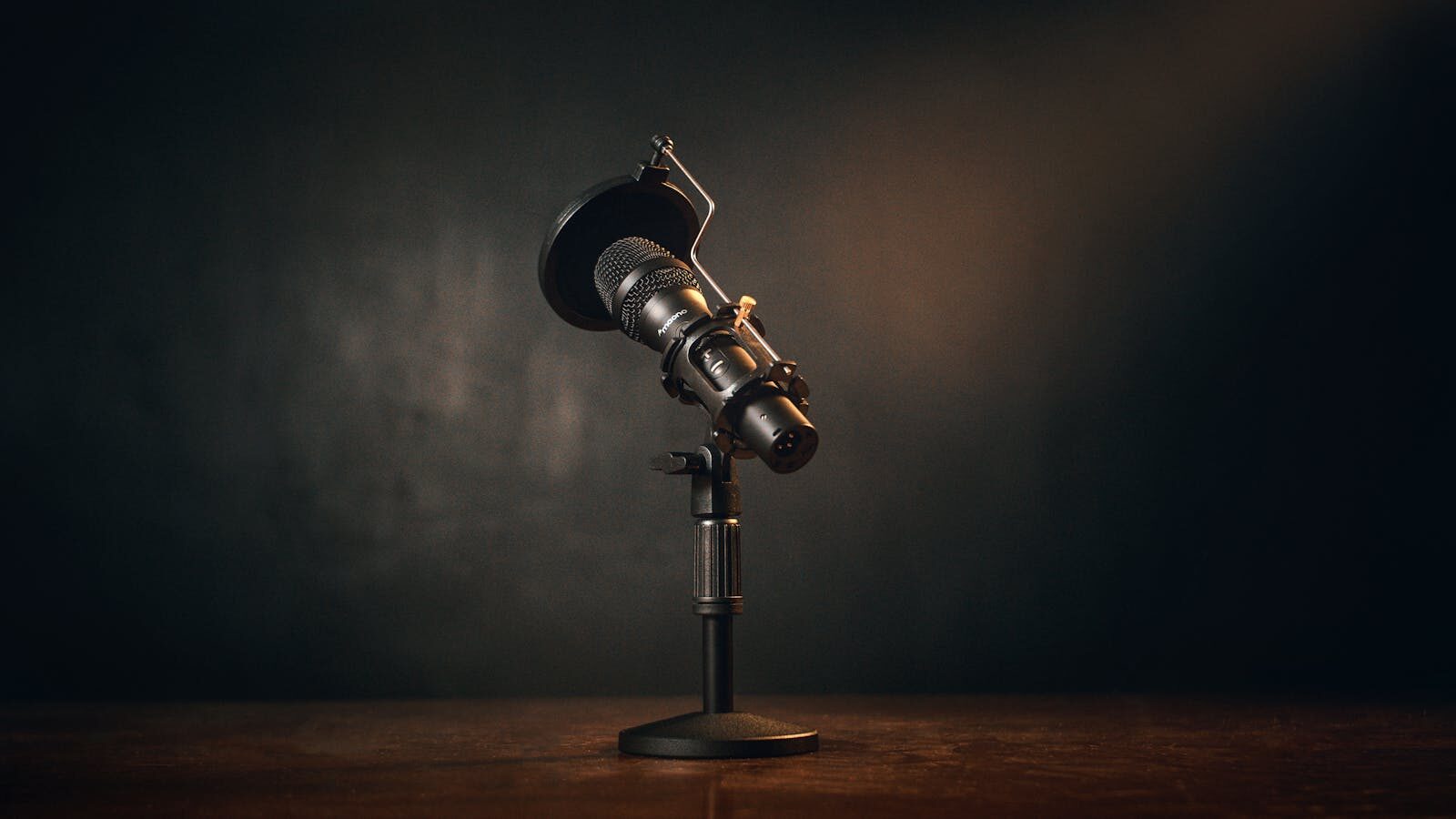
A foley artist is a post-production sound specialist who physically recreates everyday sounds in sync with the picture. Footsteps on gravel, a glass set on a table, the rustle of a jacket — none of these survive production recording, where microphones are aimed exclusively at dialogue. The foley artist performs them all over again on a dedicated stage, matching every movement frame by frame.
The craft is named after Jack Foley, a sound technician at Universal Studios who pioneered the technique in the late 1920s as Hollywood transitioned from silent films to “talkies.” Foley himself never received an on-screen credit for the work. Today, foley artists are credited in the Sound Post-Production department of the end credits, typically as a team of three: the performing artist, a foley mixer, and a foley editor.
What does a foley artist do?
The Day-to-Day on the Foley Stage
Foley work happens entirely in post-production, on a purpose-built foley stage — a room with interchangeable floor surfaces (concrete, dirt, wood, gravel), a water pit, and storage rooms filled with hundreds of props organized by type: shoes, chains, swords, keys, glass, fabric.
The foley artist works through the film in passes, each focused on a different sound layer:
Footsteps — the most time-consuming pass. The artist watches the screen and walks in sync with each character, matching gait, shoe type, surface, and emotional state. As one Emmy-nominated foley artist explains: the footsteps of a king should sound precise and authoritative, while a peasant’s should drag. On Bridgerton, the foley artist increased the “clicky-ness” of footsteps as social class rose.
Props — every object a character touches, picks up, sets down, or throws. Keys are keys. Dice have to be dice. But other sounds are creatively faked: celery snaps for bone breaks, cornstarch crunched in a bag for snow, a bowling ball dropped onto a car door for a body hitting a boat.
Cloth and movement — the rustle of costumes, capes, bedsheets. Performed separately so the mixer can control the level independently.
Specialized passes — creature sounds, fight hits (a boxing glove on a leather jacket with a chamois for “fleshiness”), water effects, and mouth sounds. A typical 45-minute TV episode generates 500 to 900 unique foley sound files.
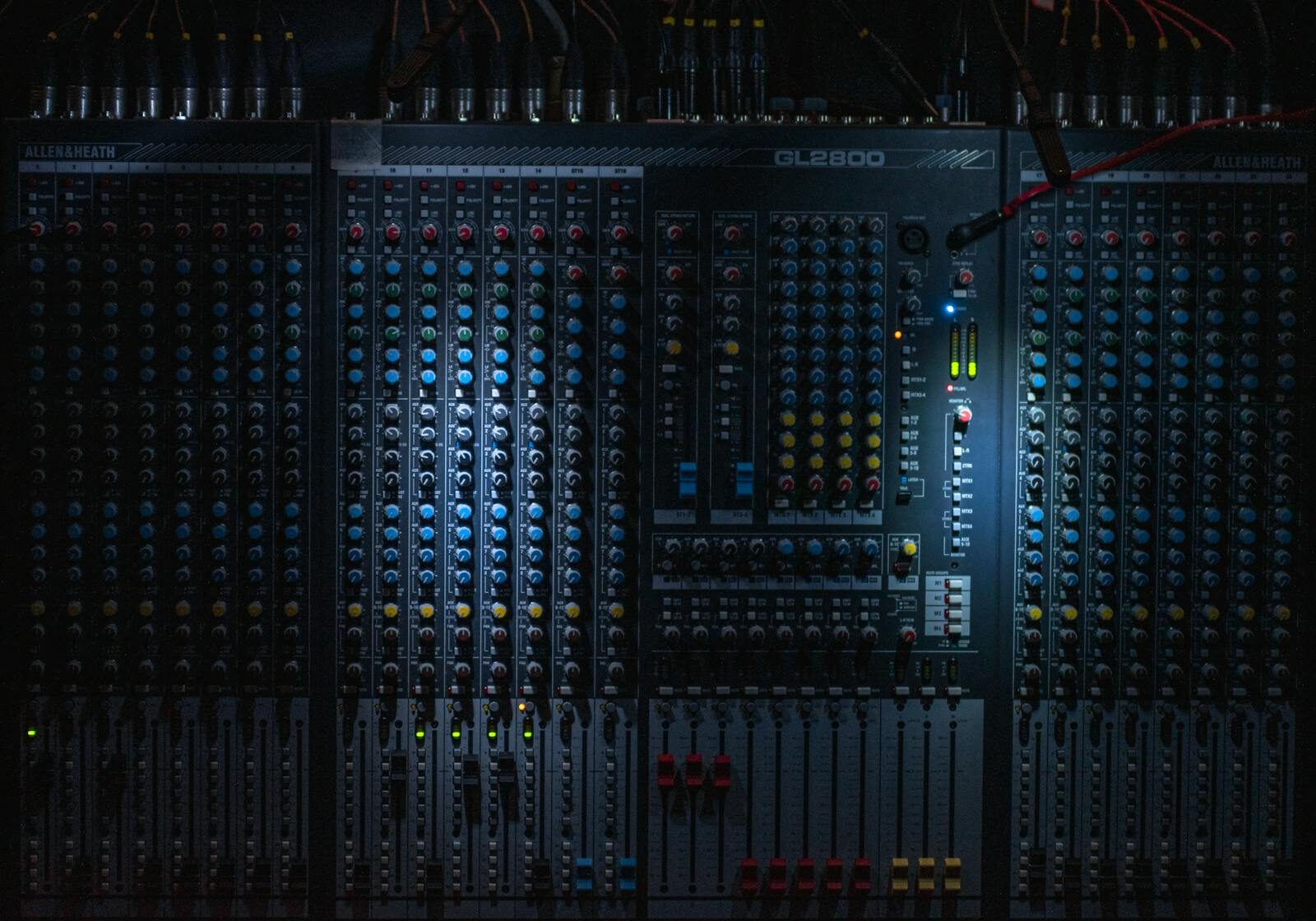
The foley artist performs alongside a foley mixer in the control room, who records, EQs, and shapes each sound in real time. The mixer deliberately does not watch the artist — they judge the sound purely by ear. After recording, a foley editor syncs and assembles the takes for the final mix.
Foley sound effects
How Everyday Objects Become Movie Sound
Every foley stage keeps an arsenal of props that bear no resemblance to the sounds they produce:
| On Screen | Prop Used |
|---|---|
| Horse hooves | Plungers stuffed with cloth |
| Snow footsteps | Cornstarch + play sand |
| Bird wings | Feather dusters |
| Dog paws | Gloves with paper clips |
| Sword draw | Real swords (often kept from previous productions) |
| Creature footsteps | Plungers with duct tape and paper napkins |
| Cracking ice | Pine cones |
| Gritty footsteps | Coffee grinds on concrete |
Foley artists also use their own voice as a hidden layer, burying vocal textures under prop sounds to add dimension. The mixer alters and blends these contributions until the source is unrecognizable.
Animation foley is a different discipline entirely. Live-action films have production sound as a reference — animation starts with silence. Every sonic element must be invented. Sounds are more exaggerated to match exaggerated movement: for the character Appa in Avatar: The Last Airbender, the foley team used plungers with duct tape to create large, muted creature footsteps. For SpongeBob, underwater scenes required a “water pass” where all cloth movement was performed by churning water in a tub instead of rustling fabric.
Where does the foley artist appear in film credits?
Credit Placement in the End Crawl
Foley credits sit within the Sound Post-Production department — one of the largest sections in the end crawl, containing up to 93 standardized roles across all sound sub-departments.
Within Sound Post, the sub-department order is:
- Sound supervision and editorial (Supervising Sound Editor, Sound Designer)
- Sound effects editing
- ADR (Automated Dialogue Replacement)
- Foley
- Loop Group
- Re-recording mixing
Foley appears after ADR and before Loop Group. On guild-governed productions, this ordering is contractual.
The Foley Credit Block
A standard foley team credit reads:
FOLEY ARTIST
    Jane Smith

FOLEY MIXER
    John Doe

FOLEY EDITOR
    Alex Johnson
In a two-column crawl:
Foley Artist .............. Jane Smith
Foley Mixer ............... John Doe
Foley Editor .............. Alex Johnson
Larger productions with multiple foley artists list them under a shared title card. The foley stage often receives a separate facility credit at the end of the post-production services section:
Foley recorded at Warner Bros. Post ProductionOpening Credits
Foley artists do not appear in opening credits. Opening cards are reserved for above-the-line talent: studio, production company, lead cast, director, writers, and producers. No below-the-line sound crew receives an opening card.
How to credit a foley artist correctly
Formatting Rules and Title Variations
The standard credit title is “Foley Artist” — always two words, always capitalized. Variations you may encounter:
| Credit Title | Usage |
|---|---|
| Foley Artist | Standard, preferred on modern productions |
| Foley Walker | Older/UK usage, still appears on some British productions |
| Foley Recordist | Occasionally used instead of Foley Mixer |
| Supervising Foley Editor | Senior editorial role on large productions |
| Senior Foley Artist | Lead performer when multiple artists are credited |
Never abbreviate “Foley Artist” in on-screen credits. “FA” is acceptable on call sheets but not in the crawl.
If a crew member held dual roles (Foley Artist and Foley Mixer, for example), list each credit separately in its respective position. Never combine them on a single line.
Foley artists working on union productions are covered by IATSE Local 700 (Motion Picture Editors Guild), which provides credit protections through collective bargaining agreements. The MPSE (Motion Picture Sound Editors) — an honorary society, not a union — recognizes foley work through its Golden Reel Awards, which include a dedicated Feature Effects/Foley category.
Foley artist salary
What Foley Artists Earn
Foley artist compensation varies by format, budget, and union status:
| Type | Range | Context |
|---|---|---|
| Union TV (IATSE) | $40K–$75K/year | Standardized minimums via collective bargaining |
| Freelance day rate | $400–$600/day | Scripted TV and features, LA/NYC rates |
| Non-union / indie | $150–$300/day | Lower-budget productions |
| Animation | Higher end of scale | Every sound must be created from scratch |
Television provides the most consistent work thanks to its episodic nature — a single series can employ the same foley team across an entire season. Feature film work is project-by-project and less predictable.
The profession is frequently described as “the bottom of the totem pole” in budget priority. Lower-budget productions often skip dedicated foley entirely, relying on sound libraries instead. But every project requiring an M&E (Music & Effects) mix for international distribution — which is most professional productions — needs recorded foley regardless of production sound quality.
How to become a foley artist
Breaking into One of Film’s Smallest Professions
There is no degree program for foley. The profession is learned through apprenticeship, and the community of working artists is vanishingly small.
Steps to break in:
- Learn Pro Tools — post-production audio runs almost exclusively on Pro Tools
- Build a reel — download short films from Vimeo and foley them yourself
- Record everything — carry a portable recorder (Zoom H4N) and build a personal sound library
- Intern at a foley stage — working studios are the only classroom
- Understand the difference — foley is performance, not editing. Pulling sounds from a library and syncing them to picture is sound editing, not foley
The typical career progression in sound post-production runs: sound assistant → foley editor → foley artist. Some artists transition into foley mixing or re-recording mixing. Union membership through IATSE Local 700 becomes available as credits accumulate.
Foley artist vs sound designer
How the Roles and Credits Differ
| Foley Artist | Sound Designer | |
|---|---|---|
| What they do | Performs real-world sounds in sync with picture | Creates and shapes the overall sonic identity of a film |
| When they work | Post-production only | Pre-production through final mix |
| Tools | Physical props, shoes, surfaces | DAWs, synthesizers, sound libraries |
| Credit position | Sound Post → Foley sub-department | Sound Post → top of department (leadership) |
| Team size | 2–3 people | Often solo or with assistants |
The foley artist recreates what exists on screen. The sound designer invents what doesn’t — the roar of a spaceship, the hum of a lightsaber, the sonic texture of a dream sequence. In the credits, the Sound Designer title sits at the top of the Sound Post department, while the Foley Artist sits mid-section. The roles never overlap.
Famous foley artists
Notable Professionals in Film History
Jack Foley — the inventor. A sound technician at Universal Studios in the 1920s, Foley realized that performing effects live to picture eliminated an entire production step. He worked at Universal for over 40 years, contributing to films from Showboat (1929) through Spartacus (1960). He never received an on-screen credit for foley work — the craft was named after him posthumously.
Gary Hecker — one of the longest-working foley artists in Hollywood. His first job was on The Empire Strikes Back (1980). Credits span Spider-Man, Django Unchained, and hundreds of others across four decades. On the craft: “It’s like a big canvas of sound and we paint different colors and textures and brush strokes.”
John Roesch — veteran Warner Bros. foley artist with credits on Avatar, Inception, The Dark Knight, and the Harry Potter series.
Marko Costanzo — prolific New York-based foley artist. Credits include Black Swan, No Country for Old Men, and Birdman.
John Rush — Skywalker Sound foley artist with nearly 40 years of experience. Credits include E.T., Interstellar, Back to the Future, and Braveheart. On the rarity of the profession: “There are more astronauts in the world than there are foley artists.”
Sources & Further Reading
- MPSE Golden Reel Awards — Motion Picture Sound Editors
- IATSE Local 700 — Editors Guild — union covering foley artists, foley editors, and foley mixers
- Complete Guide to Film Credits — EndCreditsPro
- Film Credits Format & Order Guide — EndCreditsPro
Recommended Videos
- Foley Artists: How Movie Sound Effects Are Made — Insider
- How Cartoon Sounds Are Made For Movies & TV Shows — Insider
Create Professional Credits with EndCreditsPro
Format foley artist credits with correct title placement, Sound Post department ordering, and facility credits — all guild-compliant. Generate broadcast-ready end credits with EndCreditsPro or browse all film crew roles.