What Is a Costume Designer in Film?
They’re not picking outfits. They’re building people — from the inside out, one fabric choice at a time.
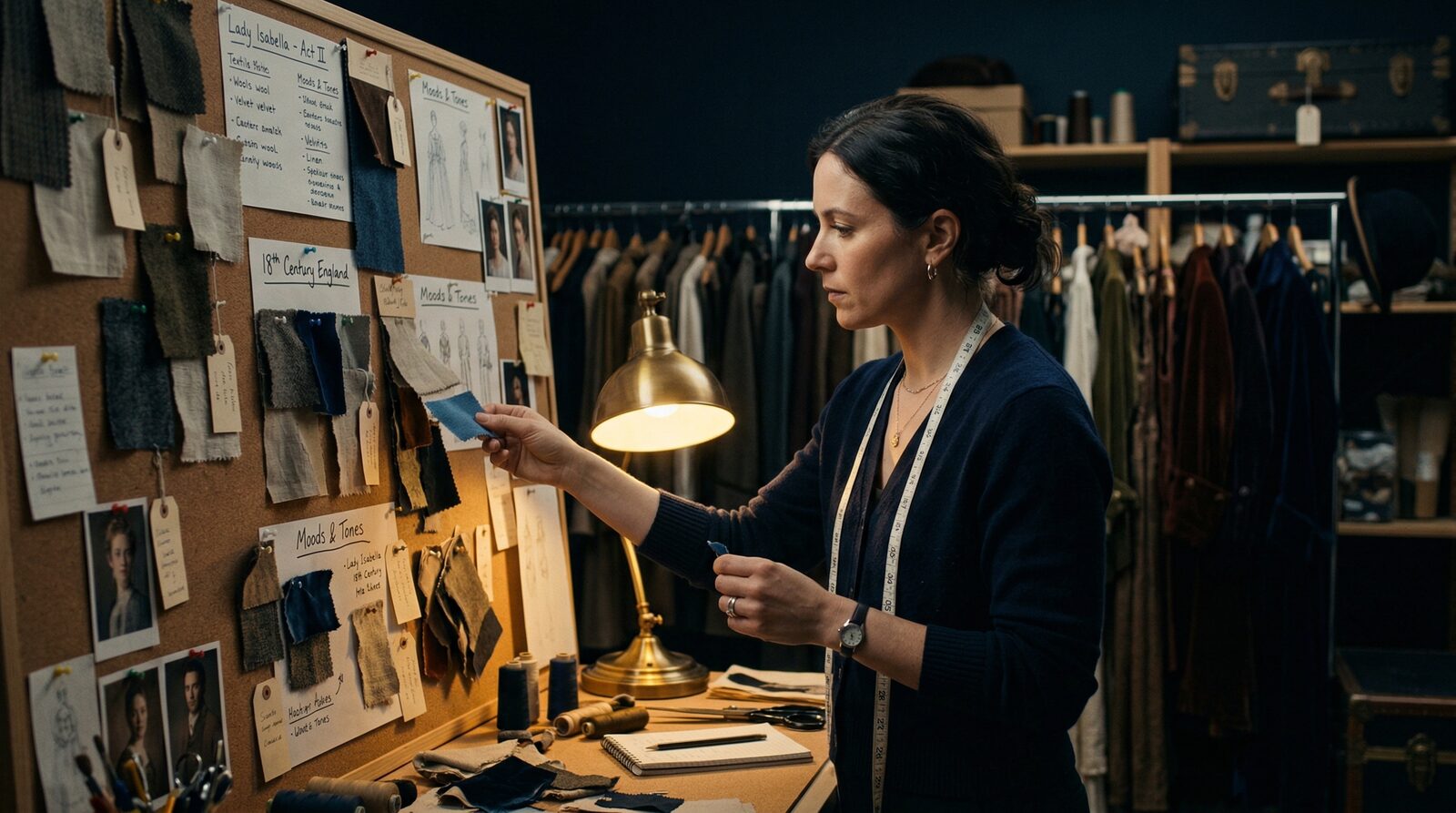
A costume designer is the department head responsible for every garment worn on camera: conceiving, sourcing, constructing, and managing all costumes across a production. They sit in the Art department cluster, reporting directly to the director on creative decisions and to the line producer on budget.
In the production hierarchy, the costume designer is above the Wardrobe Supervisor, who handles logistics and on-set execution. Below them: the on-set costumer, costume maker, and ager/dyer. The designer leads the creative vision; the rest of the department executes it.
What does a costume designer do?
Costume Designer Responsibilities
A costume designer’s work starts the moment they receive the script — often weeks before a production designer has drawn a single concept sketch.
Pre-production:
- Conduct scene-by-scene script breakdowns, cataloguing every character’s costume changes by “script day”
- Research period, culture, class, and character psychology to build a design vocabulary
- Produce mood boards, fabric swatches, and preliminary sketches for director approval
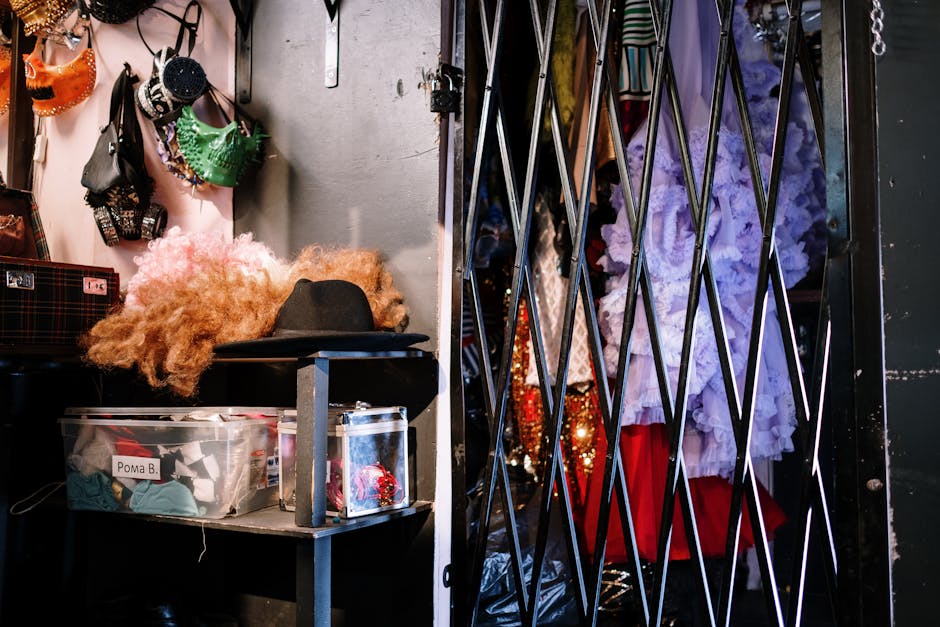
- Source costumes through four channels: custom build, purchase (new or thrifted), rental from a costume house, or brand partnership/loan
- Create detailed budget projections covering labor, acquisition, storage, and workspace
- Schedule fittings with cast and manage alterations
Production:
- Maintain the “Costume Bible” — the master continuity document tracking every costume change, continuity photographs, and special-effects duplicates
- Conduct camera screen tests before principal photography begins
- Coordinate daily with hair and makeup to ensure a unified on-screen look
- Manage costume changes for scenes shot out of order
- Photograph every costume after each shooting day for continuity reference
Post-production:
- Consult on color grading when costume colors affect the grade
- Archive, organize, and catalogue all costumes
- Negotiate IP rights for franchise or sequel use
One costume designer described the psychology of the role directly: “As a costume designer, sometimes we’re more like psychologists — figuring out our characters, where they would shop, what kind of clothes they would wear, how messy they were, where they’re stationed in life. Basically, we set the time and the place with our costumes.”
Where does the costume designer appear in film credits?
Costume Designer Credit Placement
The costume designer receives a dedicated above-the-line card in the opening title sequence on prestige productions — equivalent to the production designer’s credit placement. In standard features and television, they appear in the end crawl under the wardrobe/costume department.
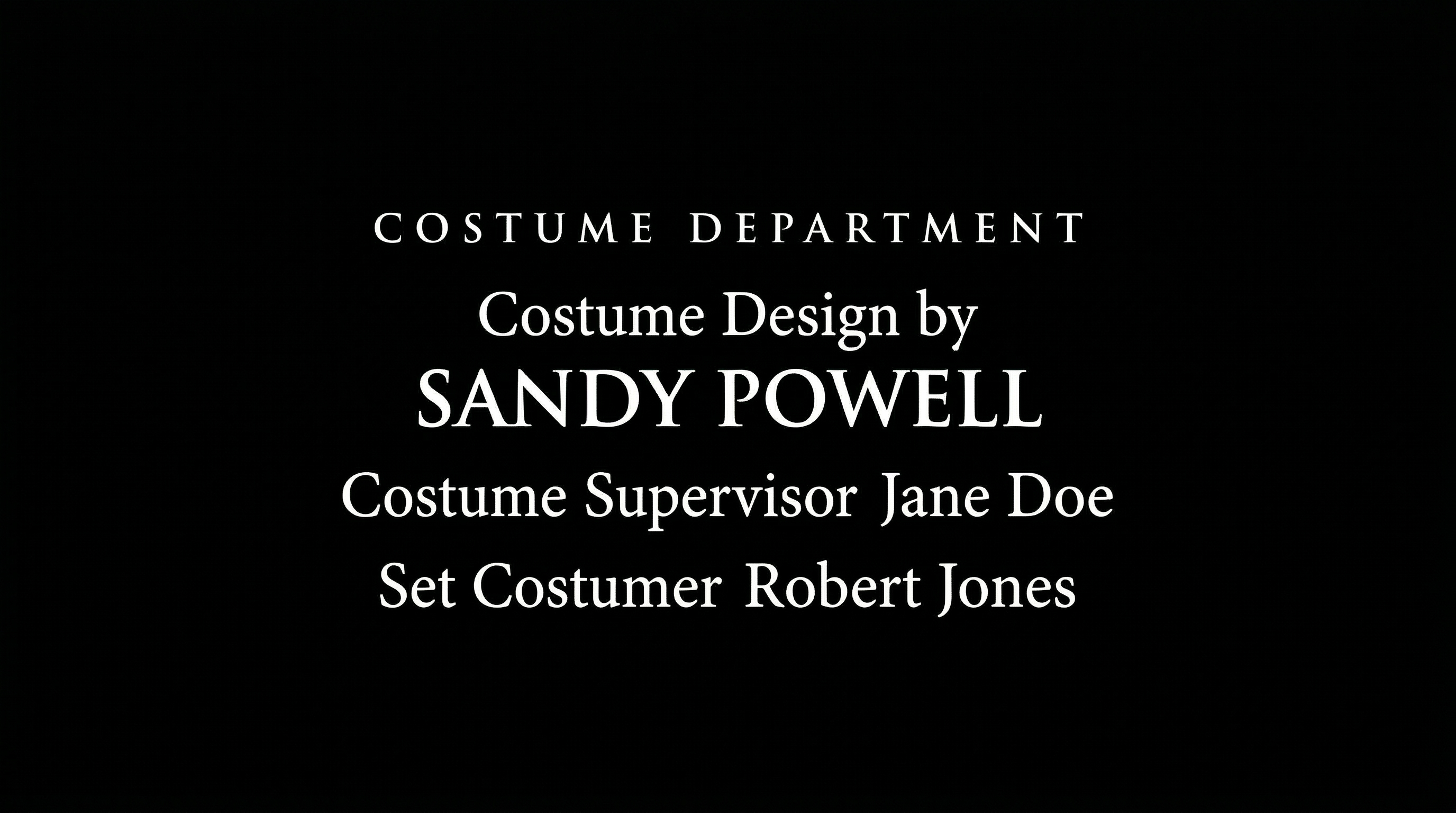
Opening credits: Major features will include the costume designer in the pre-film title sequence, typically as a single card reading:
Costume Design by
SANDY POWELL
or
Costumes Designed by
COLLEEN ATWOOD
Both formats are accepted. “Costume Design by” is the more common phrasing in contemporary productions.
End credits — standard placement:
In the scrolling end crawl, the costume designer leads the costume/wardrobe department block:
COSTUME DEPARTMENT

Costume Designer ........... Jane Smith
Costume Supervisor ......... Michael Torres
Set Costumer ............... Lisa Park
The costume designer always appears first within the wardrobe block, regardless of when the section appears in the overall credit scroll order.
Guild credit requirements: Under IATSE Local 892 (Costume Designers Guild) agreements, productions using CDG-represented designers must credit them as “Costume Designer” — not as “Costume Supervisor” or any diminished title. The Guild’s Basic Agreement specifies that the credit must appear on-screen for a minimum duration consistent with other department-head credits.
How to credit a costume designer correctly
Credit Formats and Common Variations
The two accepted opening-credit formats:
| Format | Example |
|---|---|
| Costume Design by [NAME] | Costume Design by Sandy Powell |
| Costumes Designed by [NAME] | Costumes Designed by Colleen Atwood |
What to avoid:
- “Wardrobe by” — this is a trade-level credit, not a designer credit
- “Costumes by” — acceptable informally but not standard for the department head
- Crediting the costume supervisor instead of the designer — a Guild violation on covered productions
If one person held both roles: A designer who also served as costume supervisor should receive the more senior credit: “Costume Designer.” The supervisor function is absorbed into the designer title.
Television: In episodic TV, the costume designer credit often reads “Costume Designer” in the main titles on the pilot, then moves to end credits for subsequent episodes. On streaming productions and prestige limited series, a main-title card is standard throughout.
Costume designer vs. wardrobe supervisor
Costume Designer vs. Wardrobe Supervisor: What’s the Difference?
These two titles are frequently confused — and occasionally misused in credits.
| Costume Designer | Wardrobe Supervisor | |
|---|---|---|
| Focus | Creative direction and design | Logistics, inventory, and on-set execution |
| Hires | Yes — builds the department | No — reports to designer |
| Budget authority | Yes | Purchasing within approved budget |
| On-set daily | Sometimes | Always |
| Credit placement | Department head card | Below designer in wardrobe block |
| Guild | IATSE Local 892 | IATSE Local 705 |
The wardrobe supervisor is a key collaborator — they run the department day-to-day while the designer focuses on creative decisions and director relationships. On lower-budget productions, one person may hold both functions, but Guild minimums require appropriate crediting on covered projects.
For more on related roles, see the Production Designer — the costume designer’s counterpart on the Art side — and the Makeup Artist and Special Effects Makeup Artist, who share the daily look-continuity work.
Costume designer salary
Costume Designer Salary & Day Rates
Rates vary significantly by production scale, union status, and market.
IATSE Local 892 minimums (US, approximate):
- Television (network/streaming): $2,000–$3,500/week
- Features (studio): $2,500–$4,500/week
- Low-budget features (under $1M): $800–$1,500/week
Top-end rates for experienced designers on studio features or major streaming productions (Stranger Things, prestige limited series) range from $6,000–$15,000/week, with some high-profile designers negotiating flat-deal rates for the full production period.
Day rates for non-union productions typically run $400–$800/day, with significant regional variation between Los Angeles, New York, and other markets.
The Academy Award for Best Costume Design has elevated several designers’ rates significantly — Colleen Atwood, Sandy Powell, and Ruth Carter command fees at the top of the scale following their wins.
Notable costume designers in film history
Influential Costume Designers
Edith Head — Won eight Academy Awards for Best Costume Design between 1949 and 1973, a record that still stands. Her work on Sunset Boulevard, Roman Holiday, and Rear Window established the Hollywood costume designer as a creative authority, not a wardrobe handler.
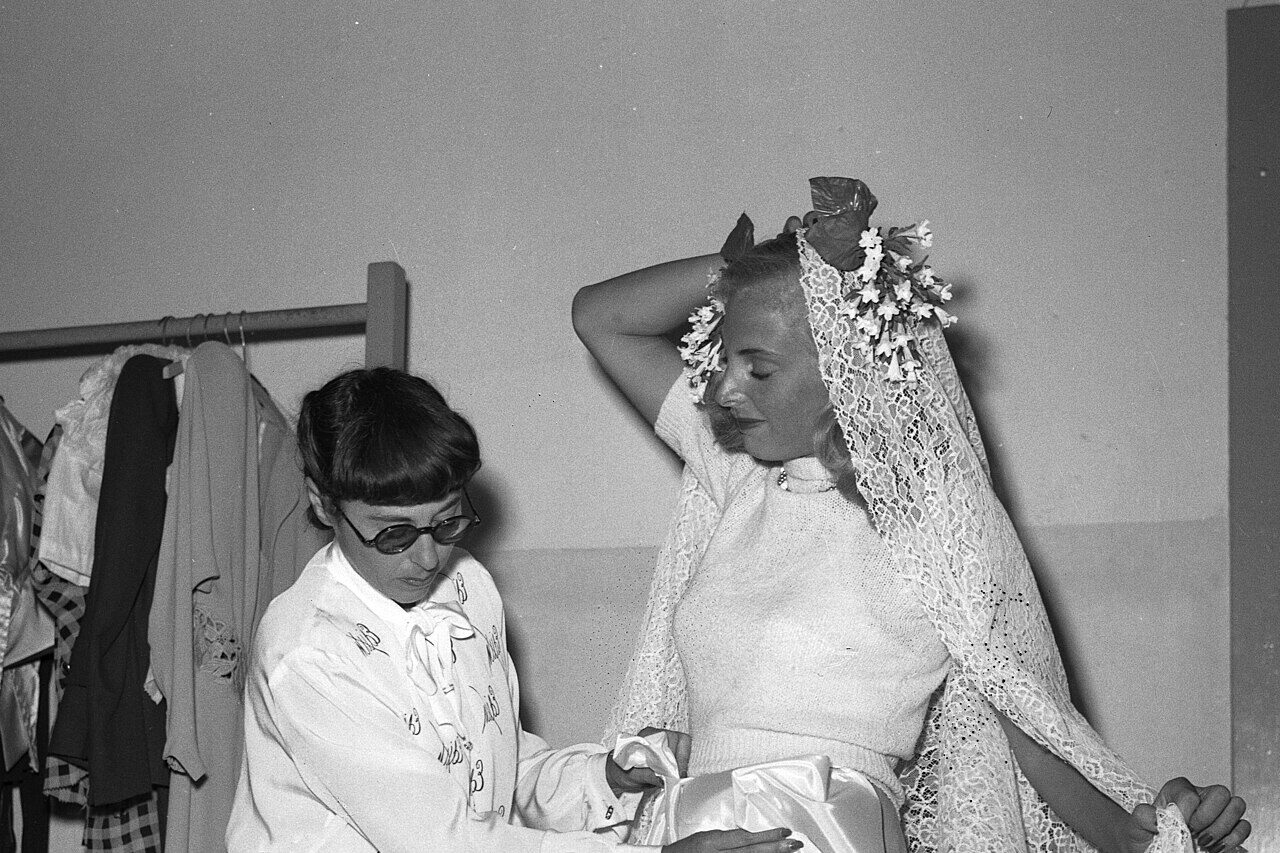
Sandy Powell — Three-time Oscar winner. Her work on The Aviator, The Young Victoria, and Cinderella (2015) demonstrates the range from period accuracy to fantasy. She famously wore a dress with her own name written on it to the Oscars to make a point about visibility for below-the-line talent.
Ruth E. Carter — Won consecutive Oscars for Black Panther (2019) and Black Panther: Wakanda Forever (2023), the first Black designer to win the award. Her work for Spike Lee films in the 1990s — Malcolm X, Do the Right Thing — built a body of work around cultural authenticity.
Colleen Atwood — Four Oscar wins, including Chicago and Memoirs of a Geisha. Longtime collaborator of Tim Burton, where she developed signature gothic fantasy silhouettes that influenced a generation of designers.
Sources & Further Reading
- IATSE Costume Designers Guild Local 892 — union minimums, membership, and credit requirements
- Academy Award for Best Costume Design — historical records and nomination criteria
Create Professional Credits with EndCreditsPro
Getting costume designer credits right — correct title, correct placement, correct format — matters to Guild members and productions alike. EndCreditsPro auto-formats credits with the correct department hierarchy, including the wardrobe block with the designer at the top.
Generate guild-compliant credits in minutes →
Related roles: Production Designer · Makeup Artist · Special Effects Makeup Artist · All Film Crew Roles
See also: IATSE Compliance Guide · Film Credits Format & Order Guide