What Is a Special Effects Makeup Artist in Film?
The Thing needed 70 prosthetic pieces for a single transformation sequence. The actor sat in the chair for six hours before the camera rolled. That’s before the SFX makeup artist had touched the lighting rig, repainted the edges, or argued about continuity with the script supervisor.
Special effects makeup artists (also called SFX makeup artists or special makeup effects artists) create physical character transformations on-screen — wounds, creature designs, prosthetic faces, aging effects, and anything else that requires the actor’s appearance to change beyond what a standard makeup kit can achieve. They work in the Hair & Makeup department alongside the makeup artist, but operate with a specialization that can dwarf the rest of the department in budget and complexity.
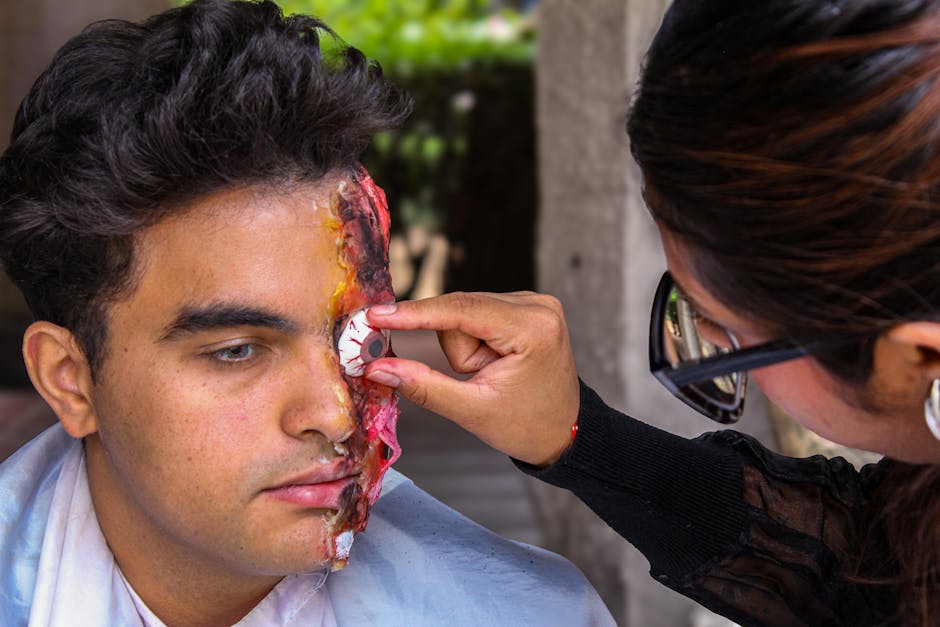
What does a special effects makeup artist do?
What Does a Special Effects Makeup Artist Do?
The role divides cleanly into pre-production design work and on-set application. Both halves require different skill sets, and on major productions the two phases often involve different people.
Pre-production responsibilities:
- Collaborating with the director and production designer to develop character concepts
- Sculpting prosthetic pieces in clay, then creating silicone or foam latex molds
- Using ZBrush for digital sculpting before committing to physical production
- Sourcing materials: encapsulated silicone, foam latex, gelatin, thermoplastics
- Building and testing animatronic integration when mechanical movement is required
- Creating continuity documentation — photographed references for every prosthetic applied
Production (on-set) responsibilities:
- Applying prosthetics using medical-grade adhesives; a full character transformation takes 2–6 hours
- Blending prosthetic edges with airbrush work to make seams invisible on camera
- Managing touch-ups between takes — prosthetics compress, sweat causes lifting, blood rigs malfunction
- Coordinating with the DP on lighting; certain prosthetic materials reflect differently under different light temperatures
- Maintaining strict continuity — the same scar in scene 5 must match scene 58 shot three weeks later
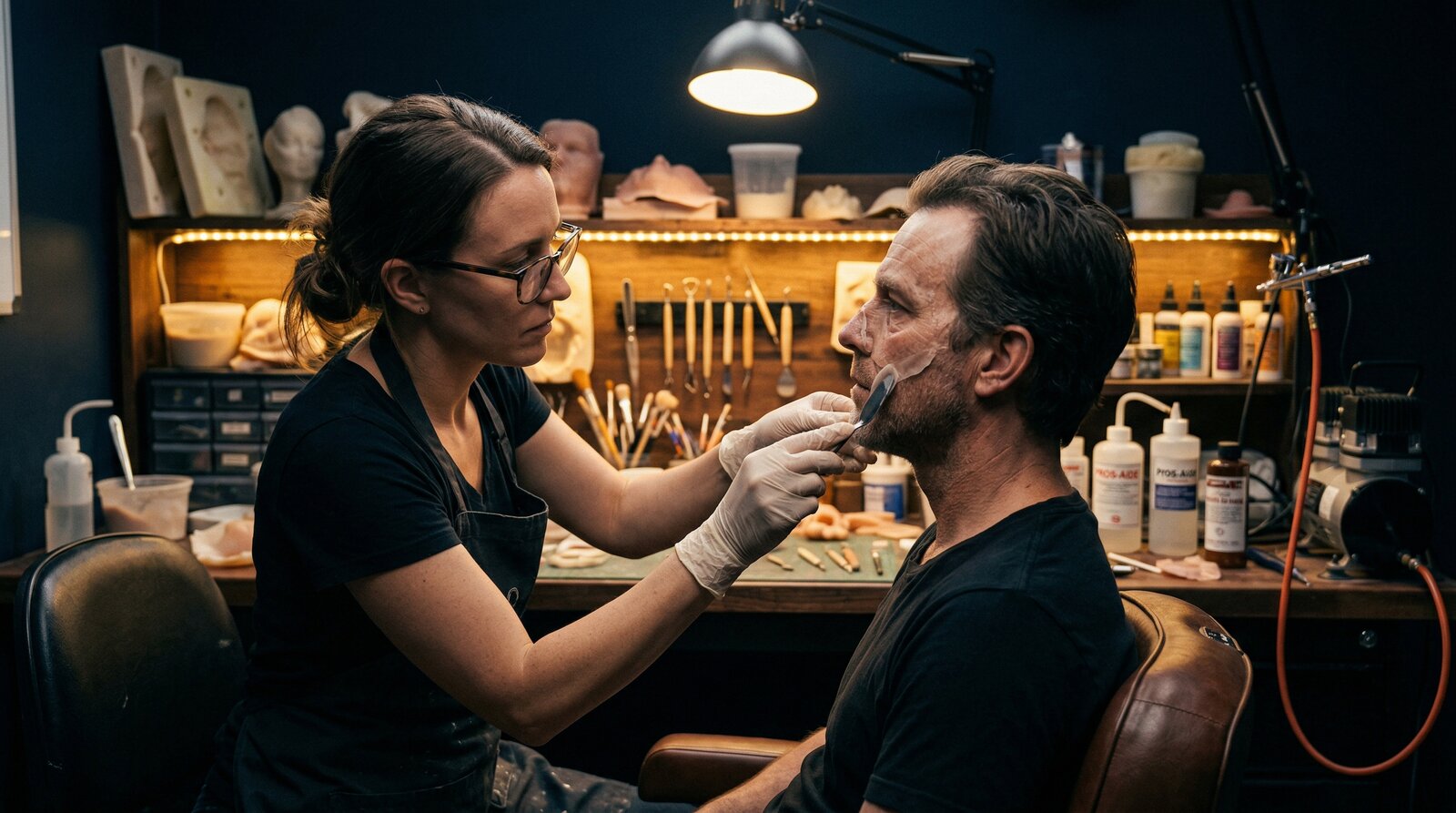
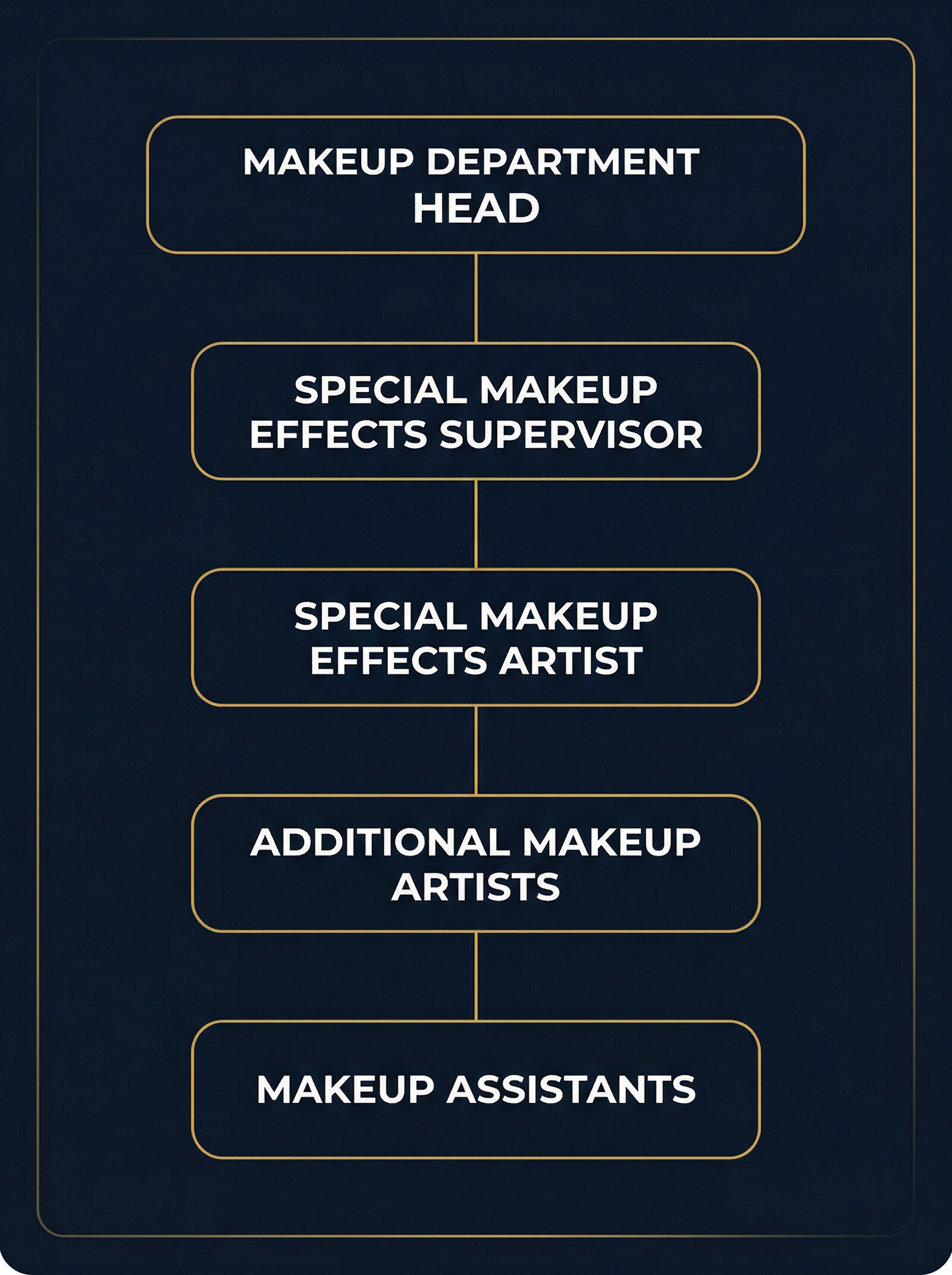
Who they report to: The Key Makeup Artist or Makeup Department Head. On large productions, an SFX Makeup Supervisor oversees a team of SFX artists and reports directly to the Makeup Department Head. On smaller productions, one person may hold both the SFX role and the Key Makeup Artist role.
Tools of the trade: Foam latex, encapsulated silicone, gelatin, Pros-Aide adhesive, Telesis adhesive, airbrushing equipment, sculpting tools, mold-making materials, fake blood formulas, 3D printers (increasingly used for rapid prosthetic prototyping).
Where does the special effects makeup artist appear in film credits?
Credit Placement in End Credits
The special effects makeup artist appears in the end credits under the Hair & Makeup Department block, which itself sits within the broader below-the-line crew section. The exact position depends on the hierarchy within the department.
End credits hierarchy — Hair & Makeup Department:
- Makeup Department Head / Key Makeup Artist
- Special Makeup Effects Supervisor (if this is a separate role)
- Special Makeup Effects Artist(s) / Prosthetics Designer
- Additional Makeup Artists
- Makeup Assistants
- Hair Department Head
- Key Hairstylist
- Hairstylists
- Hair Assistants
On productions where the SFX makeup work is substantial — a horror film, a creature feature, a period piece with heavy aging effects — the SFX Makeup Supervisor may receive their own card or a prominent position near the top of the department block.
Opening credits: SFX makeup artists almost never appear in opening credits. The rare exceptions occur when the role is integral to the film’s identity — for example, when a makeup effects designer like Rick Baker or Stan Winston received special mention cards on films where their work defined the visual concept.
Single card vs. department block: On SAG-AFTRA productions, principal creative crew may negotiate single cards. SFX makeup artists on union productions are covered by IATSE Local 706 (Motion Picture Makeup Artists and Hair Stylists), which sets minimum credit standards.
How to credit a special effects makeup artist correctly
Credit Format and Variations
The credit title for this role is not standardized across the industry. You will see all of the following used on legitimate studio productions:
| Credit Title | Usage |
|---|---|
| Special Makeup Effects Artist | Broad term; most common in end scrolls |
| Special Makeup Effects Supervisor | For the department head on large effects productions |
| Prosthetics Designer | When the role is specifically prosthetic creation |
| Makeup Effects Designer | Design-focused variant, often for concept/pre-production credit |
| Key Special Effects Makeup Artist | Emphasizes their seniority within the SFX team |
| SFX Makeup Artist | Informal, occasionally used on lower-budget productions |
Recommended standard format for end credits:
Special Makeup Effects Supervisor .......... JANE DOE
Special Makeup Effects Artists ............. JOHN SMITH
                                             MARIA GARCIA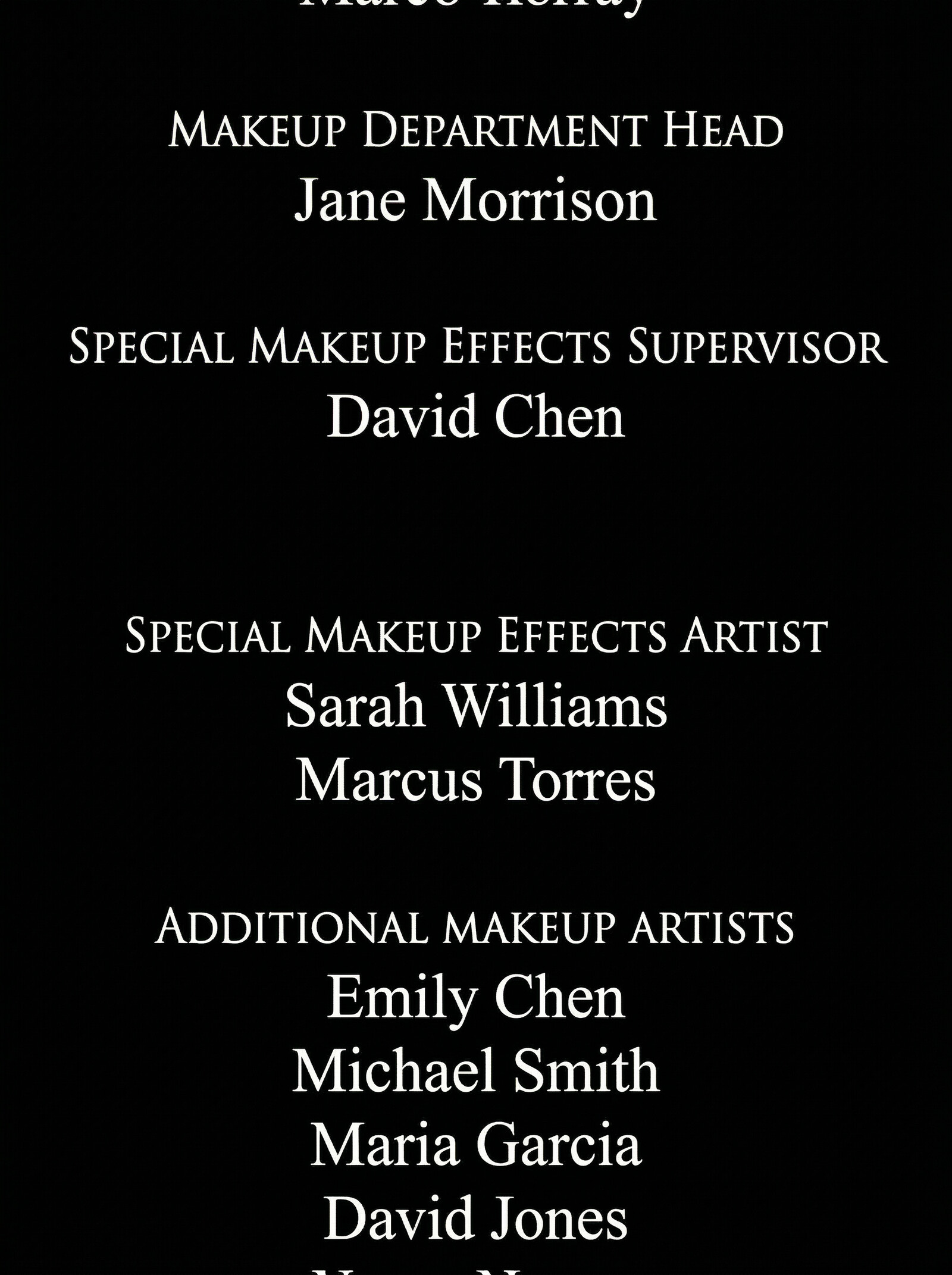
When one person held both roles (e.g., they designed and applied all prosthetics), credit them with the higher title: “Special Makeup Effects Supervisor.” If budget constraints mean they also served as Key Makeup Artist, list both titles on separate lines or negotiate a combined credit before principal photography begins.
Common errors to avoid:
- Don’t abbreviate to “SFX Artist” in formal credits — use the full title
- Don’t fold this role into the general “Makeup Artists” block without distinction; their specialized contribution deserves a differentiated credit
- Don’t omit the possessive “Effects” — “Special Makeup Artist” is a different role (cosmetic enhancement) than “Special Makeup Effects Artist”
Special effects makeup artist vs. key makeup artist
SFX Makeup Artist vs. Key Makeup Artist
These are distinct roles that coexist on most mid-to-large productions.
| Key Makeup Artist | Special Makeup Effects Artist | |
|---|---|---|
| Focus | Cosmetic continuity, beauty makeup, actor prep | Prosthetics, creature design, practical effects |
| Pre-production | Minimal; tests and approves actor looks | Extensive; sculpts, molds, fabricates |
| On-set role | Touch-ups, continuity between takes | Application of prosthetics, effects maintenance |
| Credit position | Makeup Department Head or Key Makeup | SFX Supervisor / SFX Artist |
| Guild coverage | IATSE Local 706 | IATSE Local 706 |
Both report to the same department, but on major effects productions the SFX Makeup Supervisor operates with near-autonomous creative control over their effects team. The Key Makeup Artist handles the rest of the cast while the SFX team focuses on characters requiring prosthetics.
How credits differ: You’ll see both names in the same department block. The Key Makeup Artist typically comes first; the SFX credits follow, ranked by seniority within the effects team.
Special effects makeup artist salary
Special Effects Makeup Artist Salary & Day Rates
Rates vary significantly by union status, project type, and role level.
IATSE Local 706 minimum rates (union productions):
- Makeup Artist (base): approximately $50–$65/hour under current IATSE agreements
- SFX Makeup/Prosthetics Specialist: negotiated above scale, often 20–40% above the base rate
- SFX Makeup Supervisor on a major studio feature: $5,000–$12,000+/week
Non-union and independent productions: Day rates range from $300–$800/day depending on the complexity of the work and the artist’s credit history. A single complex prosthetic application often commands a higher rate than standard makeup work.
Annual salary range: Full-time SFX makeup artists working consistently in the industry earn $55,000–$120,000+ annually, with top-tier artists on tentpole productions earning significantly more. Academy Award-winning artists like Rick Baker or Ve Neill command rates commensurate with above-the-line talent.
How to become a special effects makeup artist
Training, Schools & Career Path
This is a craft-based career. Formal training is not legally required, but portfolio and on-set experience are essential for union membership and studio work.
Common training paths:
- Formal programs at dedicated makeup effects schools (Cinema Makeup School, NYCMA, Joe Blasco Makeup Center)
- Online courses for foundational techniques (prosthetics, mold-making, airbrushing)
- Apprenticeships — the traditional path; shadowing an established SFX makeup artist on set
- Building a portfolio through short films, student productions, and personal projects
IATSE Local 706 membership: Required for most union film and television productions. Membership is typically gained by accumulating qualifying work days on IATSE-signatory productions and then applying for membership. Working as a day player or on low-budget non-union productions first is the standard entry path.
Key skills to develop:
- Foam latex mold-making and casting
- Silicone prosthetics fabrication
- Airbrushing and color-matching on skin
- Sculpture and painting
- Character design and continuity management
Notable special effects makeup artists in film history
Notable SFX Makeup Artists
Rick Baker — Seven Academy Awards for Best Makeup (more than any artist in history). Created the werewolf transformation in An American Werewolf in London (1981), which took months of preparation. Also: Men in Black, Ed Wood, Maleficent.
Stan Winston — Four Academy Awards. Defined the look of modern creature effects by blending animatronics, prosthetics, and early CGI. Key films: Aliens, Predator, Terminator 2: Judgment Day, Jurassic Park, Avatar.
Dick Smith — “The Godfather of Makeup.” Pioneered full-face foam latex prosthetics. His dental plumpers for Marlon Brando in The Godfather — small acrylic devices that reshaped the jaw — demonstrated the ingenuity the role demands. Also: The Exorcist, Amadeus, Death Becomes Her.
Ve Neill — Three Academy Awards (Beetlejuice, Mrs. Doubtfire, Ed Wood). Known for imaginative character design and efficiency on set. Became widely known through the SyFy series Face Off.
Lesley Vanderwalt — Academy Award winner for Mad Max: Fury Road (2016). Developed transfer-based prosthetics specifically engineered to survive weeks of shooting in extreme heat and desert conditions.
Howard Berger — Academy Award for The Chronicles of Narnia: The Lion, the Witch and the Wardrobe. A specialist in creature and monster design; has credited his title as “Special Makeup Effects Artist” throughout his career.
Sources & Further Reading
Guild & Industry Organizations:
- IATSE Local 706 — Motion Picture Makeup Artists and Hair Stylists
- Academy of Motion Picture Arts and Sciences — Makeup and Hairstyling Branch
Recommended Viewing:
Special effects makeup credits are one part of a larger end credit sequence that must be formatted correctly for every department. EndCreditsPro generates guild-compliant end credits automatically — with correct department order, title formats, and hierarchy — so the credits match the work.
Browse the film crew roles hub for every department. Related roles: the Makeup Artist — the department head this role reports to — and the Costume Designer, the neighbouring look department. For union compliance requirements, see the IATSE compliance guide.