What Is a Production Sound Mixer in Film?
Mark Ulano won an Academy Award for The Hateful Eight. His entire department — boom operator, utility, playback — hinged on one simple fact: he owned the sound. Every word Tarantino got in that film went through Ulano’s hands first.
A production sound mixer (also called the location sound mixer, location sound recordist, or production sound recordist) is the head of the sound department during principal photography. They are responsible for recording all audio captured on set — primarily dialogue — and delivering clean, usable tracks to post-production. Everything that happens to sound after they leave the set is built on the foundation they lay.
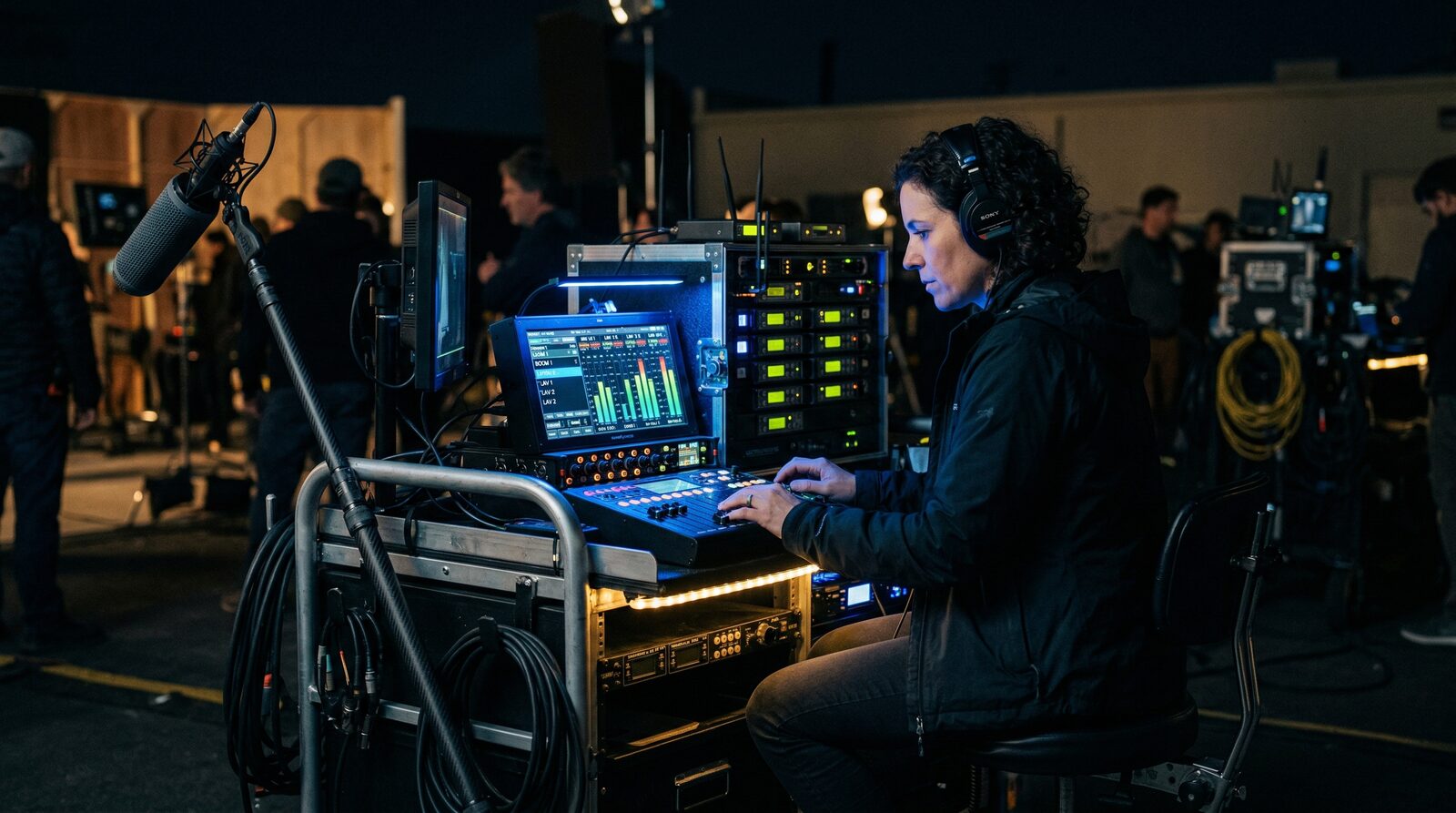
The sound department hierarchy runs: the production sound mixer at the top, followed by the boom operator, the utility sound technician (or cable wrangler), and on larger productions, a playback operator. The mixer hires their own crew, supplies their own equipment, and is paid both a day rate and a separate kit box rental for their gear.
What does a production sound mixer do?
The Production Sound Mixer’s Role on Set
The production sound mixer is a department head. That means they are not just capturing audio — they are planning, managing, troubleshooting, and delivering. Their work begins in pre-production and ends when picture locks.
Pre-production:
- Reading the script for scenes that present sound challenges — crowd interiors, vehicles, water, high winds, massive set pieces
- Meeting with the director and production designer to identify locations that may compromise audio quality
- Scouting shooting locations to assess background noise, echo, RF interference from nearby wireless systems, and power sources for charging equipment
- Building the sound equipment package within the production’s budget — selecting mixers, recorders, microphones, wireless systems
- Meeting with the post-production supervisor to confirm deliverable formats, sample rates, and metadata standards
Production (on-set):
- Arriving early to mark up sides, cross-reference the call sheet, assign wireless channels, and input scene metadata into the sound recorder
- Placing, hiding, and managing lavali microphones on talent — balancing audio quality against costume constraints
- Operating the production mixer and monitoring all audio tracks in real time throughout each take
- Coordinating boom placement with the boom operator based on camera framing and blocking
- Flagging problematic takes for sound (“For Sound” or “FS” in the sound report), recommending additional takes when environmental noise compromises a recording
- Recording room tone (30–60 seconds of ambient sound for every new location), wild lines (dialogue recorded without camera), and MOS shots
- Delivering sound reports — metadata logs for every recorded file — to post at the end of each day
Post-production handoff:
- Providing clean, labeled audio files with complete sound reports
- Being available for ADR (automated dialogue replacement) sessions when production dialogue is unusable
As Mark Ulano put it: “The soundman has to be a filmmaker — just like the cameraman has to be a filmmaker. You need to understand the director’s intent and the context of the particular situation.”
production sound mixer equipment
The Standard Production Sound Kit
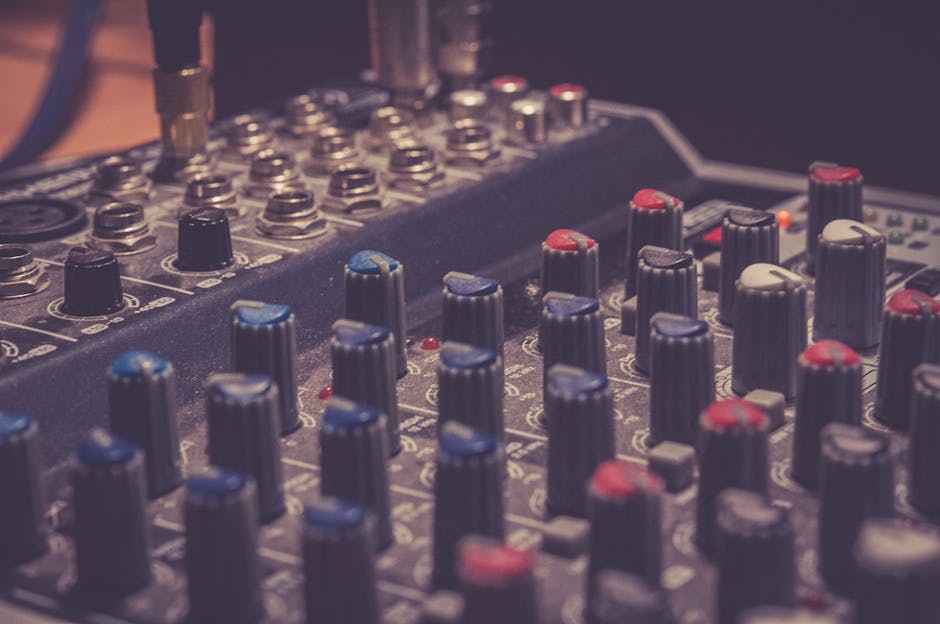
Production sound mixers own and maintain their equipment. The kit represents a significant capital investment — a professional rig costs between $50,000 and $150,000. The per-day kit box rental fee (separate from the day rate) compensates the mixer for equipment depreciation and maintenance.
Core equipment:
| Category | Examples |
|---|---|
| Portable mixer | Sound Devices 833, Zaxcom Nomad, Scorpio |
| Multi-track recorder | Sound Devices 888, Zaxcom Nova |
| Boom microphones | Sennheiser MKH 416, Schoeps CMIT 5U, Sanken CS-3e |
| Lavalier microphones | DPA 4060, Sanken COS-11D, Sennheiser MKE 2 |
| Wireless transmitters/receivers | Lectrosonics SMDB/SRc, Wisycom MTP40S, Zaxcom ZMT |
| Headphones | Sony MDR-7506 (industry standard), Sennheiser HD 280 |
| Boom pole | K-Tek KE-89, Ambient QP 5100 |
| Accessories | Wind protection, cable, timecode devices, backup batteries |
The specific microphone selection is driven by context, not habit. Ulano described his approach: “I make selections that have to do with the tonality of the actor, where we are in context with the character — is it more of an internal thing, what you know, where are we in the character’s arc in the story.”
Single-system vs. double-system recording:
On most professional productions, sound is recorded double system — audio on a separate recorder, synchronized to camera via timecode. On documentary and news work, single system recording (audio direct to camera) is common. The production sound mixer determines which approach fits the production.
production sound mixer salary
Production Sound Mixer Day Rates & Compensation
Production sound mixers are freelance and set their own rates. Compensation has two components: a day rate for labor and a kit box rental for equipment.
Typical rates (United States):
| Category | Rate |
|---|---|
| Day rate (union, features/episodic) | $650 – $1,200/day |
| Kit box rental | $300 – $650/day |
| Day rate (non-union, indie) | $350 – $600/day |
| Overtime | 1.5x after 10 hours; 2x after 14 hours (union) |
Union members working under IATSE Local 695 (Studio Electrical Lighting Technicians & Sound Technicians, West Coast) or IATSE Local 52 (East Coast) are subject to negotiated minimums through the Basic Agreement. The actual rate for experienced mixers on studio features is typically higher than the floor minimums.
Annual income varies widely. A busy mixer in Los Angeles or New York working 150–200 days per year earns $100,000–$250,000+ when kit box rentals are included. Independent documentary work pays less and involves more inconsistent scheduling.
Where Does the Production Sound Mixer Appear in Film Credits?
This is the section competitors never cover. Knowing the role is only half the job — crediting it correctly matters to the union, to the professional, and to the accuracy of your production’s permanent record.
Credit Placement in End Credits
The production sound mixer is credited in the sound department section of end credits. This section typically appears in the lower half of the crew scroll, after the camera and lighting departments.
Standard credit block order within the sound department:
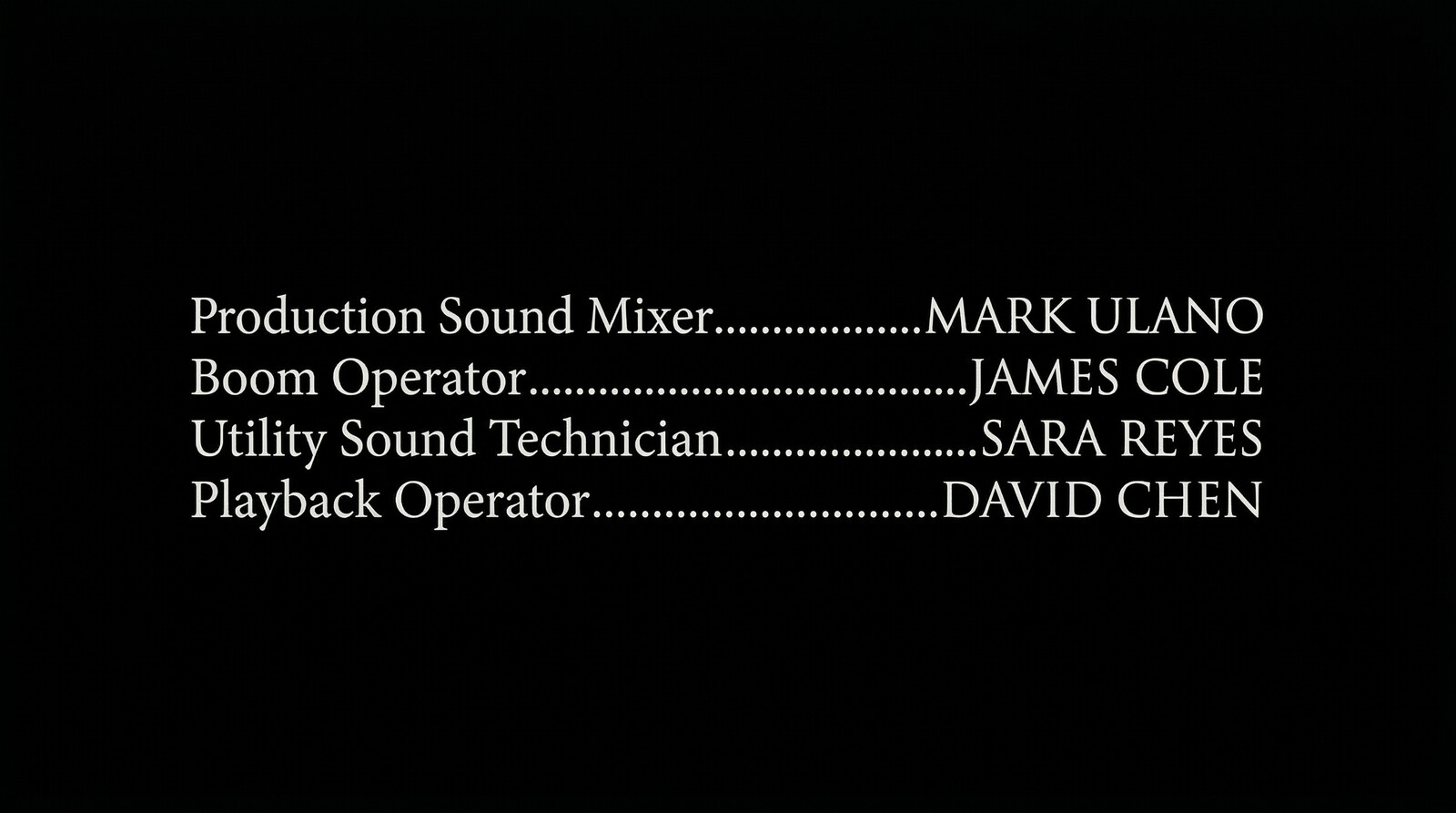
Production Sound Mixer ............... [Name]
Boom Operator ........................ [Name]
Utility Sound Technician ............. [Name]
On larger productions with additional sound crew:
Production Sound Mixer ............... [Name]
Boom Operator ........................ [Name]
Second Boom Operator ................. [Name]
Utility Sound Technician ............. [Name]
Playback Operator .................... [Name]
Credit Title Variations
The correct credit title depends on the production type and union affiliation:
| Production Type | Credit Title |
|---|---|
| Studio features, major TV | ”Production Sound Mixer” |
| UK productions | ”Sound Recordist” or “Location Sound Recordist” |
| Documentary | ”Sound Recordist” or “Production Sound” |
| Low-budget indie | ”Sound Mixer” or “Sound Recordist” |
| Union (IATSE Local 695) | “Production Sound Mixer” (required by contract) |
Do not use “Sound Engineer” as a production credits title — this term belongs to studio recording engineers, not location sound. Using it in film credits marks an unfamiliarity with industry convention.
Opening Credits
Production sound mixers do not appear in opening credits. Opening credits are reserved for above-the-line talent (director, producers, writer, lead cast) and occasionally the Director of Photography on prestige productions. The production sound mixer’s credit is always in the end crawl.
IATSE Local 695 Credit Requirements
Under IATSE Local 695 agreements, union productions are required to credit the production sound mixer by their contractual title. Key points:
- The credit title “Production Sound Mixer” is the union-recognized designation for the head of location sound
- Downgrading the credit to “Sound Mixer” or omitting the “Production” qualifier is not contractually required to be accepted by the mixer, though enforcement is typically informal
- The mixer should appear before the boom operator and all other sound crew in the credits block
Single Card vs. Scroll
Production sound mixers are credited in the scroll (the rolling end credits), not on a single card. Only above-the-line and key below-the-line personnel (editor, DP, production designer, costume designer, composer on some productions) receive single cards. The mixer’s credit scrolls with the rest of the sound department.
How to Credit a Production Sound Mixer Correctly
The standard format is straightforward:
Production Sound Mixer ............... FIRST LASTUse all caps for the name. The title is set in mixed case (standard industry convention for below-the-line crew). Dots or space fill the gap between title and name in traditional scrolling credits.
If one person handled multiple sound roles (common on micro-budget productions):
Sound Recordist / Boom Operator ...... FIRST LASTOr credit each role separately if the screen time allows. Avoid combining three or more roles into a single credit line — it reads as disorganized and shortchanges the professional.
If sound was recorded without a dedicated mixer (e.g., camera operator recorded sound directly):
Sound ................................ FIRST LASTThis is acceptable on very low-budget productions, but should not be used when a dedicated sound professional was hired.
Production Sound Mixer vs. Re-Recording Mixer
The biggest source of confusion in crediting sound roles is the distinction between the production sound mixer and the re-recording mixer.
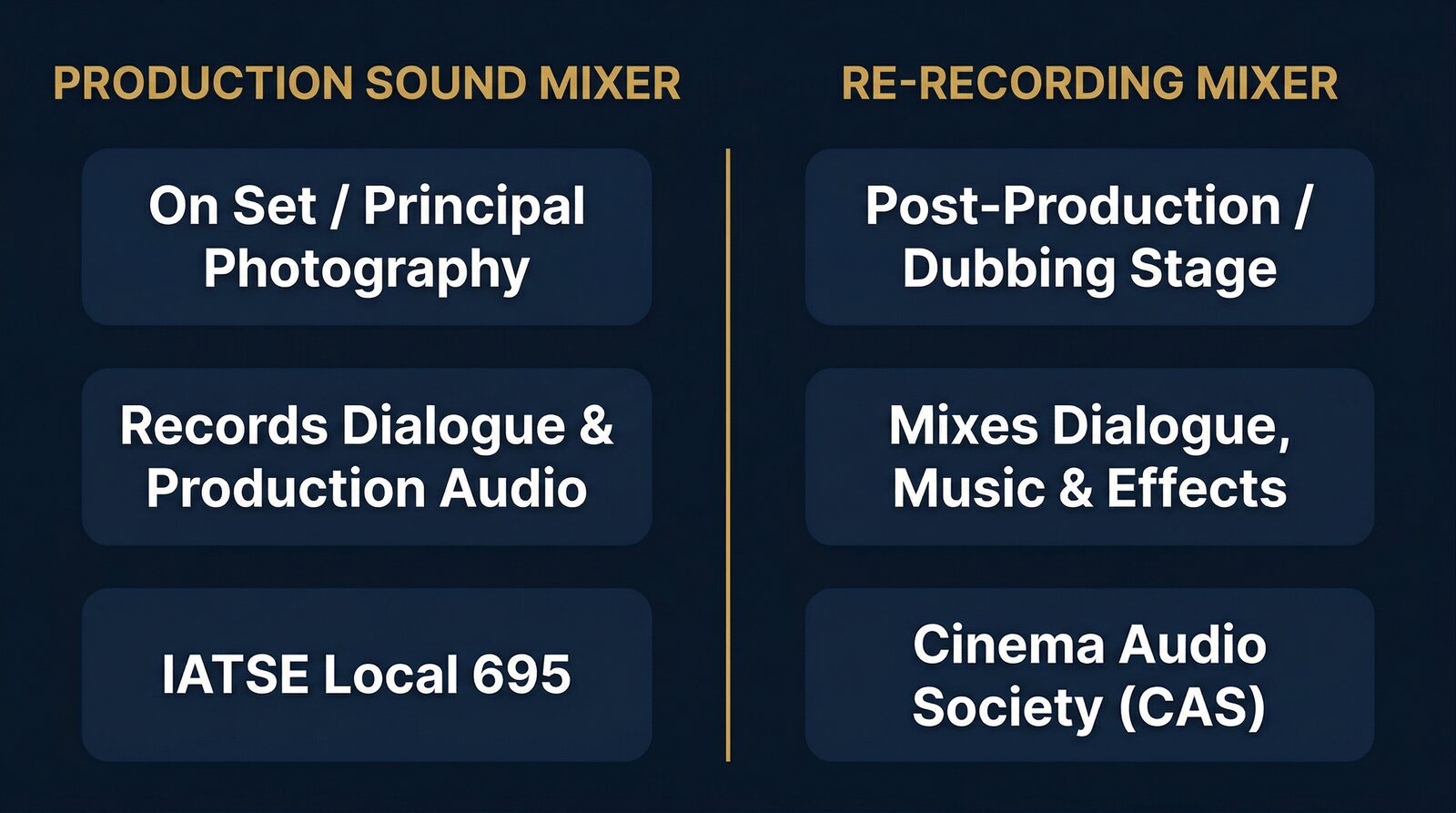
| Production Sound Mixer | Re-Recording Mixer | |
|---|---|---|
| When they work | During principal photography, on set | In post-production, in a dubbing stage |
| What they do | Record the original dialogue and production audio | Mix all audio elements (dialogue, music, effects) into the final soundtrack |
| Guild | IATSE Local 695 / 52 | CAS (Cinema Audio Society) members, IATSE Local 695 or 700 |
| Credit section | Sound department (end crawl) | Post-production sound (separate section, end crawl) |
| Famous examples | Mark Ulano, Chris Newman, José Antonio García | Kevin O’Connell, Andy Nelson, Anna Behlmer |
Both roles may be credited within the same film’s end crawl, but in separate sections. The re-recording mixer appears later in the credits, grouped with post-production sound editors, music editors, and Foley supervisors.
Notable Production Sound Mixers in Film History
Chris Newman — Three-time Academy Award nominee. Recorded The Exorcist, Apocalypse Now, Amadeus, Silence of the Lambs, and Schindler’s List. Newman’s work on Apocalypse Now under the conditions of that production remains a benchmark for location sound under extreme circumstances.
Mark Ulano — Academy Award winner for The Hateful Eight (2015). Known for his philosophical approach to sound as a narrative tool, not just a technical capture. Works frequently with Quentin Tarantino.
Simon Hayes — Oscar winner for Les Misérables (2012), where he had to capture live singing performed on set rather than miming to pre-recorded tracks. His solution — in-ear foldback monitors for each actor — changed how live-performance productions approach sound.
Sources & Further Reading
- Cinema Audio Society — professional organization for production and post-production sound professionals
- IATSE Local 695 — union representing production sound mixers and other sound technicians in Los Angeles
- Sound Devices — manufacturer of professional field recorders and mixers; technical resources on production sound workflows
Create Professional Sound Credits with EndCreditsPro
Get the credit title, department order, and formatting right — automatically. EndCreditsPro generates guild-compliant end credits with the correct hierarchy for every sound role, from production sound mixer through Foley artist.
Browse the complete film crew roles guide or explore related sound department roles: boom operator, foley artist. For credit formatting rules across your entire production, see the complete guide to film credits format and order.