What Is a Re-recording Mixer in Film?
Every sound you hear in a finished film — the whisper, the gunshot, the score — was shaped by one person at the console. Miss that name in the credits and you’ve shorted the person who made the movie listenable.
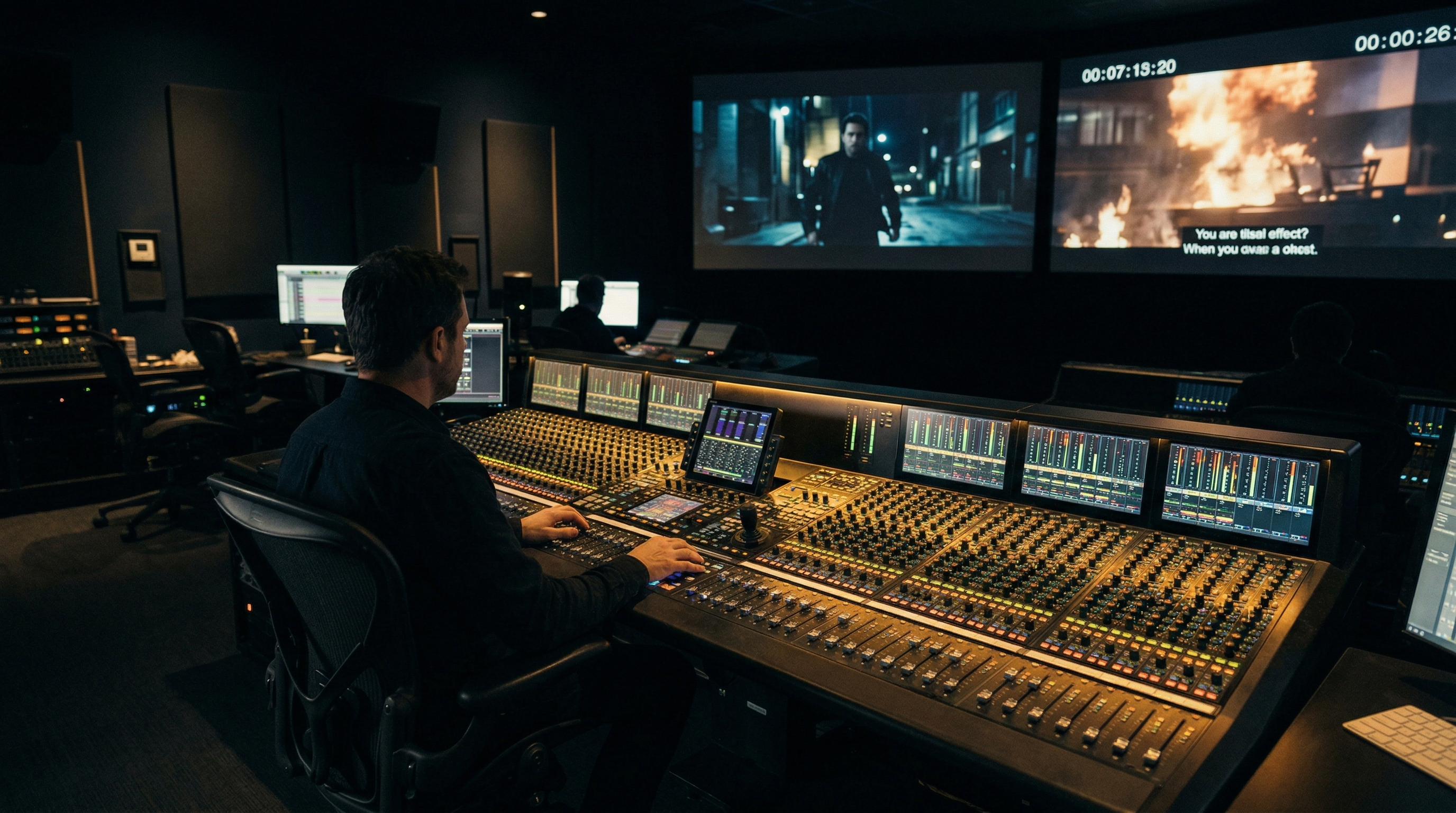
A re-recording mixer (called a dubbing mixer in Europe and the UK) is the post-production audio engineer who combines dialogue, sound effects, Foley, and music into the final soundtrack. Working in a dedicated mixing stage or dubbing stage, they are the last hands on the audio before picture lock. They report to the supervising sound editor and work in direct consultation with the director.
The re-recording mixer belongs to the sound post-production department and typically holds membership in IATSE Local 695 (Production Sound Technicians) or the Cinema Audio Society (CAS).
What does a re-recording mixer do?
What Does a Re-recording Mixer Do?
The re-recording mixer’s job is not to record — the production sound mixer handles that. The “re-recording” designation refers to re-recording previously captured audio elements onto a new master track.
Core responsibilities:
- Premix: Rough passes on individual stems — dialogue, music, effects, backgrounds, and Foley — to set relative levels and establish the tonal landscape of the film
- Final mix: Moment-to-moment decisions about loudness, spectral content, spatial placement, and creative emphasis for every scene
- Format deliveries: Creating discrete mixes for theatrical (5.1, 7.1, Dolby Atmos), streaming (stereo, 5.1), broadcast (with CALM Act loudness compliance), and international M&E (music and effects) tracks
- Mix reviews: Attending spotting sessions and mix reviews with the director, producer, and supervising sound editor; incorporating notes and re-cutting stems accordingly
- Audio restoration: Using software to address noise floor issues, ADR matching problems, or location recording artifacts that editors couldn’t fully resolve
The standard mix sequence follows a strict layering logic: dialogue is locked first, then music, then backgrounds and ambiences, and finally sound effects. “We always start with the dialogue,” said mixer Jacob Cook in an interview with SoundGirls. “I mix dialogue line by line to get it in spec and sounding natural throughout the show.”
Tools of the trade:
- Pro Tools HDX (industry standard; virtually non-negotiable)
- Mixing console or control surface (Avid S6, SSL, or similar)
- Multi-channel monitoring for stereo, surround, and Atmos formats
- Audio restoration and noise reduction software (iZotope RX, Cedar)
- Reverb and dynamics processing (hardware and plugin)
The re-recording mixer works directly with: supervising sound editor, dialogue editors, sound effects editors, music editor, Foley artist, and ADR mixer.
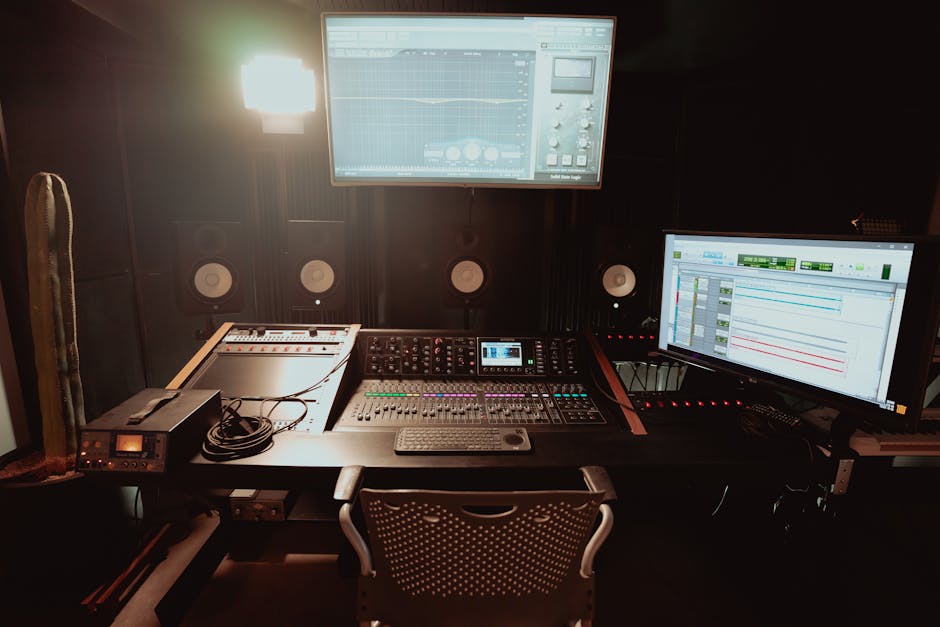
Where does the re-recording mixer appear in film credits?
Re-recording Mixer Credit Placement in End Credits
The re-recording mixer appears in the end credits, never opening titles. Their credit falls within the sound department block, which is one of the final major department groupings before the technical and legal tail credits.
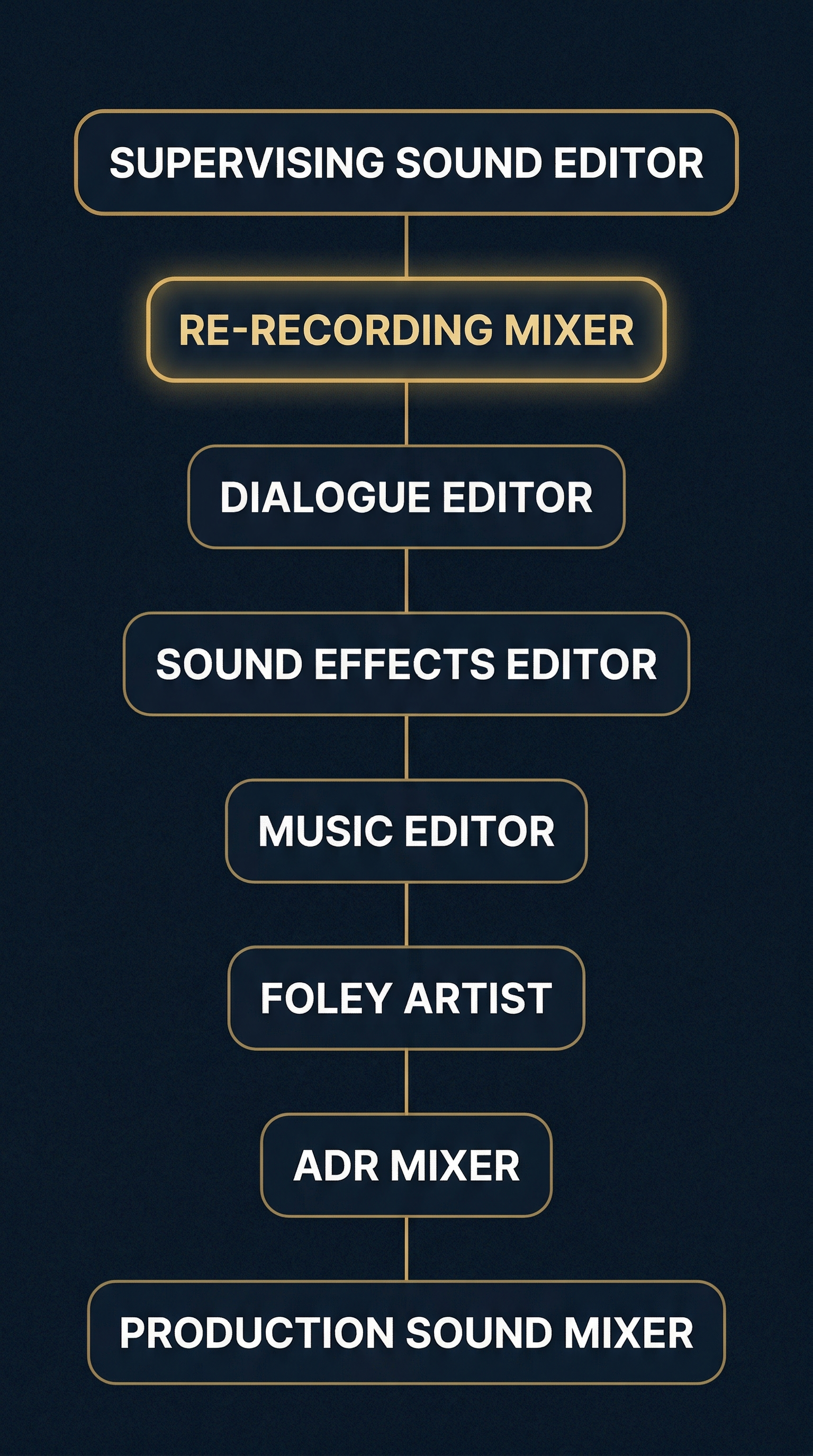
Standard placement within the sound block:
| Position | Credit |
|---|---|
| 1 | Supervising Sound Editor |
| 2 | Sound Designer (if separate from supervising editor) |
| 3 | Re-recording Mixer(s) |
| 4 | Dialogue Editor |
| 5 | Sound Effects Editor |
| 6 | Music Editor |
| 7 | Foley Artist / Foley Mixer |
| 8 | ADR Mixer / ADR Supervisor |
| 9 | Production Sound Mixer |
On larger productions, two re-recording mixers often share the role — one mixing dialogue and music, the other mixing effects. In those cases, both receive equal billing on the same card.
Credit card format:
Re-recording Mixers
FIRSTNAME LASTNAME
FIRSTNAME LASTNAME
Or on a shared scroll:
Re-recording Mixer ............... FIRSTNAME LASTNAMEThe title used is almost always “Re-recording Mixer” in North American credits. “Dubbing Mixer” appears on some international co-productions, particularly UK and European credits. “Mixer” alone is sometimes used on lower-budget productions, though this is considered non-standard.
Streaming vs. theatrical: Streaming platforms (Netflix, Amazon, Apple TV+) follow essentially the same credit order but may condense the sound block. Netflix’s crediting standards require the re-recording mixer to be listed by their exact contracted title — using a shortened or altered credit form requires written approval.
How to credit a re-recording mixer correctly
Correct Credit Format for a Re-recording Mixer
Exact title: Re-recording Mixer
Do not abbreviate to “Mixer” without the preceding qualifier unless production agreements specify it. Never use “Sound Mixer” — that title belongs to the production sound mixer who recorded audio on set, and conflating the two is a frequent and embarrassing error.
Common variations in legitimate use:
| Credit Title | Context |
|---|---|
| Re-recording Mixer | Standard North American theatrical and streaming |
| Re-Recording Mixer | Capitalized variant — both forms are accepted |
| Dubbing Mixer | UK/European productions |
| Supervising Re-recording Mixer | When the mixer also supervised the sound editorial team |
| Mix | Rare; seen on some prestige TV productions |
When one person holds multiple roles: If the supervising sound editor also handled the final mix — common on lower-budget independent films — the credit reads:
Supervising Sound Editor & Re-recording Mixer
FIRSTNAME LASTNAME
Do not list the same name twice under two separate titles. A single combined credit is cleaner and accurately reflects the hybrid role.
CAS designation:
Members of the Cinema Audio Society may append “CAS” after their name in the credits: FIRSTNAME LASTNAME, CAS. This is optional but common on theatrical features and high-end TV.
Re-recording mixer vs. production sound mixer
Re-recording Mixer vs. Production Sound Mixer
These two roles share the word “mixer” and nothing else — confusion between them is the most common mistake in sound crediting.
| Re-recording Mixer | Production Sound Mixer | |
|---|---|---|
| When | Post-production | Principal photography |
| Where | Mixing stage or studio | On set |
| What | Combines edited audio stems into final mix | Records live production dialogue and sound |
| Guild | IATSE Local 695 / CAS | IATSE Local 695 / CAS |
| Credit position | End credits, sound post block | End credits, sound post block (lower) |
| Also called | Dubbing mixer (UK) | Sound recordist (UK) |
Both titles appear in the end credits, but they are always listed separately. The production sound mixer’s name typically appears lower in the sound block, after the editors and post-production mixers who processed their recordings. On set, the production sound mixer works with the boom operator to capture the dialogue that the re-recording mixer later shapes; in post, the sound designer builds the effects they balance.
Notable re-recording mixers in film history
Who Are the Most Celebrated Re-recording Mixers?
Gary Rydstrom (six Academy Awards for Best Sound Mixing) redefined what theatrical audio could do with Terminator 2, Jurassic Park, and Saving Private Ryan. His Saving Private Ryan mix — opening with the chaos of Omaha Beach — remains the benchmark for sound design and mixing in the same film.
Anna Behlmer is one of the most decorated re-recording mixers in Hollywood history, with over a dozen Oscar nominations, credits on Braveheart, Gladiator, Pirates of the Caribbean, and The Dark Knight.
Kevin O’Connell holds the record for most Academy Award nominations without a win (20 nominations, eventually winning for Hacksaw Ridge in 2017) — an indication of how consistently competitive and subjective the role’s award consideration is.
John Reitz, Gregg Rudloff, and David Campbell — the trio behind The Matrix and Inception mixes — showed how collaboration between multiple re-recording mixers on a single film can produce groundbreaking results.
Create professional end credits with EndCreditsPro
Getting the sound department credit block right — correct titles, correct order, correct format — is exactly what EndCreditsPro handles automatically. Generate guild-compliant credits with the re-recording mixer listed in the correct position, using the correct title, every time.
Join the EndCreditsPro waitlist →
Sources & Further Reading
- Film Crew Roles: Sound Department — full department overview
- Complete Guide to Film Credits — credit order and formatting for all departments
- Film Credits Format & Order Guide — standard credit sequences by production type
- Foley Artist: Role & Credits — related sound post-production role
- Sound Designer: Role & Credits — creates the effects the mixer balances
- ADR Mixer: Role & Credits — records the replacement dialogue that lands on the dub stage
- Cinema Audio Society (CAS) — professional organization for production and post-production sound mixers
- SoundGirls — “The Lowdown on Mixing: Re-recording Mixer Jacob Cook” — practical workflow insights from a working mixer